Concise summary (GetRecall.ai):
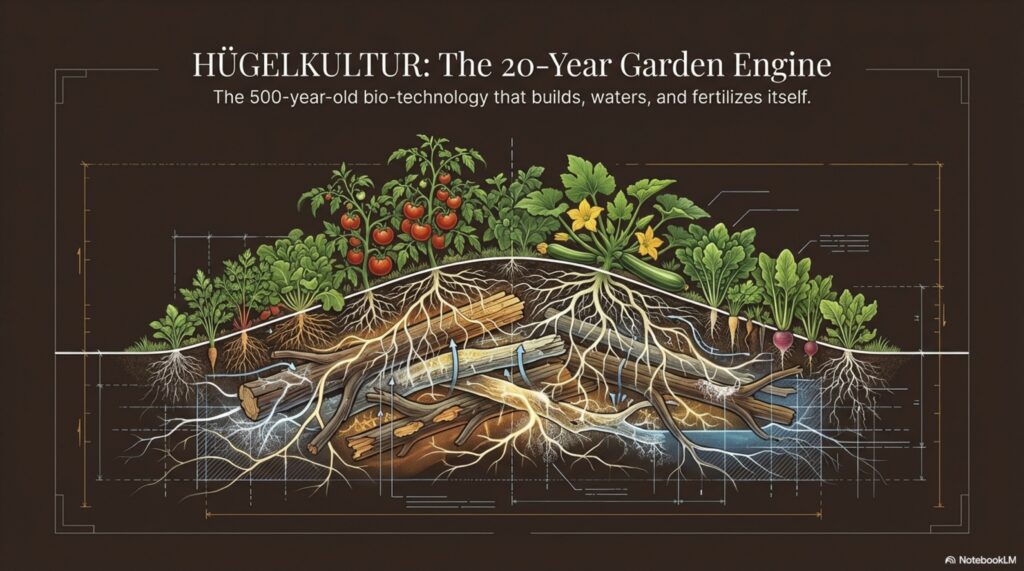
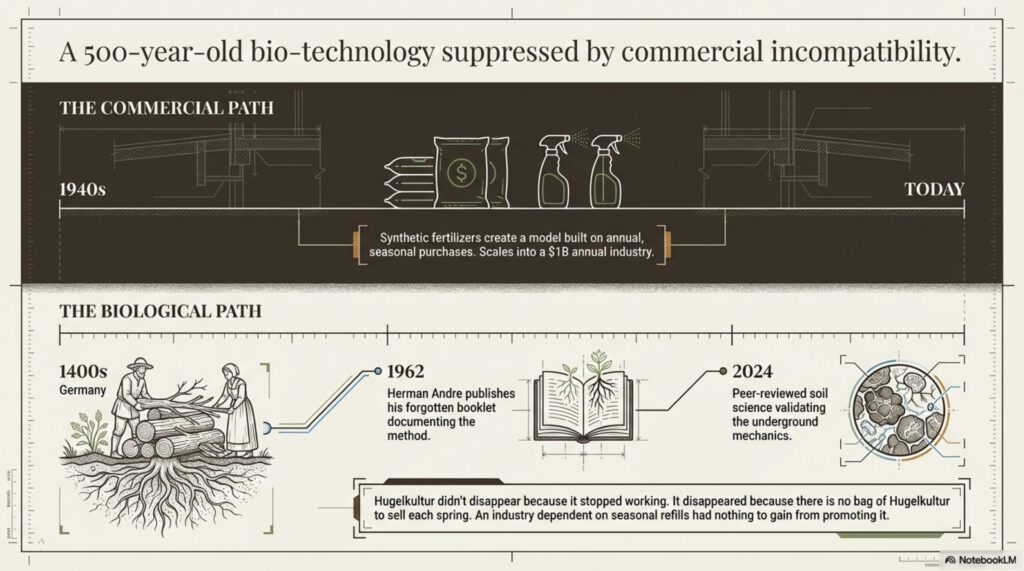
- Hugelkultur [Hügelkultur ≈ Hill Farming] is a gardening method that is self-sustaining and highly productive, with a history dating back at least 500 years, and was documented by German botanist Herman Andre in 1962 (00:00:15).
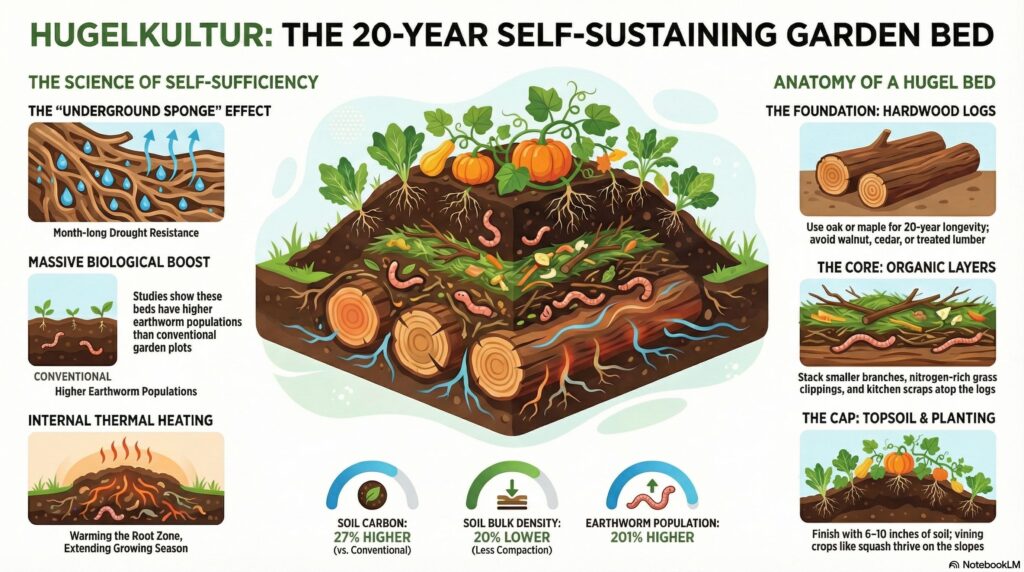
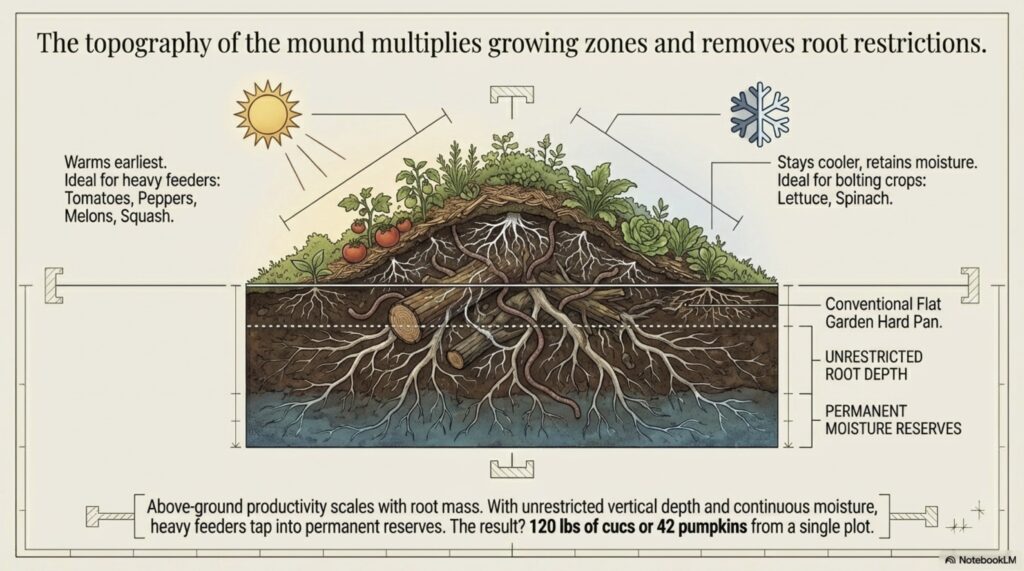
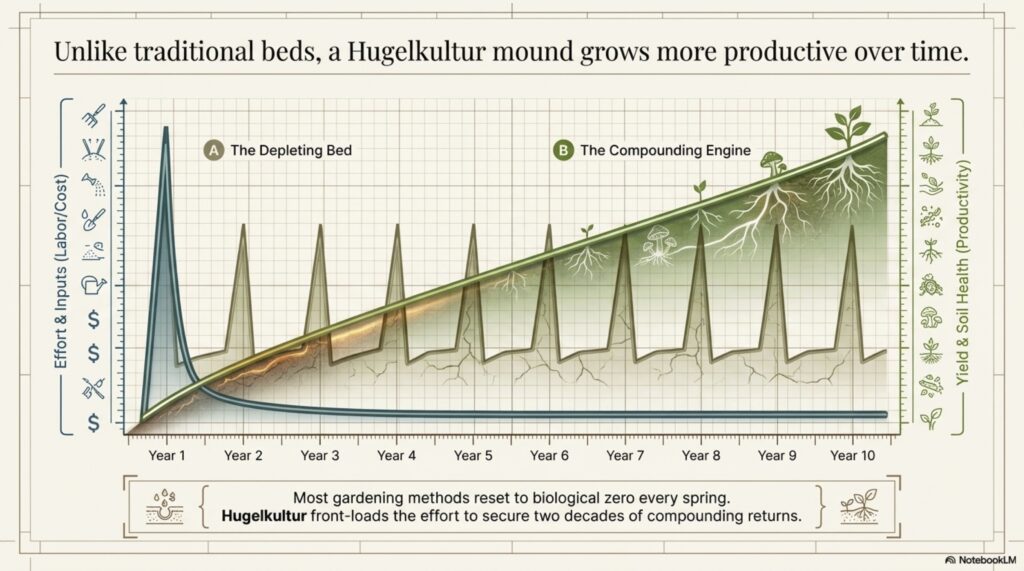
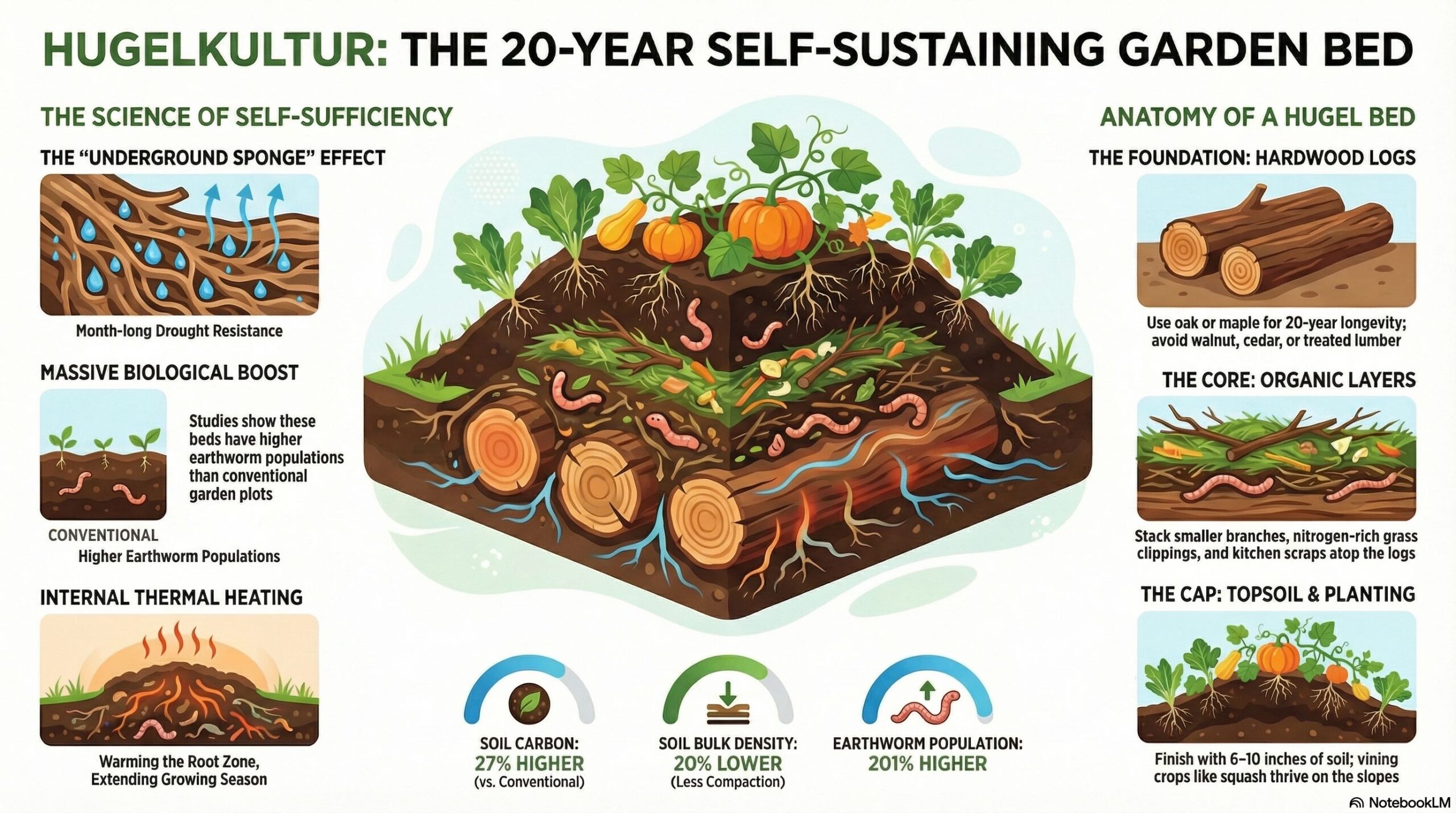
- The method involves stacking fallen logs into mounded rows, covering them with earth, and planting directly into the pile, resulting in a bed that can remain highly productive for 20 years with minimal effort (00:02:15).
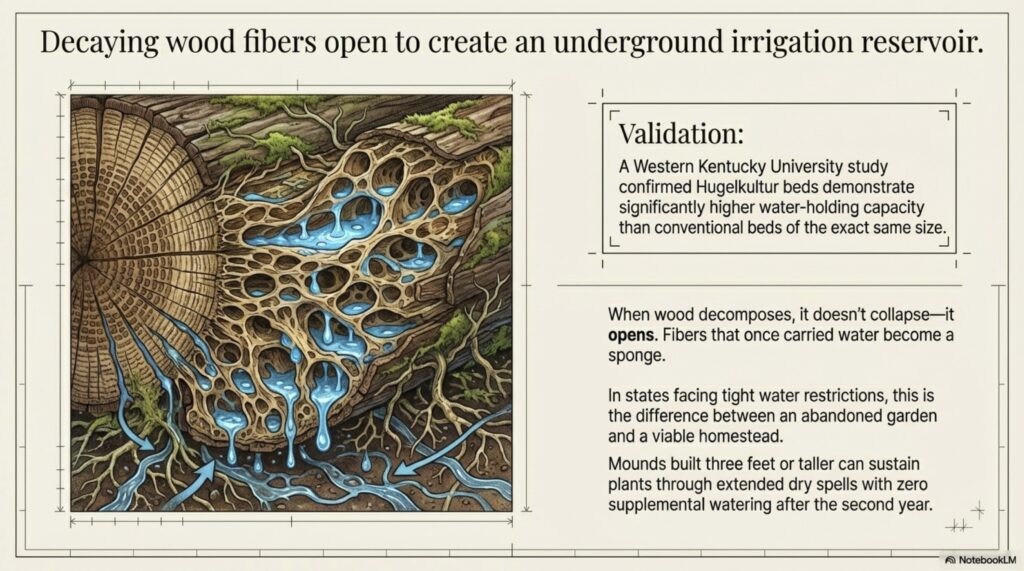
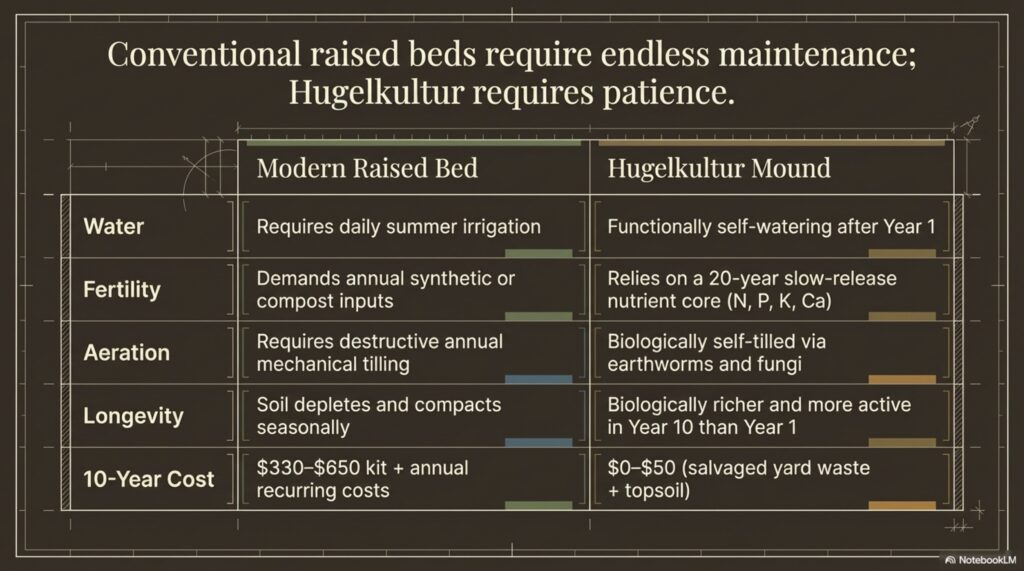
- Hugelkultur beds have a high water-holding capacity, with buried logs acting as underground irrigation reservoirs, and can sustain plants through extended dry spells with no supplemental watering after the first year or two (00:03:42).
- Hugelkultur is a self-watering and self-fertilizing garden bed that can last for 20 years, with plants having unrestricted root depth and consistent moisture (00:12:13)
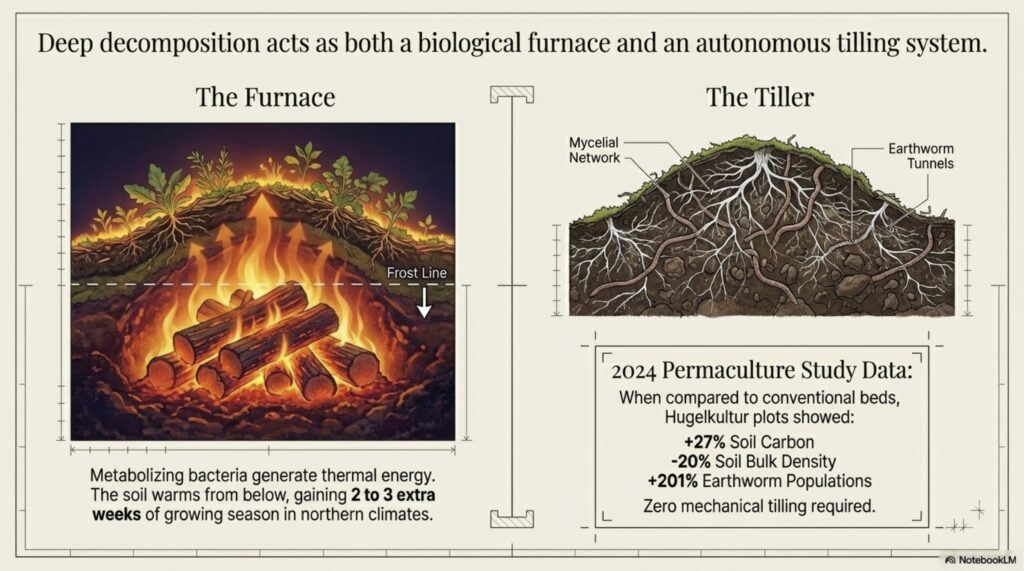
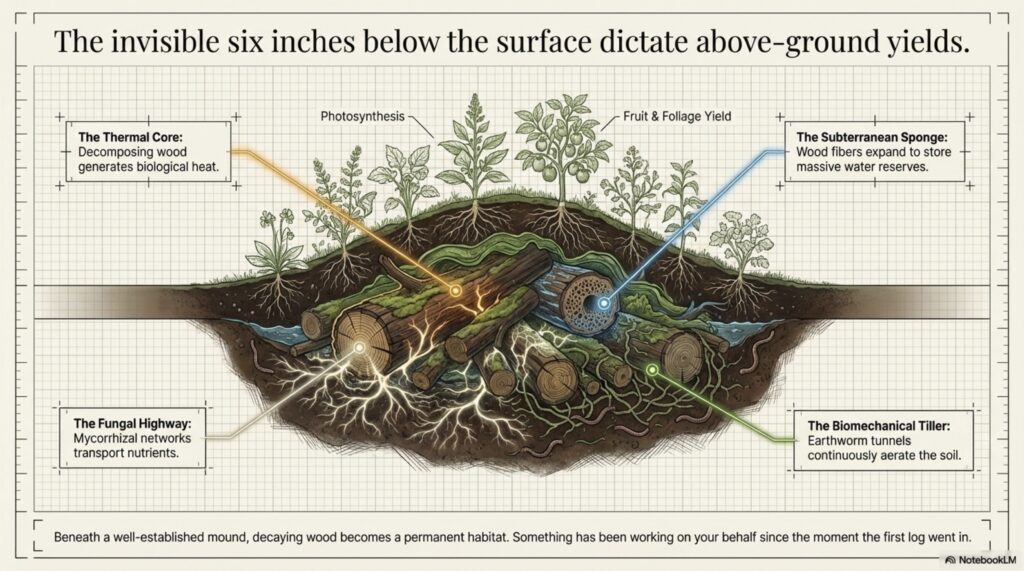
- Traditional gardening often involves tilling, which can destroy fungal networks and earthworm tunnels, whereas Hugelkultur beds improve every year without mechanical intervention (00:12:35)
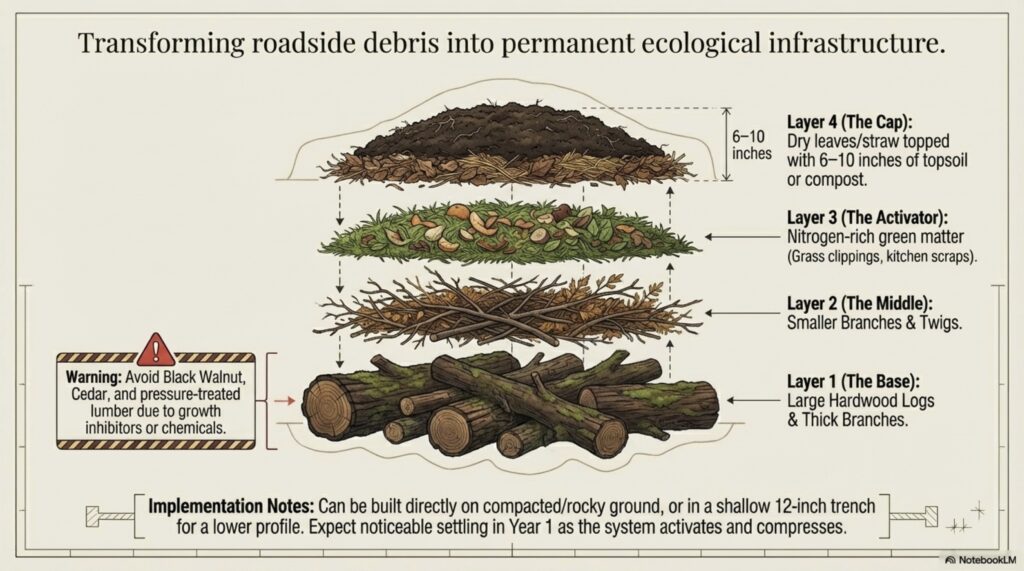
- Building a Hugelkultur bed involves layering materials, starting with large logs and branches, then smaller branches, nitrogen-rich materials, and finally top soil or compost (00:16:44)
notebooklm.google.com:
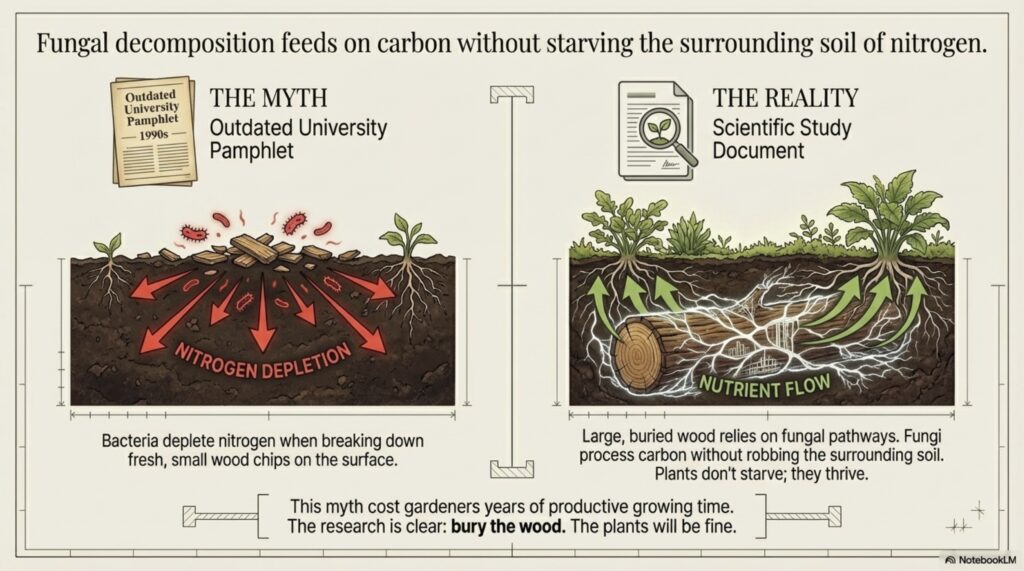
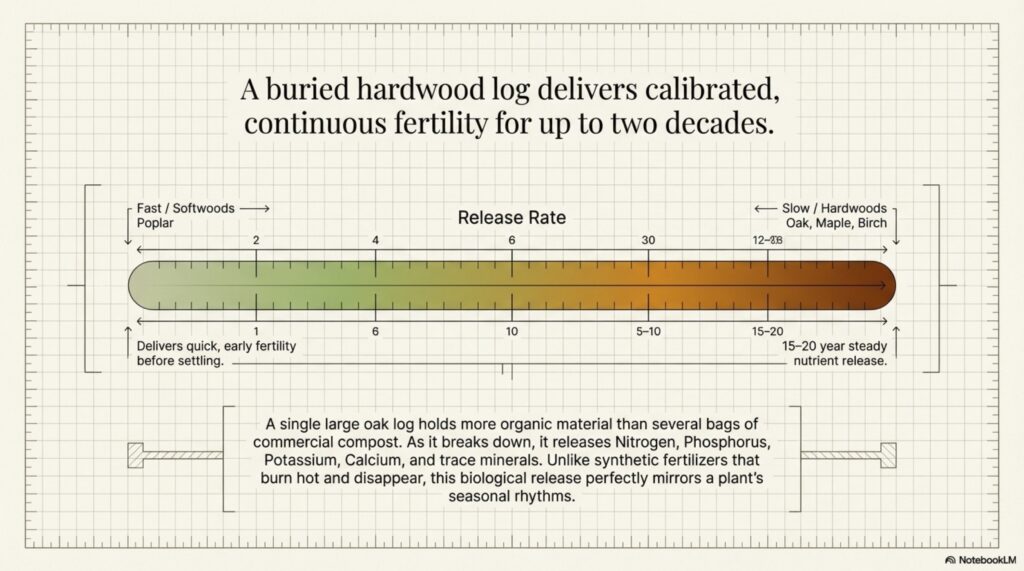
The provided text explores hugelkultur [Hügelkultur ≈ Hill Farming], an ancient yet sophisticated German gardening method that utilizes decaying wood buried beneath soil to create self-sustaining ecosystems. This technique functions as a natural irrigation reservoir and a slow-release fertilizer source, allowing gardens to thrive for up to twenty years with minimal human intervention.
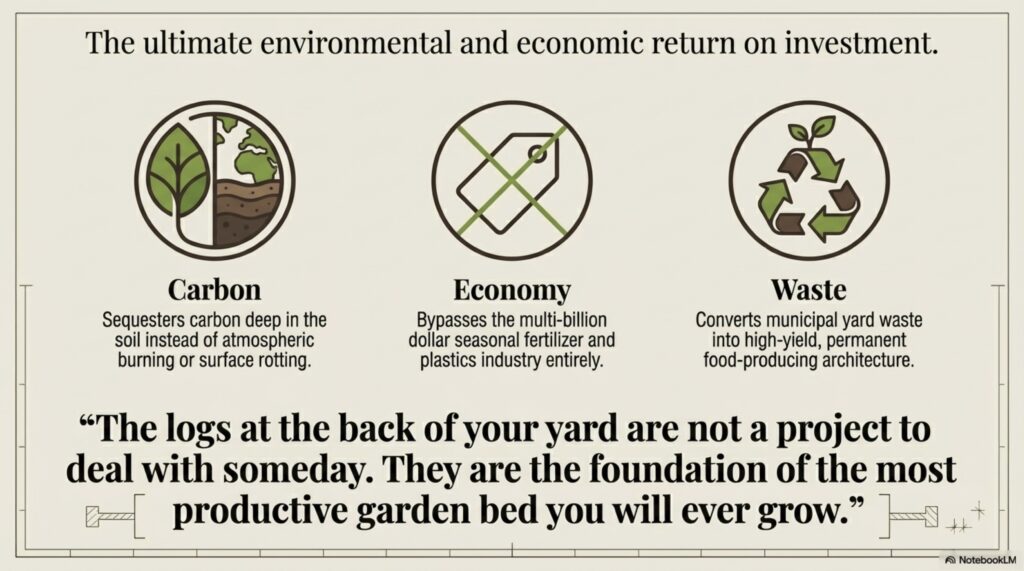
Scientific research highlights how this process fosters essential fungal networks and significantly increases earthworm populations, leading to superior soil health compared to modern industrial methods. Beyond enhancing yields, the practice offers thermal benefits that extend growing seasons and eliminates the need for expensive chemical inputs.
Ultimately, the source frames hugelkultur as a commercially overlooked but ecologically superior alternative to resource-intensive conventional farming.