
Disclaimer: All words as concessions! 🌸
Notebooklm.Google.com:
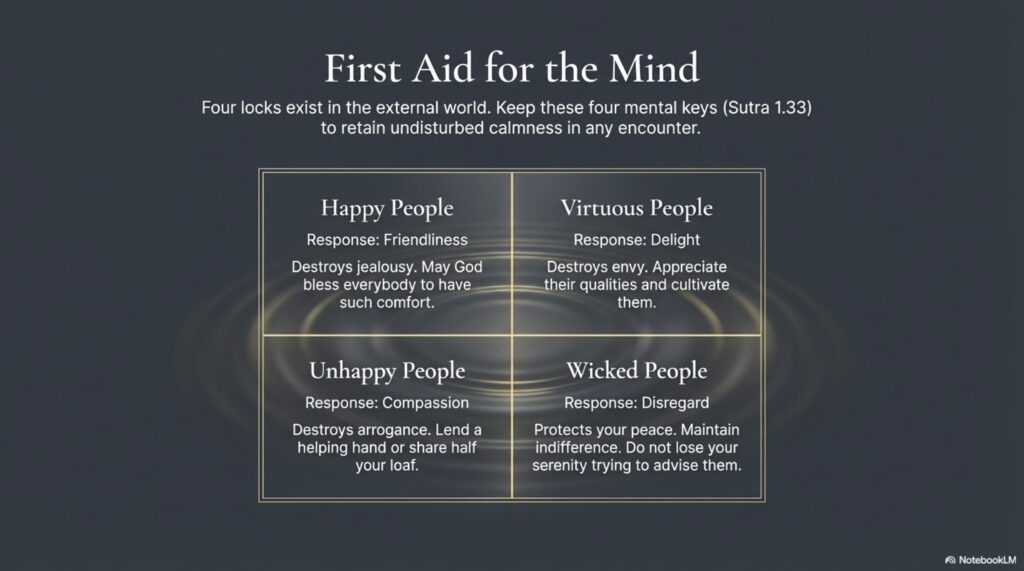
This source is a comprehensive guide to The Yoga Sutras of Patanjali, featuring a modern translation and spiritual commentary by Sri Swami Satchidananda. The text is structured into four distinct sections—Samadhi, Sadhana, Vibhuti, and Kaivalya—which collectively delineate the “science of the mind” and the path toward mastering mental modifications.
Advaita? “The Yoga Sutras of Patanjali”
Advaita Vedānta and Patañjali’s Yoga Sūtras sit in dialogue: they share much language and practice, but their metaphysics and emphasis are different.
Core Advaita view
- Reality is nondual: only Brahman (infinite consciousness) is ultimately real; world and individuality are appearance through māyā.
- The individual self (jīva) is not really separate; Atman = Brahman (“one without a second”).
- Liberation (mokṣa) is through clear knowledge: hearing the teaching, reflecting, and contemplative assimilation (śravaṇa–manana–nididhyāsana).
Core Yoga Sūtras view
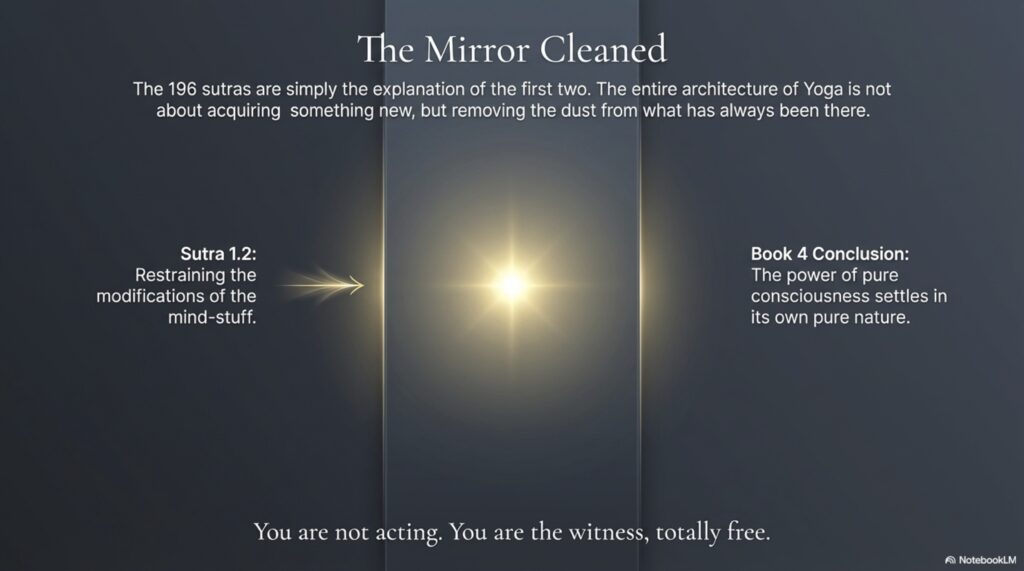
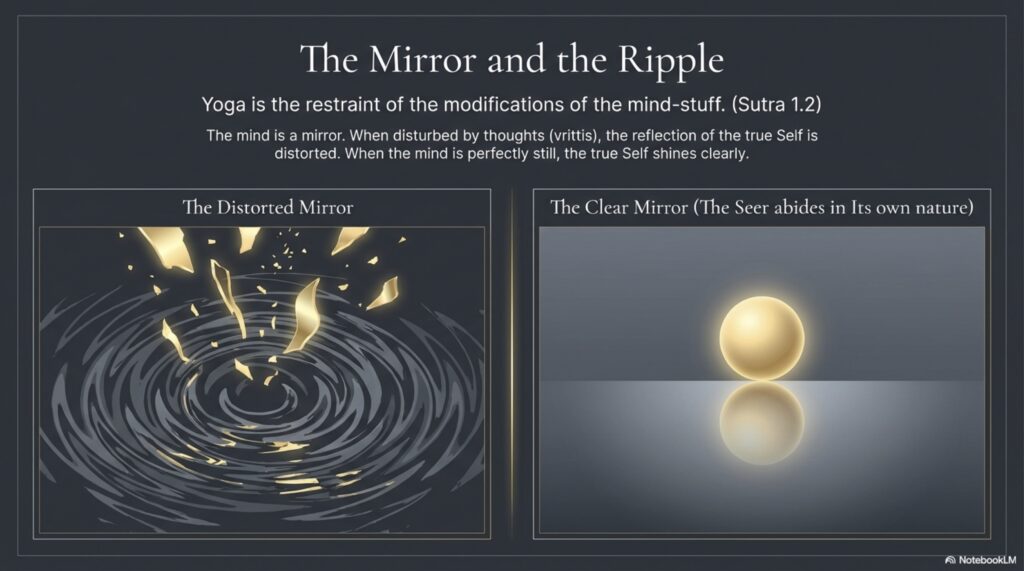
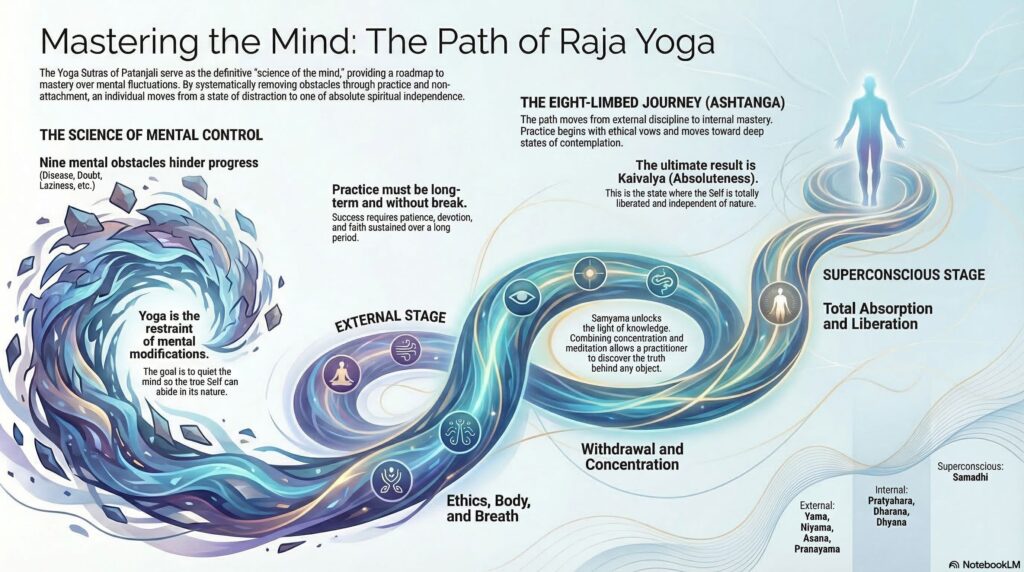
- Yoga is defined as “citta-vṛtti-nirodha”: stilling the mind’s movements so the seer abides in its own nature.
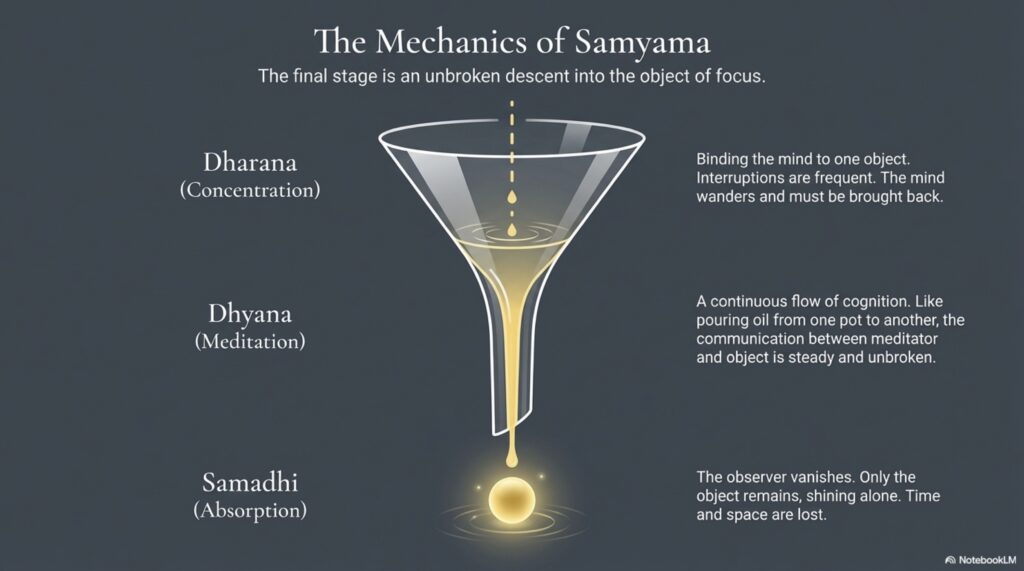
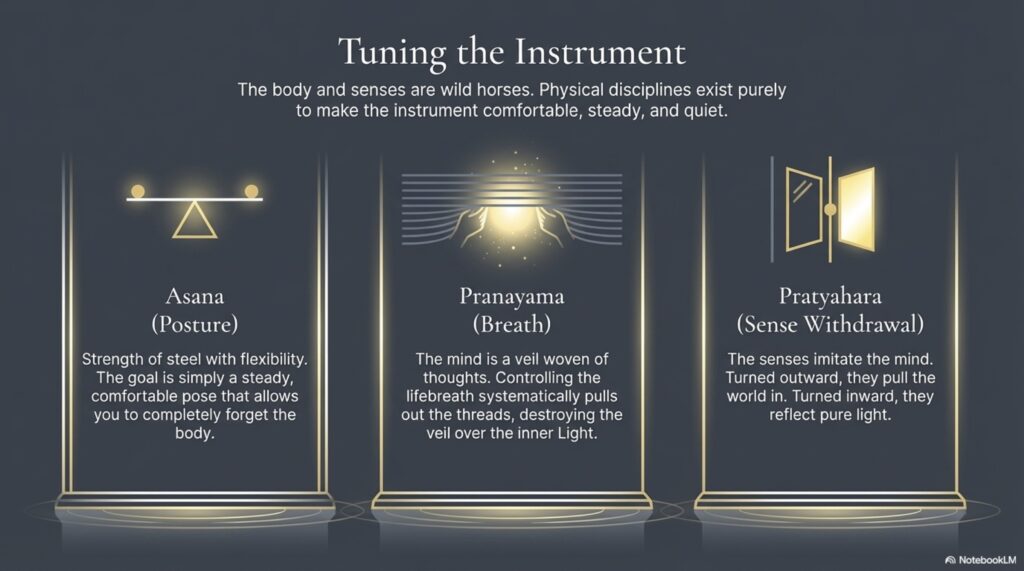
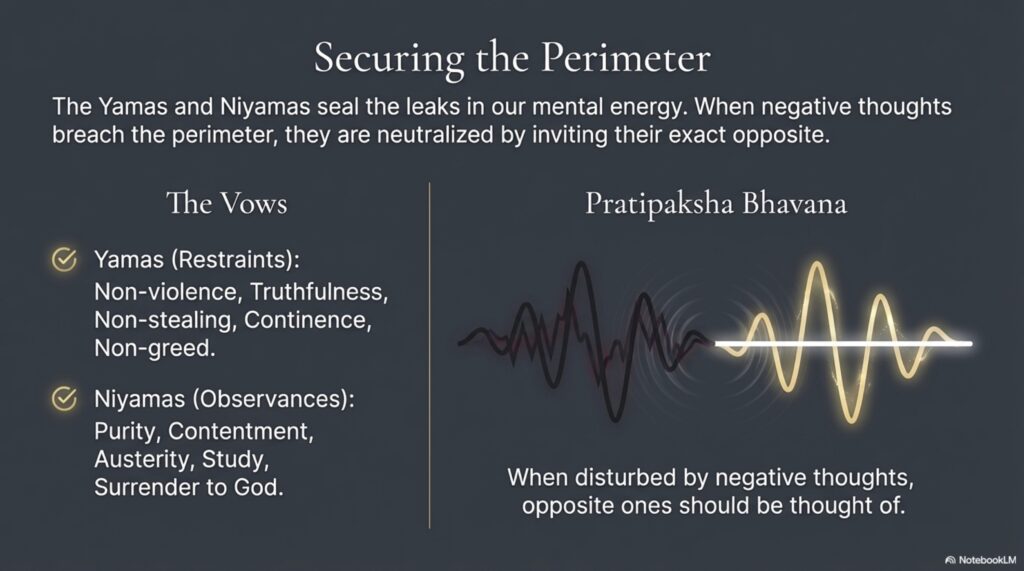
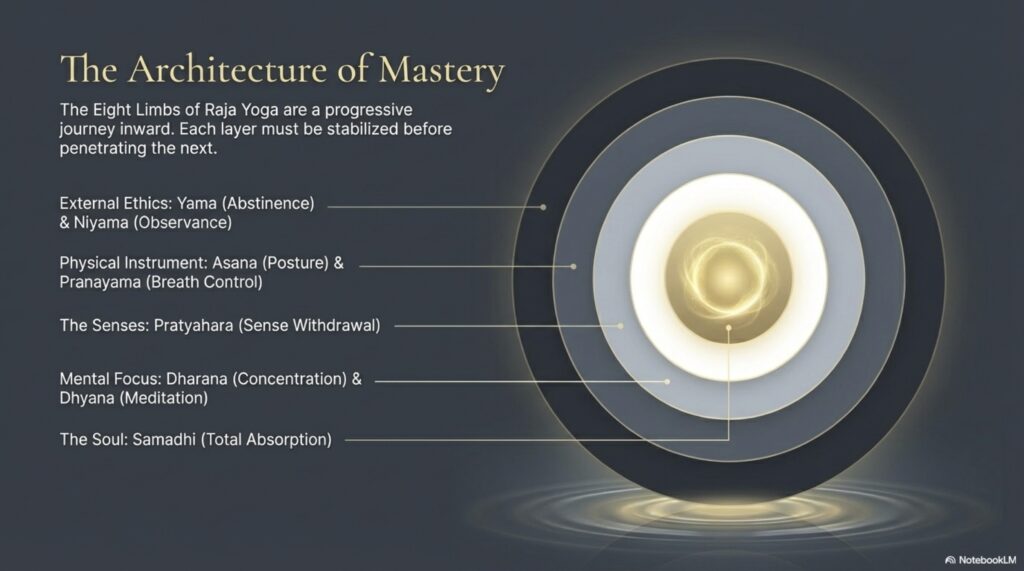
- It lays out the eight limbs: yama, niyama, āsana, prāṇāyāma, pratyāhāra, dhāraṇā, dhyāna, samādhi, a graded path of discipline and meditation.
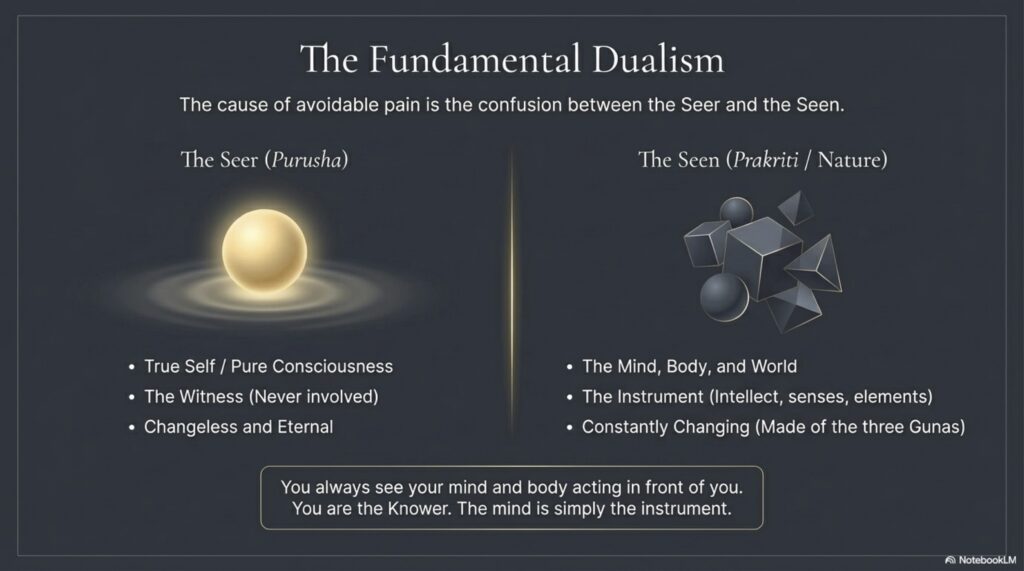
- Philosophically it is rooted in Sāṅkhya dualism: puruṣa (consciousness) and prakṛti (nature) are distinct principles.
Main convergence
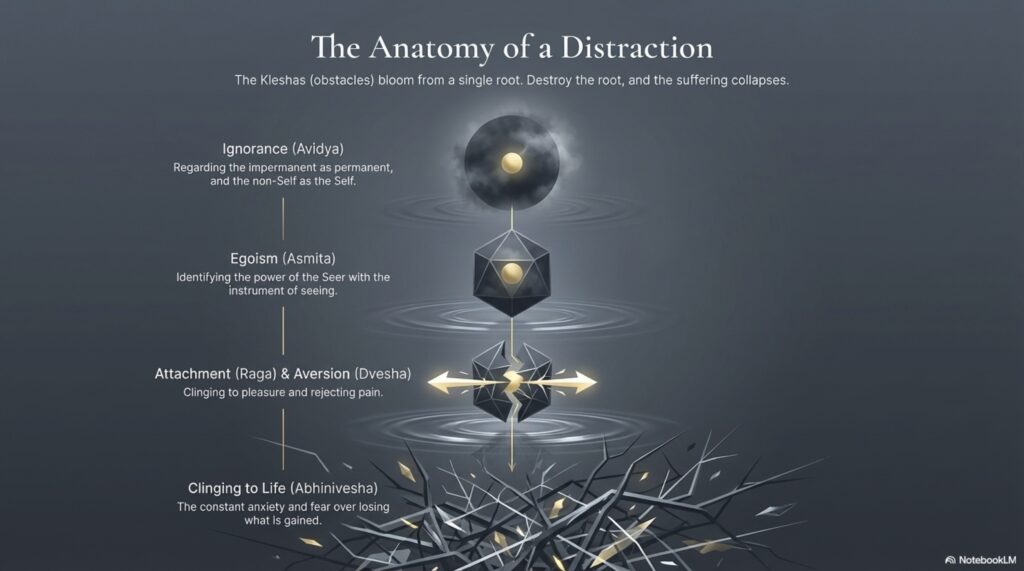
- Both treat suffering as rooted in ignorance and misidentification with mind-body; both aim at direct recognition of pure awareness (puruṣa / Atman).
- Both use deep meditation and stilling of thought as the “laboratory” where this recognition becomes stable (samādhi).
- In practice, many Advaitins adopt Patañjali’s methods (yama–niyama, āsana, prāṇāyāma, dhyāna) as preparation for nondual insight.
Main divergence
- Ontology: Yoga keeps a real distinction between puruṣa and prakṛti; Advaita says only consciousness (Brahman) is ultimately real, prakṛti/world is dependent appearance.
- Means: Yoga leans more on disciplined practice and graded samādhi; Advaita places the final weight on discriminative knowledge, with meditation serving that insight.
- Result: Yoga speaks of isolation of puruṣa (kaivalya); Advaita speaks of recognizing one’s identity as Brahman, where even the sense of an isolated individual falls away.
A simple way to hold them together
One practical synthesis many teachers use:
- Let the Yoga Sūtras guide how you live and practice (ethics, body–breath, attention, meditation).
- Let Advaita clarify what you are, so practice is oriented toward seeing that the ever-present awareness is untouched, even while practice unfolds.
Leave a Reply