Claude.ai:
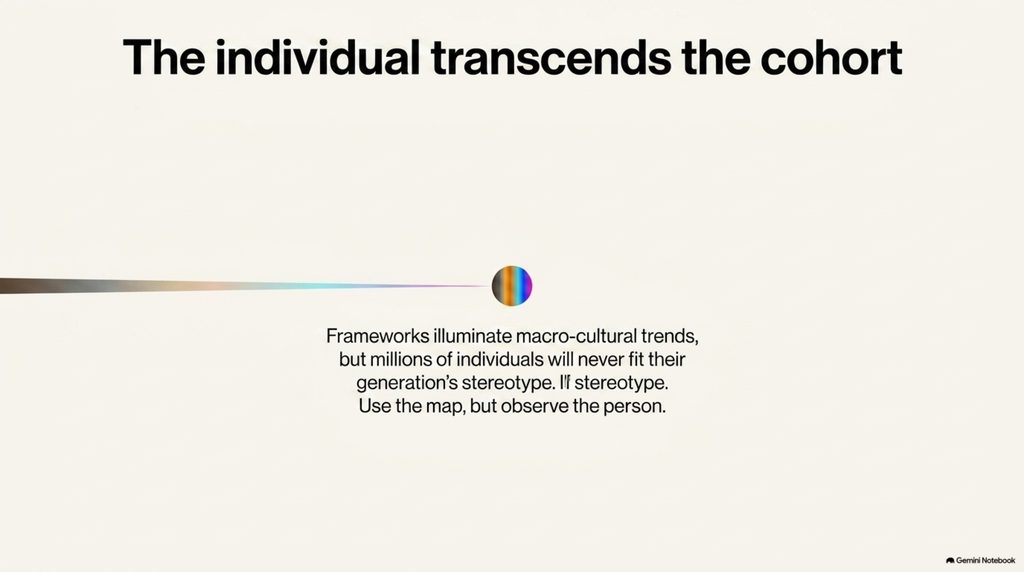
Here’s a table of commonly used generational cohorts, their birth year ranges, and the traits often attributed to them (these labels are generalizations, not hard science — plenty of people don’t fit their generation’s stereotype):
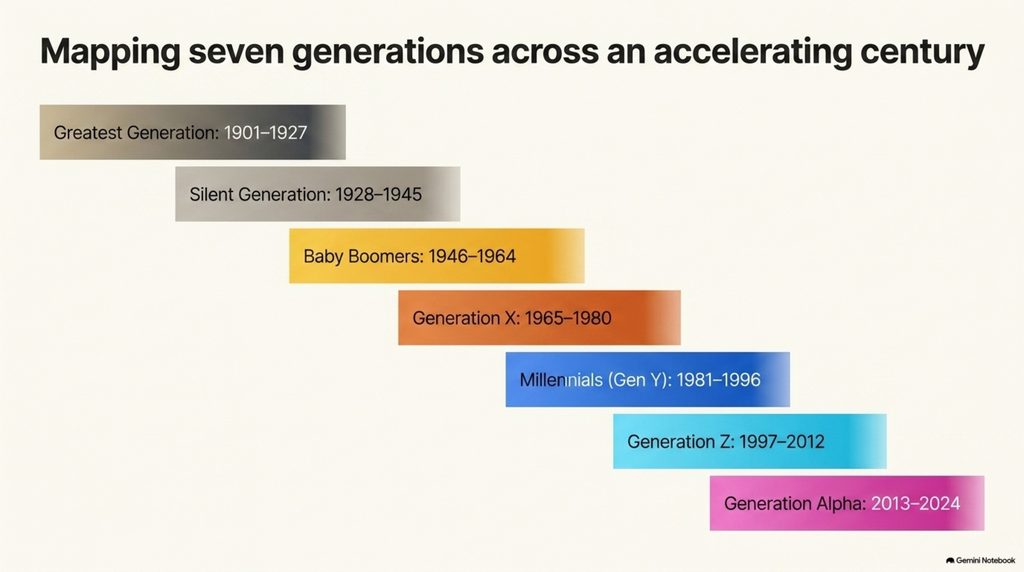
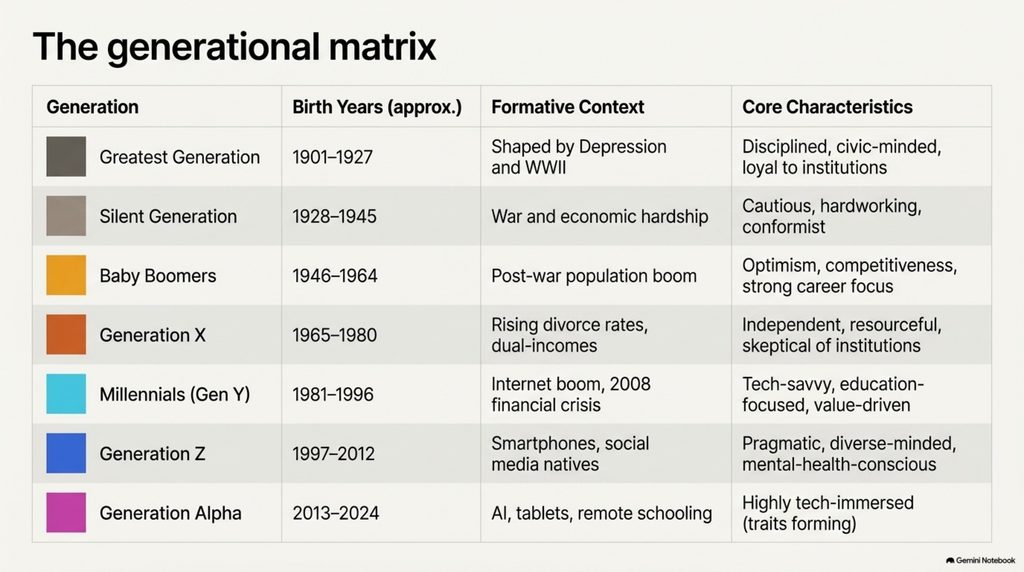
| Generation | Birth Years (approx.) | Commonly Assigned Characteristics |
|---|---|---|
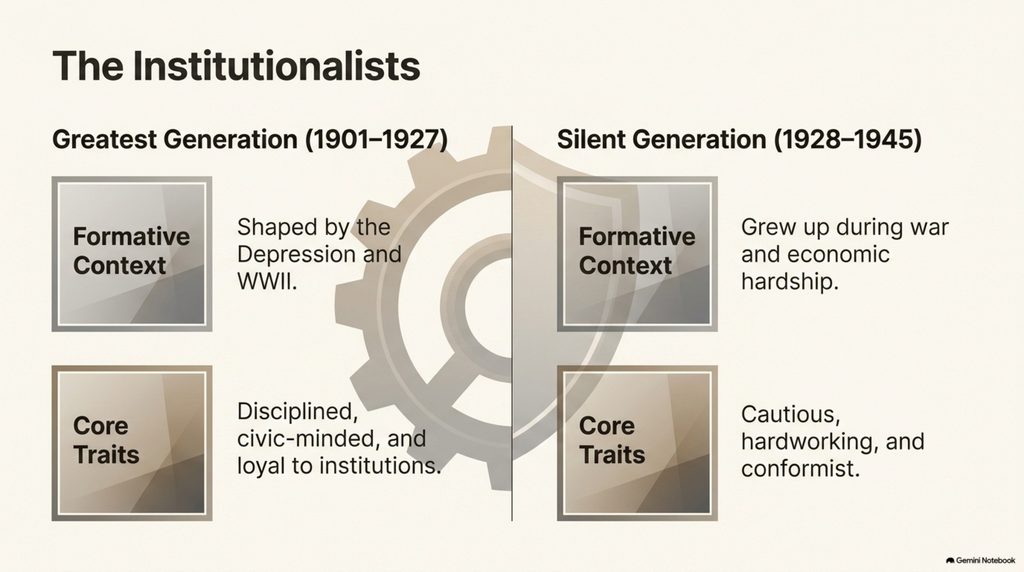
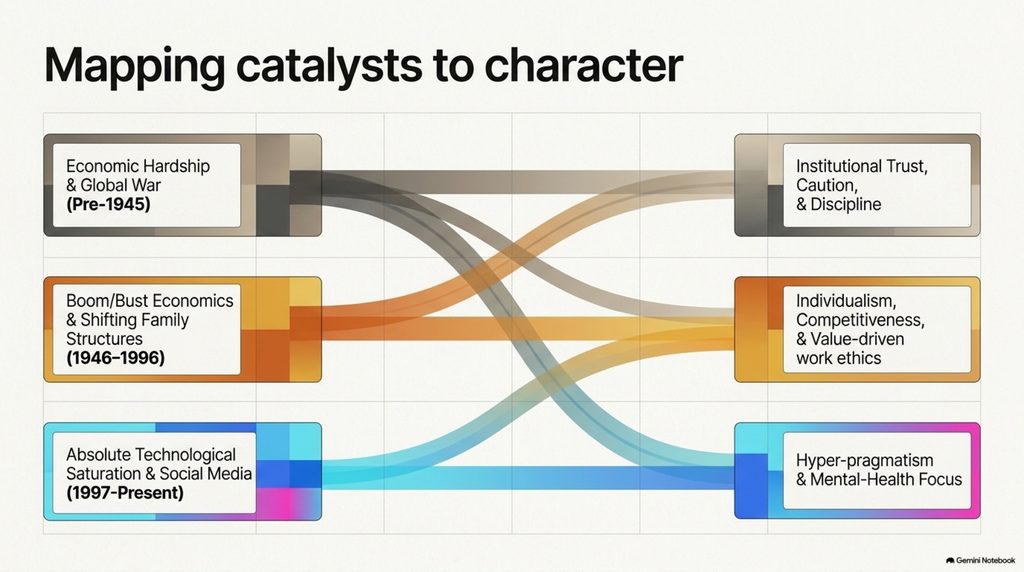
| Greatest Generation | 1901–1927 | Shaped by the Depression and WWII; described as disciplined, civic-minded, and loyal to institutions |
| Silent Generation | 1928–1945 | Grew up during war and economic hardship; often characterized as cautious, hardworking, and conformist |
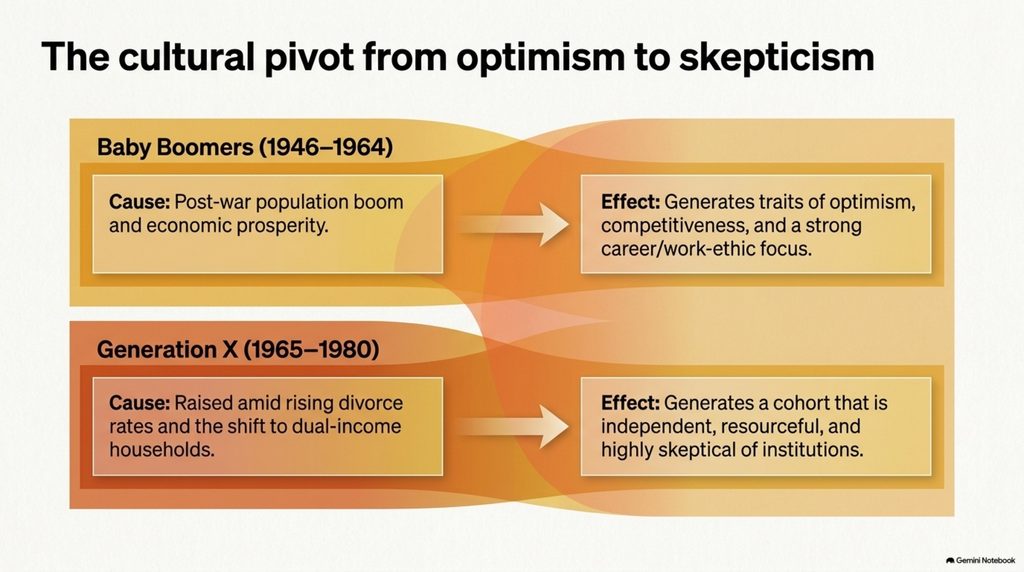
| Baby Boomers | 1946–1964 | Post-war population boom; associated with optimism, competitiveness, and strong career/work-ethic focus |
| Generation X | 1965–1980 | Raised amid rising divorce rates and dual-income households; often called independent, resourceful, and skeptical of institutions |
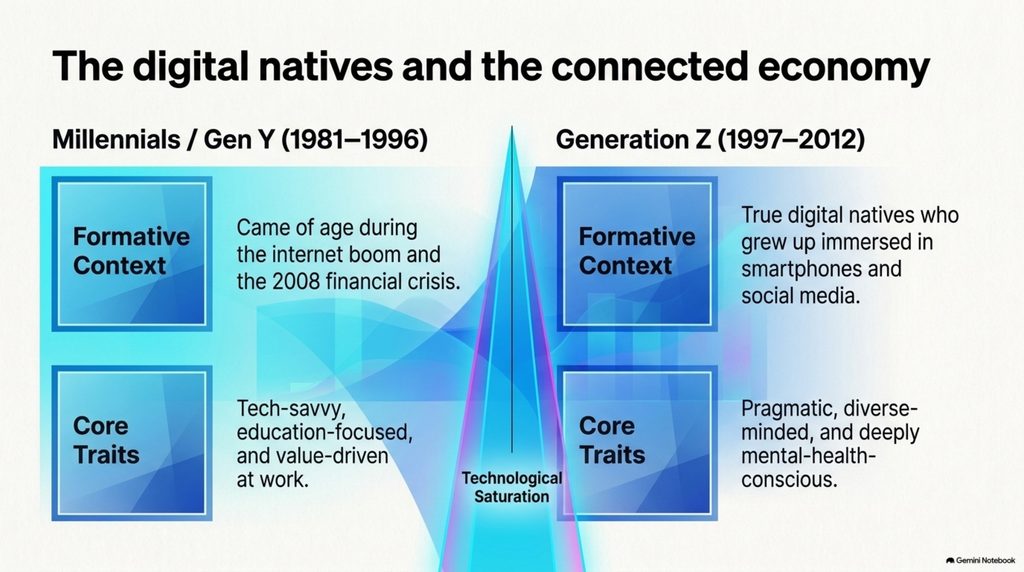
| Millennials (Gen Y) | 1981–1996 | Came of age during the internet boom and 2008 financial crisis; often described as tech-savvy, education-focused, and value-driven at work |
| Generation Z | 1997–2012 | Digital natives who grew up with smartphones and social media; often described as pragmatic, diverse-minded, and mental-health-conscious |
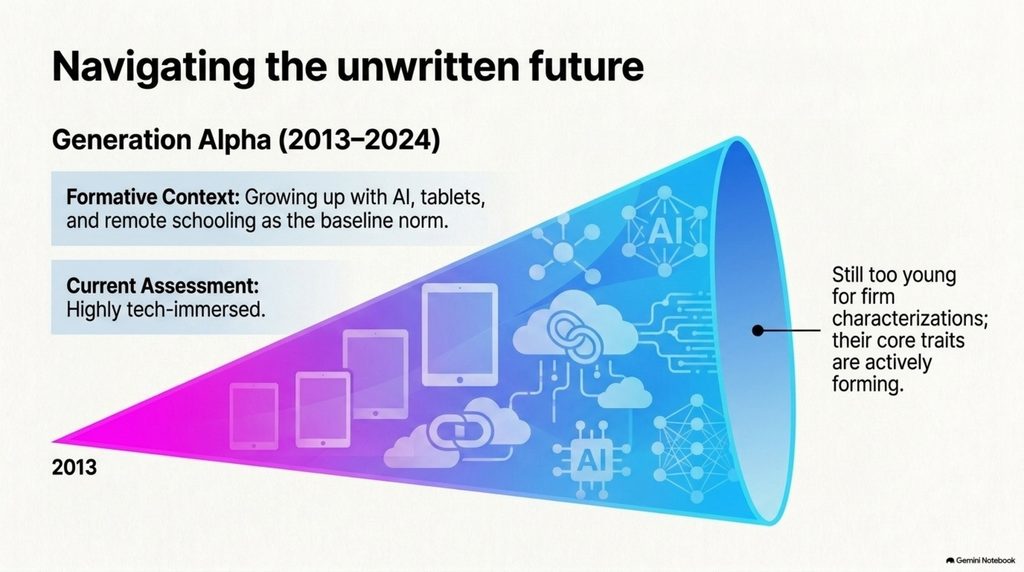
| Generation Alpha | 2013–2024 | Growing up with AI, tablets, and remote schooling as the norm; still too young for firm characterizations, but often noted as highly tech-immersed |
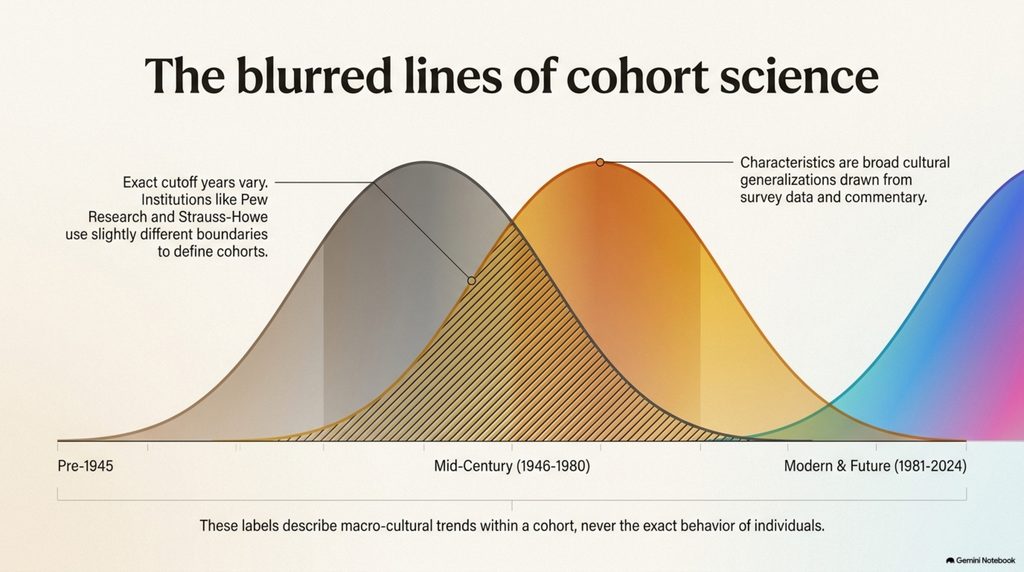
A few caveats worth keeping in mind: the exact cutoff years vary depending on which researcher or institution (Pew Research, Strauss-Howe, etc.) you’re referencing, and the “characteristics” are broad cultural generalizations drawn from survey data and commentary — they describe trends within a cohort, not individuals.
Leave a Reply