Source for this page
NotebookLM’s take (source for the infographics)
Holger: What does Roger say about top-down and bottom-up teachings?
NotebookLM.Google.com:
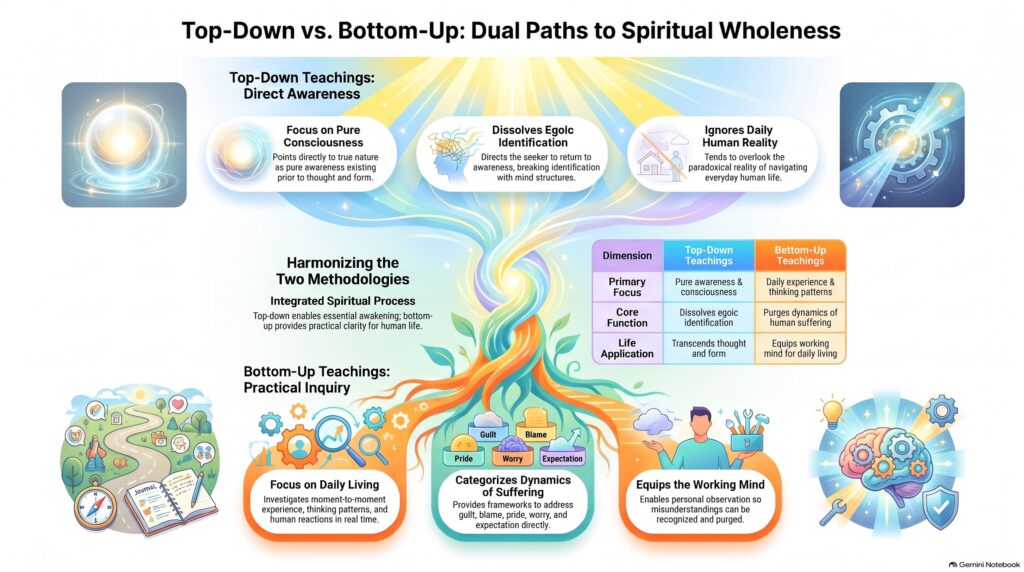
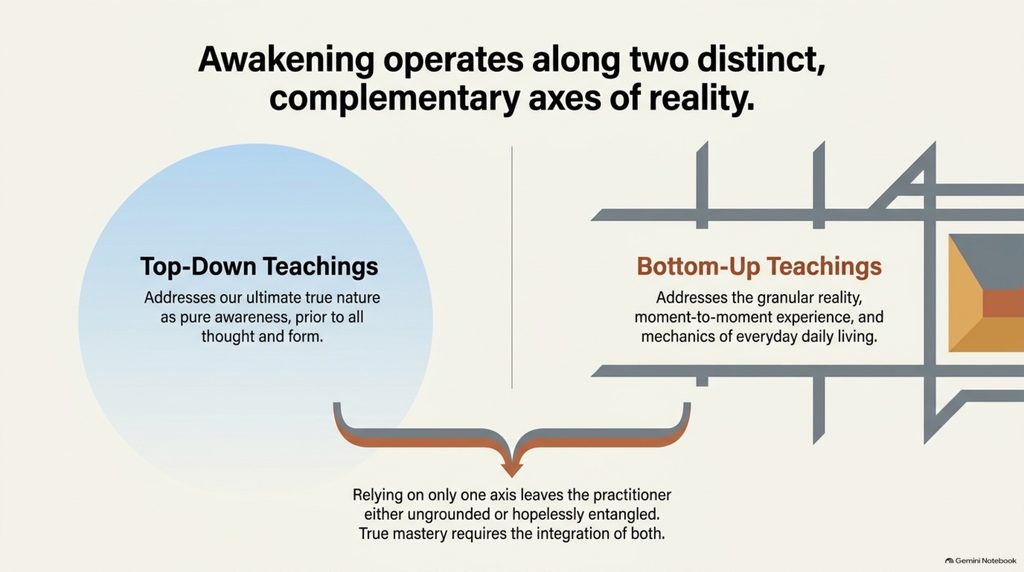
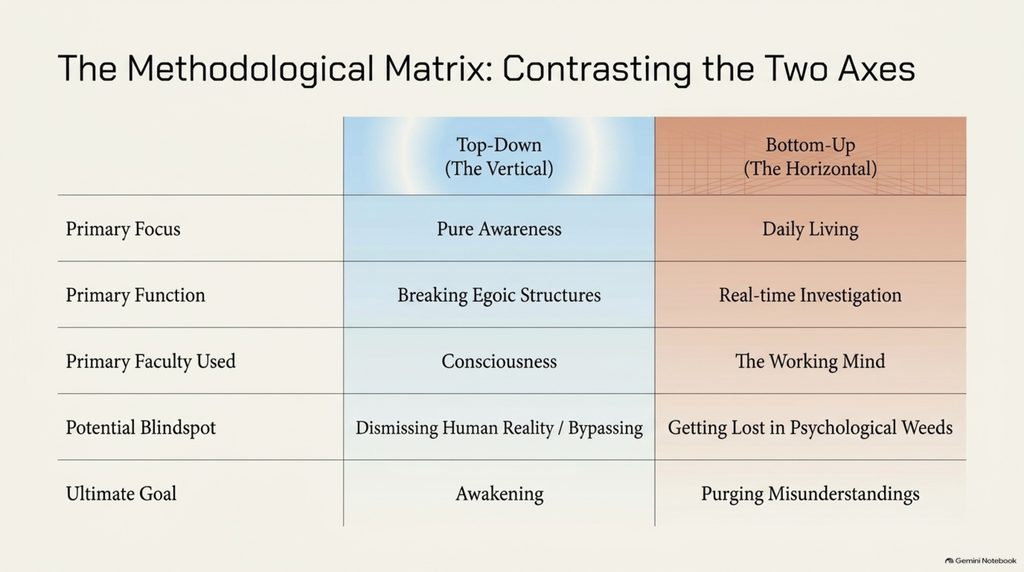
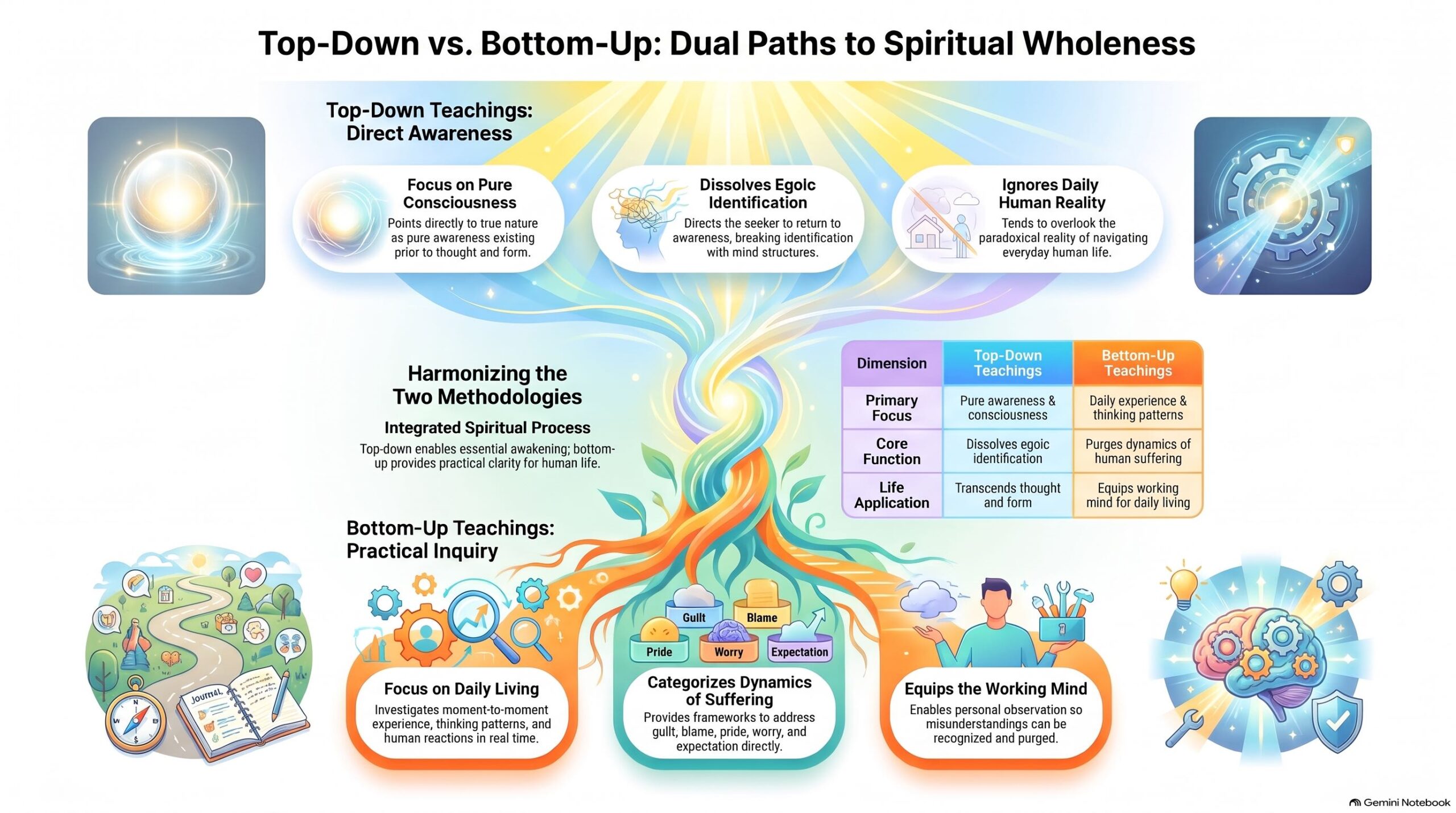
Roger explains that top-down and bottom-up teachings are two distinct yet complementary methodologies that address different stages and aspects of the spiritual process:
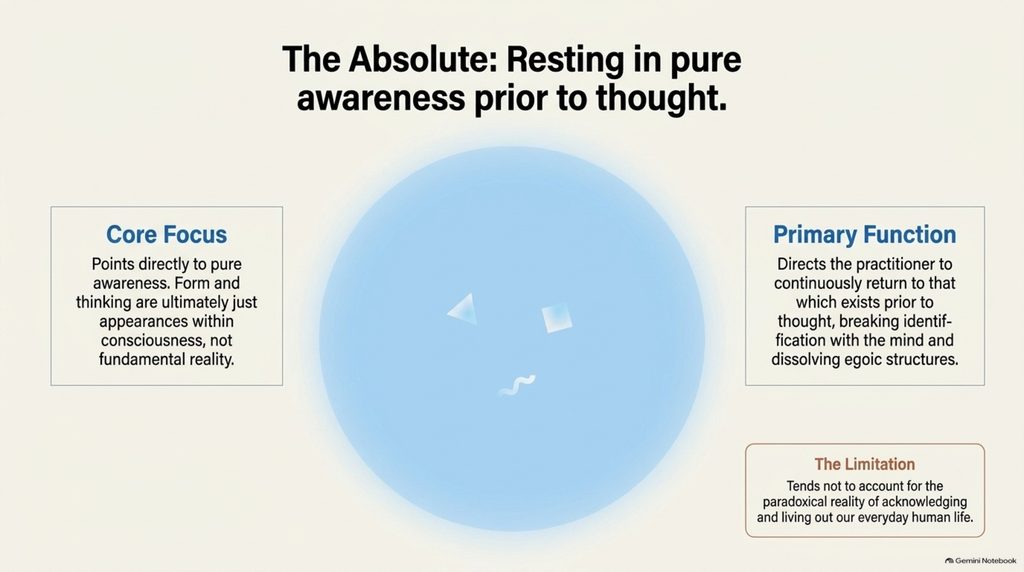
Top-Down Teachings
- Core Focus: Point directly to our true nature as pure awareness or consciousness, emphasizing that form and thinking are ultimately appearances in consciousness rather than fundamental reality.
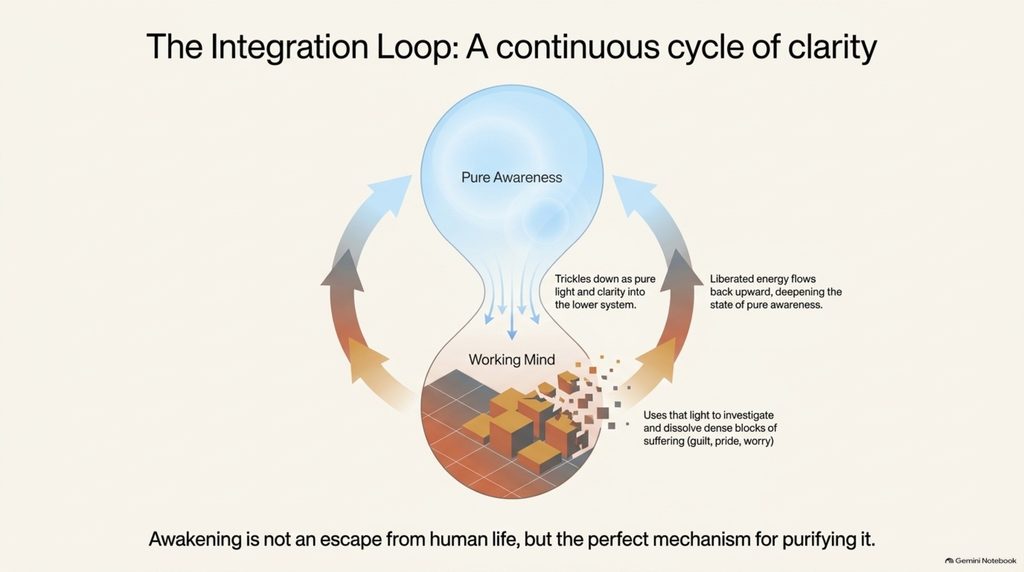
- Function: They direct the seeker to return continuously to that which exists prior to thought and form, which has immense power in breaking identification with the mind and dissolving egoic structures.
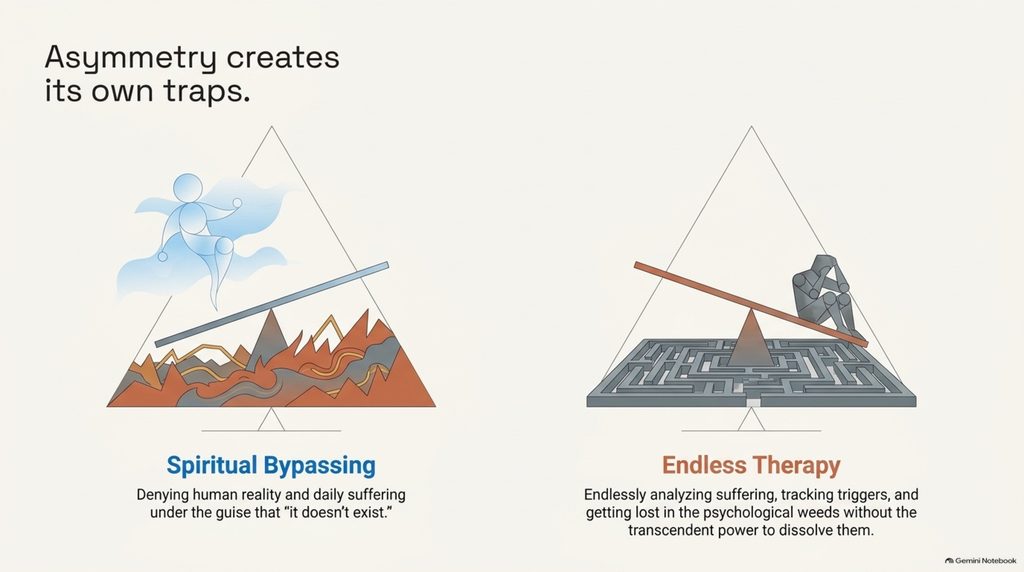
- Limitation: They tend not to account for the paradoxical reality of acknowledging and living out our everyday human life.
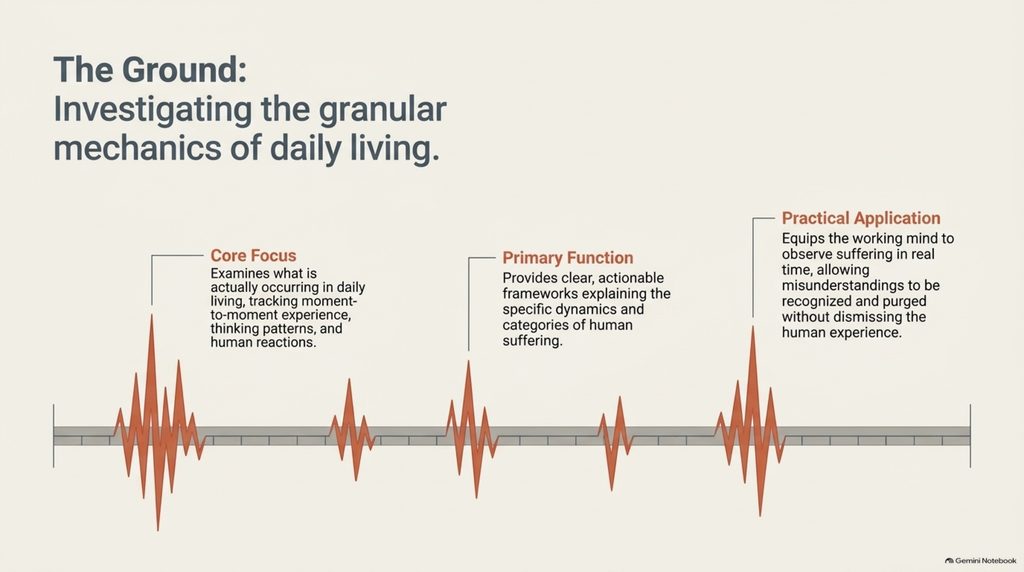
Bottom-Up Teachings
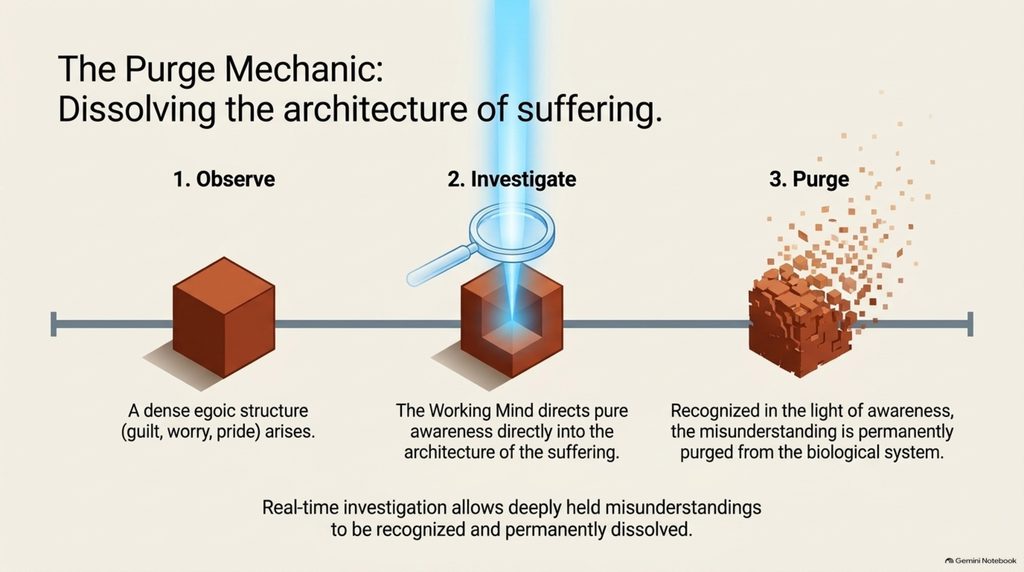
- Core Focus: Examine what is actually occurring in daily living, investigating moment-to-moment experience, thinking patterns, and human reactions.
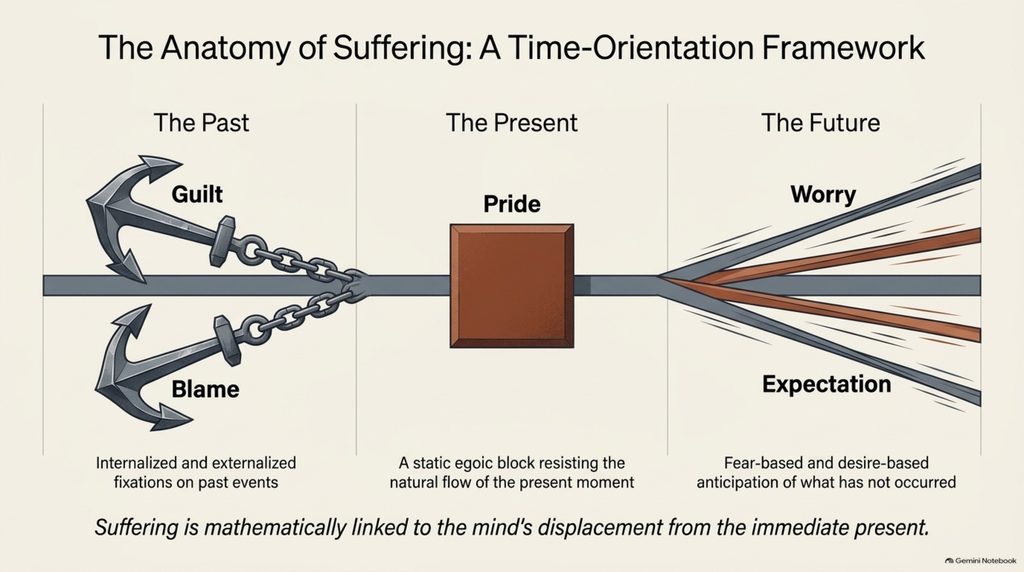
- Function: Rather than dismissing human experience with “it doesn’t exist,” bottom-up teachings provide clear frameworks explaining the specific dynamics and categories of suffering (such as guilt, blame, pride, worry, and expectation).
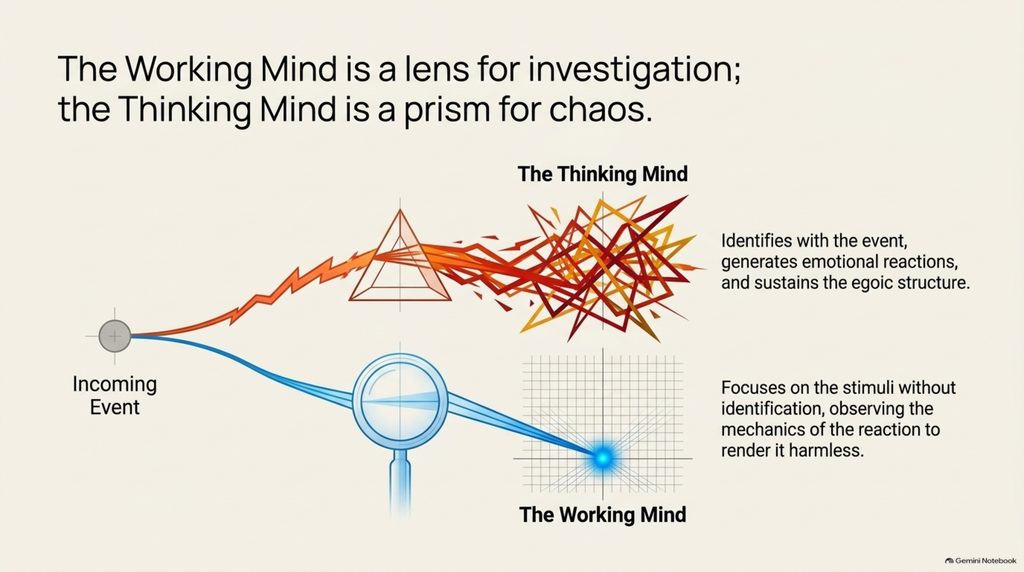
- Practical Application: They equip the working mind to conduct personal investigation and observe suffering in real time as it arises in daily life, allowing misunderstandings to be recognized and purged from the system.
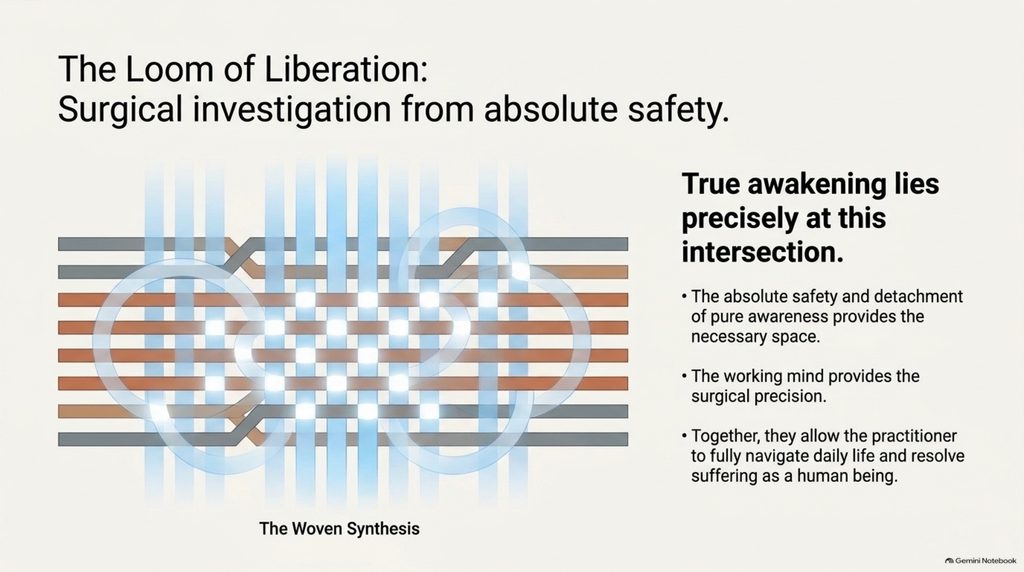
How They Work Together
Roger weaves both methodologies into his teaching. While top-down teachings facilitate the essential awakening to pure awareness, bottom-up teachings provide the practical clarity needed to navigate daily life and resolve suffering as a human being.
💡 I can detail Roger’s explanation of the five specific forms of suffering (guilt, blame, pride, worry, expectation) or elaborate on how he distinguishes the working mind from the thinking mind.
Leave a Reply