Holger@RiverOfInternet.com:
What does Salvadore Poe share about the “Phantom I” and “Rising I”, they are basically the same?
NotebookLM:
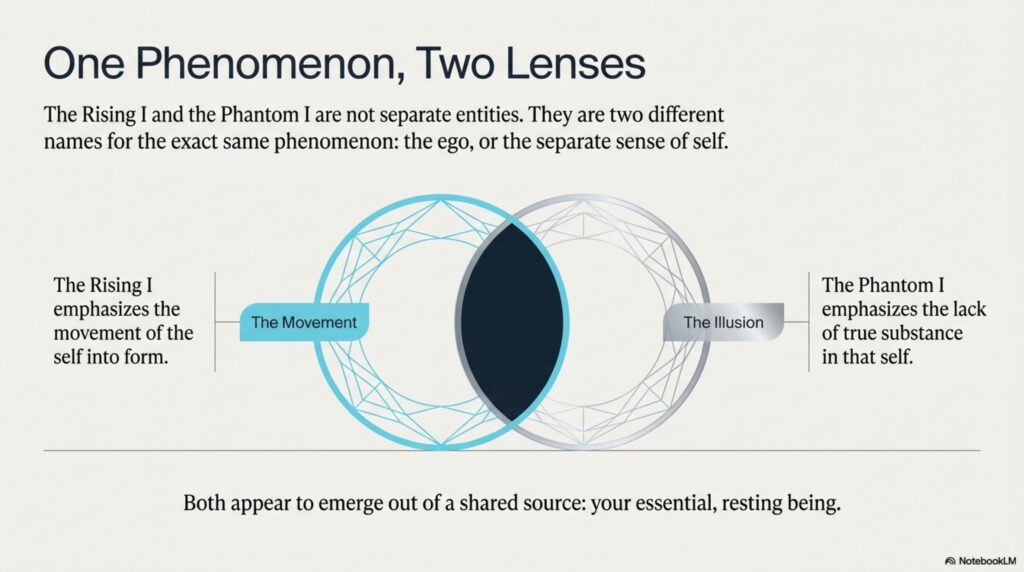
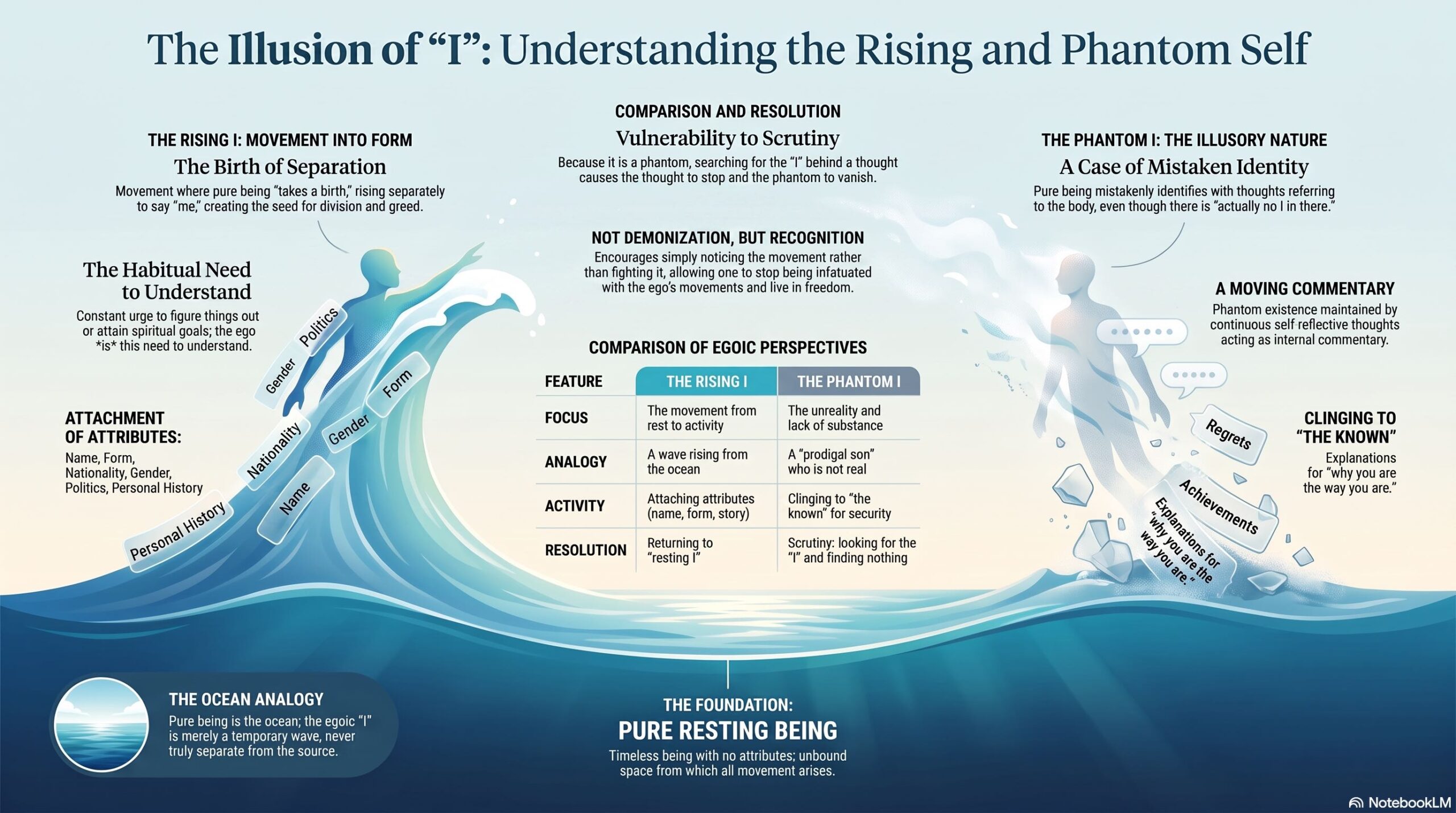
Salvadore Poe describes the “Rising I” and the “Phantom I” as different names for the same phenomenon:
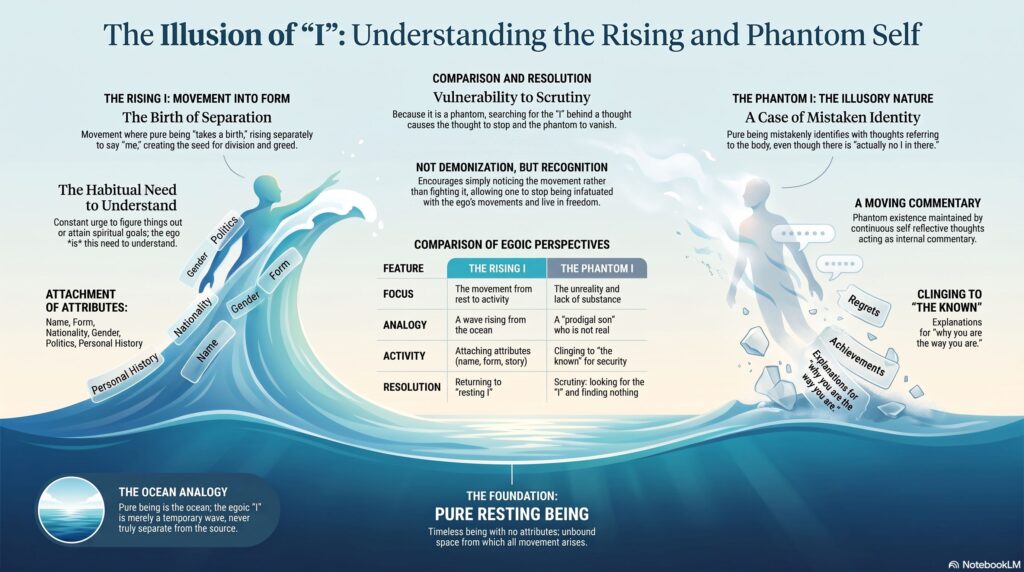
… the ego or the separate sense of self that appears to emerge out of your essential, resting being. While they refer to the same egoic movement, the terms emphasize different aspects of how this “self” functions and its lack of true substance.
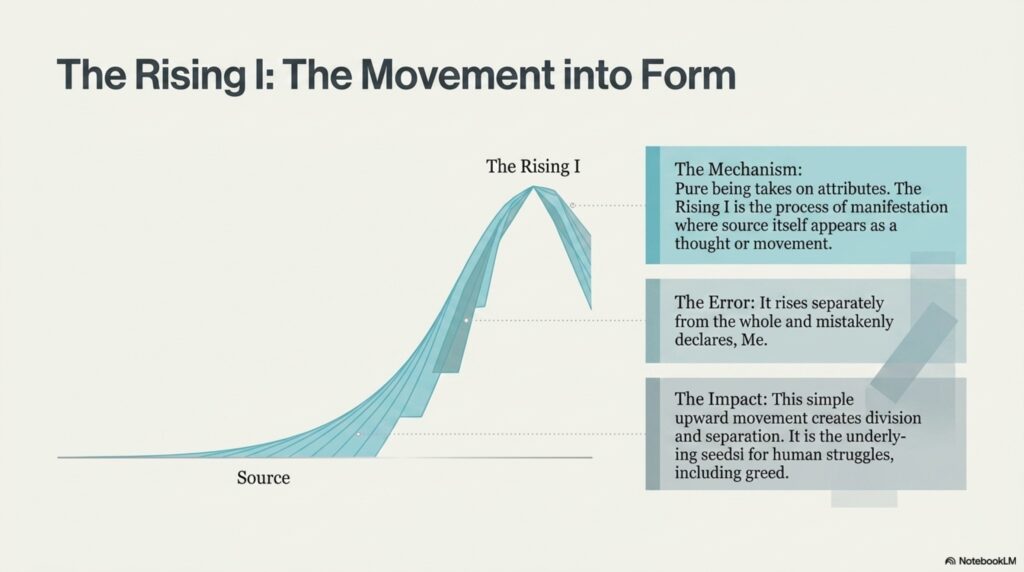
The Rising I: The Movement into Form
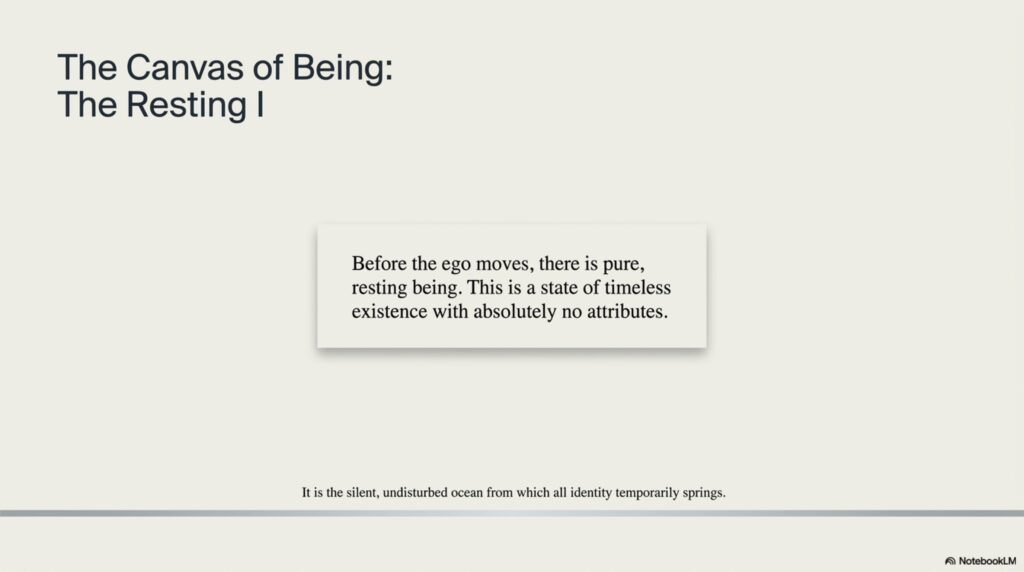
The “Rising I” (or “rising self”) refers to the process of manifestation where pure, resting being takes on attributes.
- Birth of Separation: Poe describes “resting I” as timeless being with no attributes, while the “Rising I” is the ego that “rises separately and says me”. This rising is what creates division, separation, and the “seed for very terrible things” like greed.
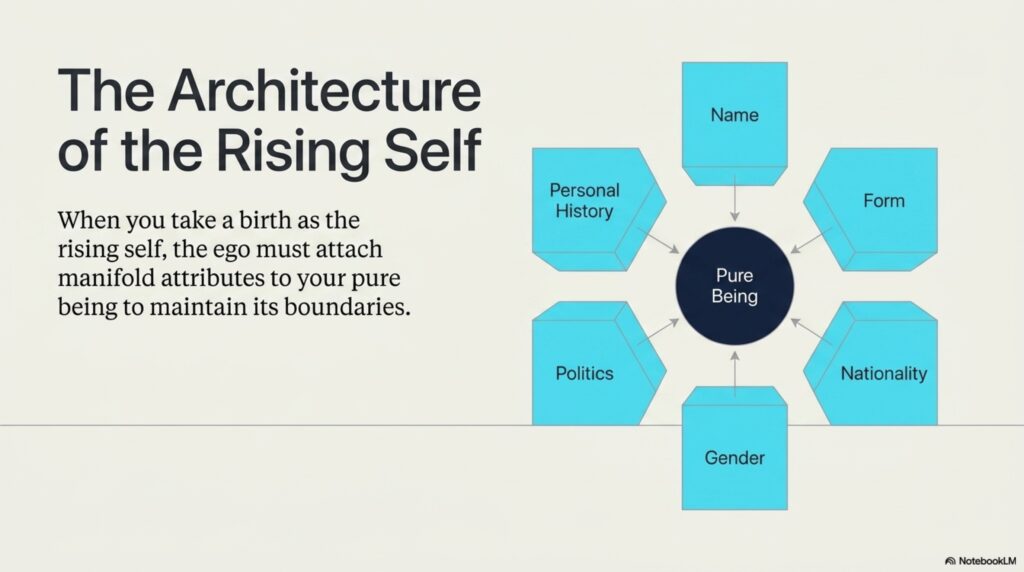
- Attachment of Attributes: When you “take a birth” as the rising self, you attach manifold attributes to your pure being, such as name, form, nationality, gender, politics, and personal history.
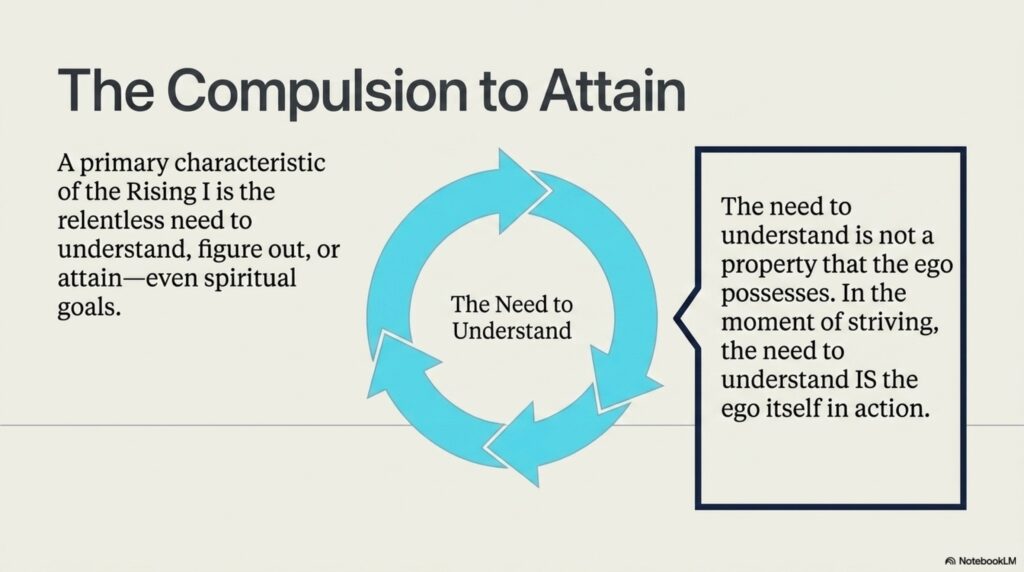
- The Need to Understand: A primary characteristic of the Rising I is the habitual need to understand, figure out, or attain spiritual goals. Poe asserts that the “need to understand” is not something the ego has, but is actually what the ego is in that moment.
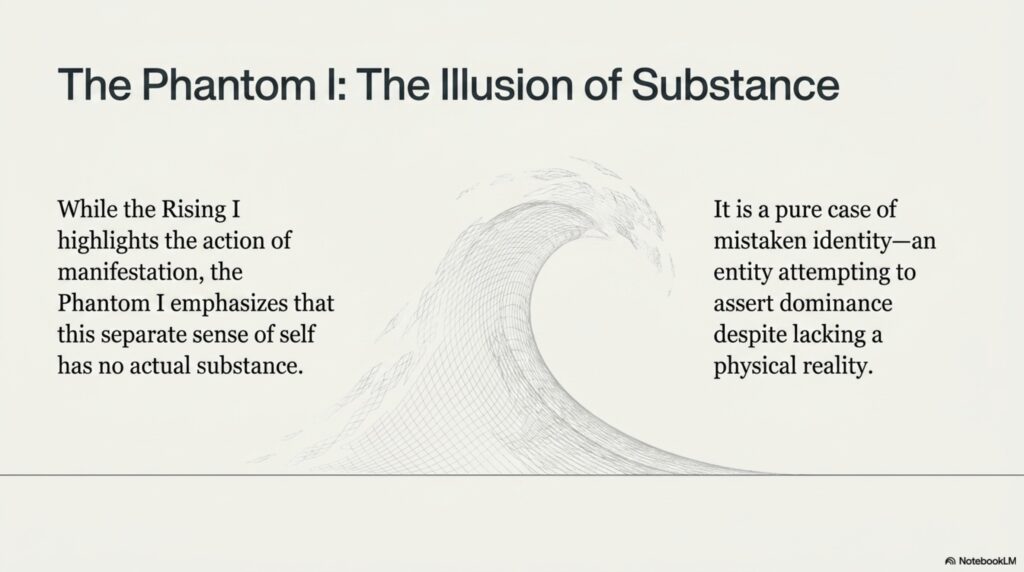
- A Temporary Wave: He likens the Rising I to a wave appearing on the surface of the ocean. Just as a wave is not separate from the ocean, the Rising I is actually “source itself” appearing as a thought or movement, though it mistakenly believes it is a separate entity.
The Phantom I: The Illusory Nature of Self
The term “Phantom I” emphasizes that this separate sense of self has no actual substance and is a “case of mistaken identity”.
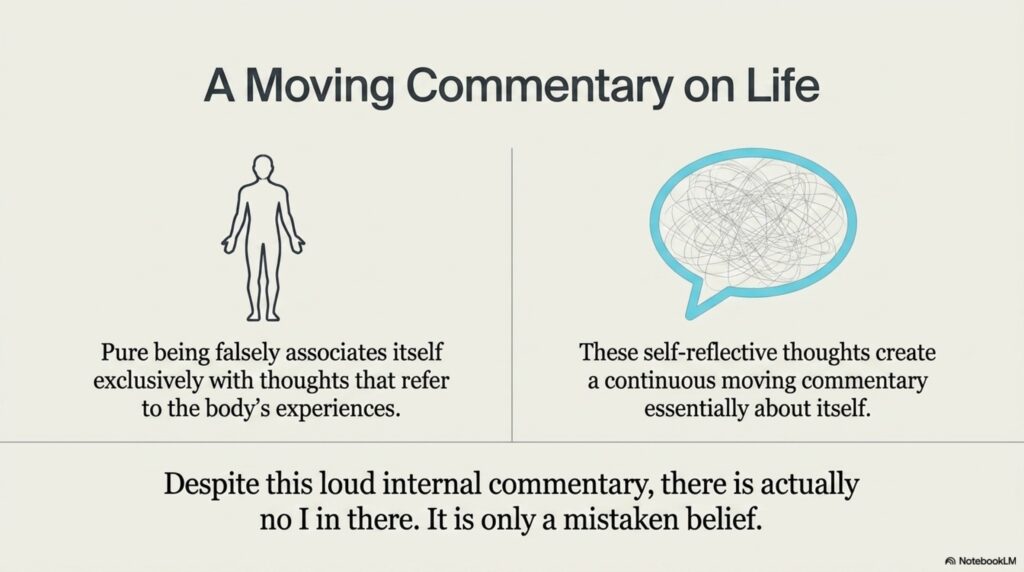
- Mistaken Identity: The Phantom I arises when pure being associates itself with thoughts that refer to the body. Poe explains that while thoughts refer to the body’s experiences, there is “actually no I in there”; it is only a “mistaken belief” that pure being is exclusively that limited form.
- Self-Reflective Thoughts: The phantom is essentially a “moving commentary on life”. It consists of thoughts that are “essentially about itself,” creating a “phantom existence” to maintain its dominance.
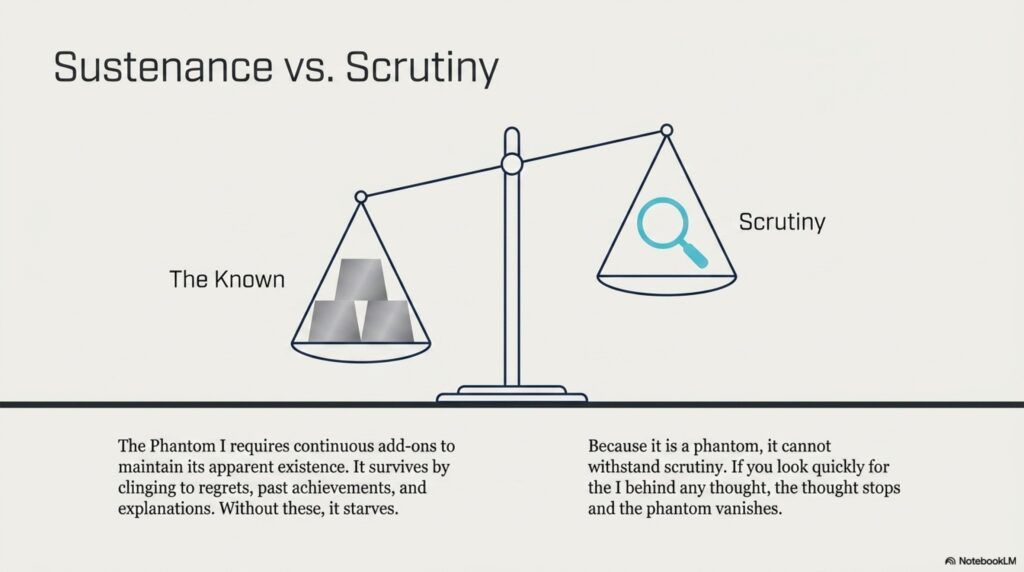
- Vulnerability to Scrutiny: Because it is a phantom, it “can’t withstand scrutiny”. Poe suggests that if you look quickly for the “I” behind a thought, the thought stops and the phantom vanishes because it is not an actual “thing”.
- The Known: The Phantom I requires “the known”—such as regrets, achievements, or explanations for why you are the way you are—to maintain its existence. Without these “add-ons,” its apparent existence ends.
Relationship and Comparison
Poe explicitly links the two terms, stating that “the one who needs to know is the phantom eye, the rising eye, the ego”.
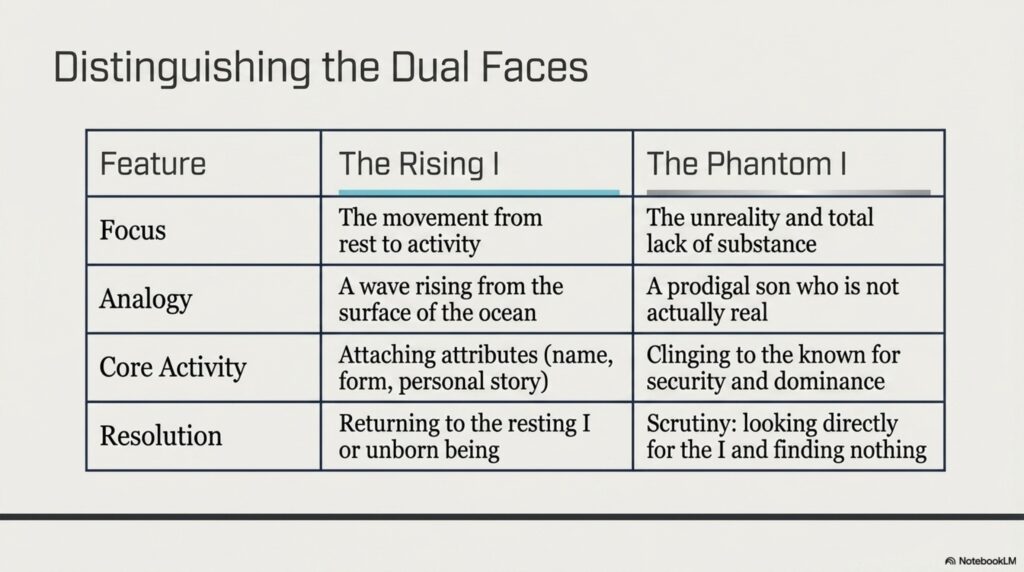
| Feature | The Rising I | The Phantom I |
|---|---|---|
| Focus | The movement from rest to activity. | The unreality and lack of substance. |
| Analogy | A wave rising from the ocean. | A prodigal son who is not real. |
| Activity | Attaching attributes (name, form, story). | Clinging to “the known” for security. |
| Resolution | Returning to “resting I” or “unborn being”. | Scrutiny; looking for the “I” and finding nothing. |
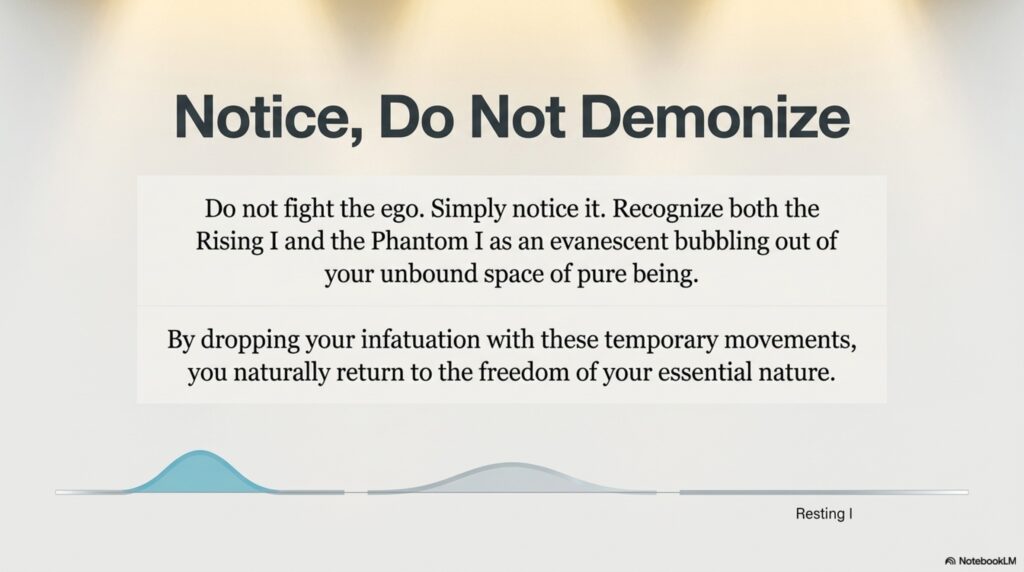
Ultimately, Poe does not “demonize” this movement; he simply encourages you to notice it. By recognizing the Rising/Phantom I as an evanescent bubbling out of your “unbound space of pure being,” you can stop being “infatuated” with its movements and live in the freedom of your essential nature.
Leave a Reply