Thank you Russ Konieczny
for your sharing
at the Garden Of Friends:
Some ai creations, based on the SoundCloud recordings:
Memo Ai App (after listening for 93 minutes)
Awareness and Peace
Action Items
- Ask yourself if you are aware
- Test awareness in experience
- Revisit peaceful awareness through the day
- Try the three suggested practices
Insights
- Awareness is inherently peaceful
- Test awareness in experience
- Identity shifts beyond ego
- Peace remains through change
Overview …
| Concept | Detail |
|---|---|
| Awareness | Inherently peaceful and constant |
| Core practice | Become aware of awareness |
| Meditation | Direct or indirect approach |
| Ego | Separate self, not true core |
| Suffering | Comes from separateness illusion |
| Love | Shared unity with others |
| Death | Awareness not subject to decay |
| Reality | Awareness shared with everything |
[[2026-08-17]] This note presents awareness as the central practice, the core of identity, and a practical basis for peace.
Being aware
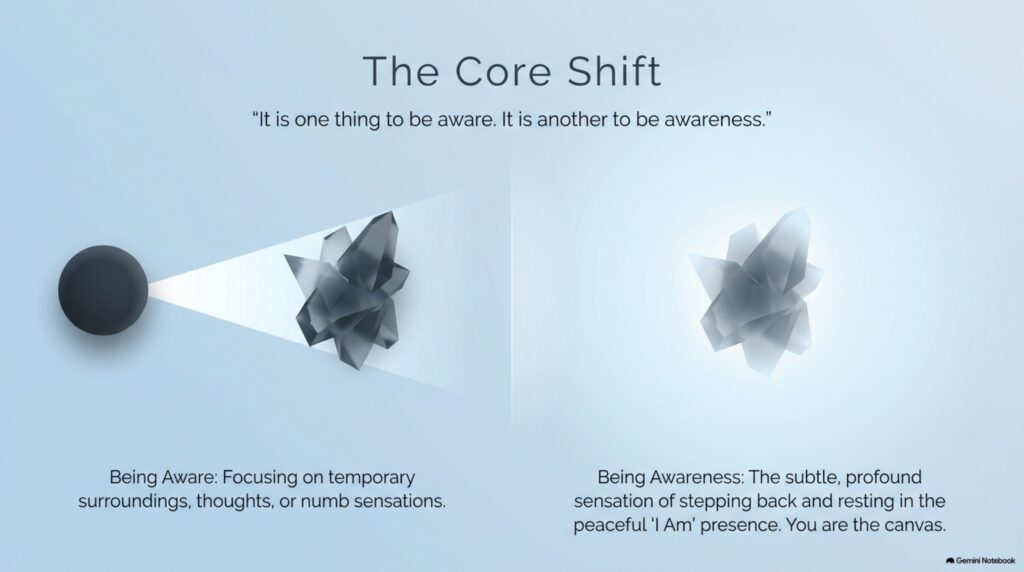
The starting point is simple awareness, not a dramatic or mystical state. The key turn is to become aware of being aware.
- Awareness can include surroundings, body, emotions, or numbness.
- A focused version settles into the fact of being aware.
- A background version stays present while daily activity continues.
Awareness is presented as the center of the series and as a direct way to explore identity, practical life, and inner tensions.
Awareness is everything.
Peace
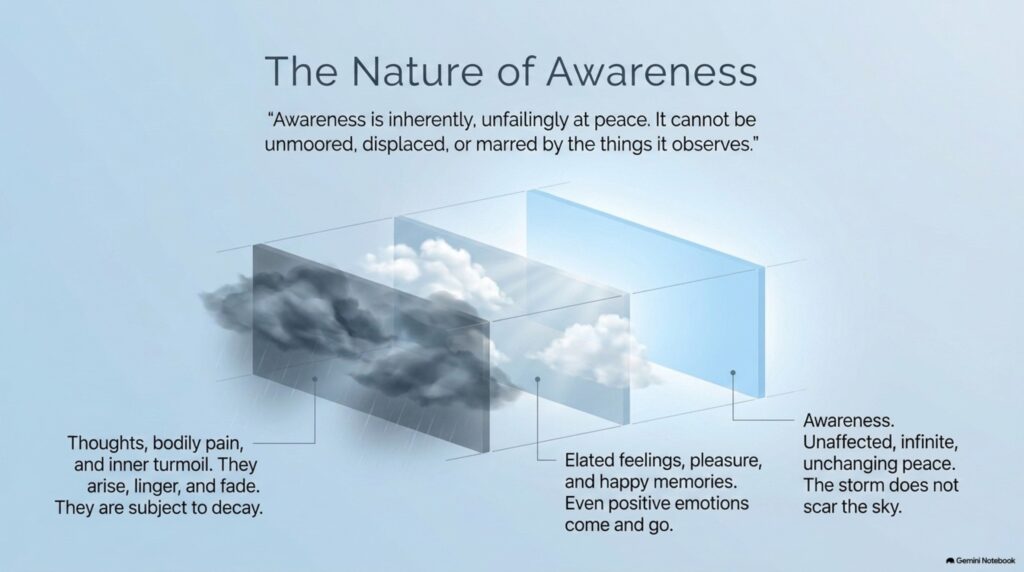
Awareness is described as inherently peaceful even when what appears in experience is not. The invitation is to verify this directly rather than believe it.
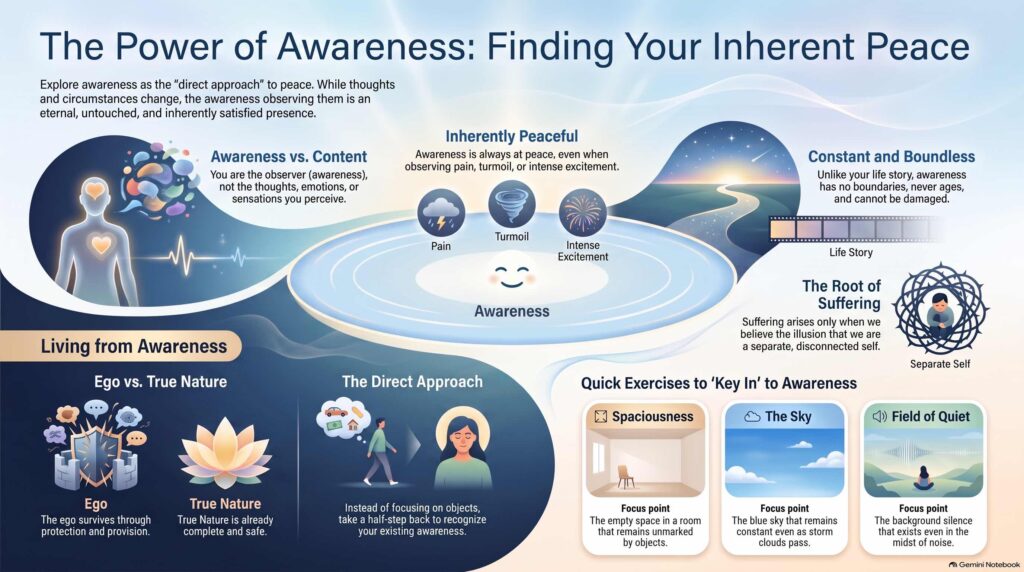
Core test: Notice thoughts, emotions, or pain, and distinguish them from the awareness that knows them.
- Peace is the absence of what disturbs calm satisfaction.
- Thoughts and emotions may be restless, while awareness itself remains peaceful.
- The distinction is between awareness and the content it observes.
- Awareness is described as spirit or consciousness, not mind or emotion.
This becomes the basis of meditation: let what is present be as it is, and notice the peaceful nature of awareness.
Testing it
The same test applies in different conditions.
- Use relatively peaceful moments to notice awareness clearly.
- Use turmoil, bodily pain, or noisy settings to compare content with awareness.
- Use pleasant states and happy memories to see that awareness stays the same in positive experience too.
The claim is that awareness does not get overtaken by what it knows, even if mixed results need later clarification.
Practice
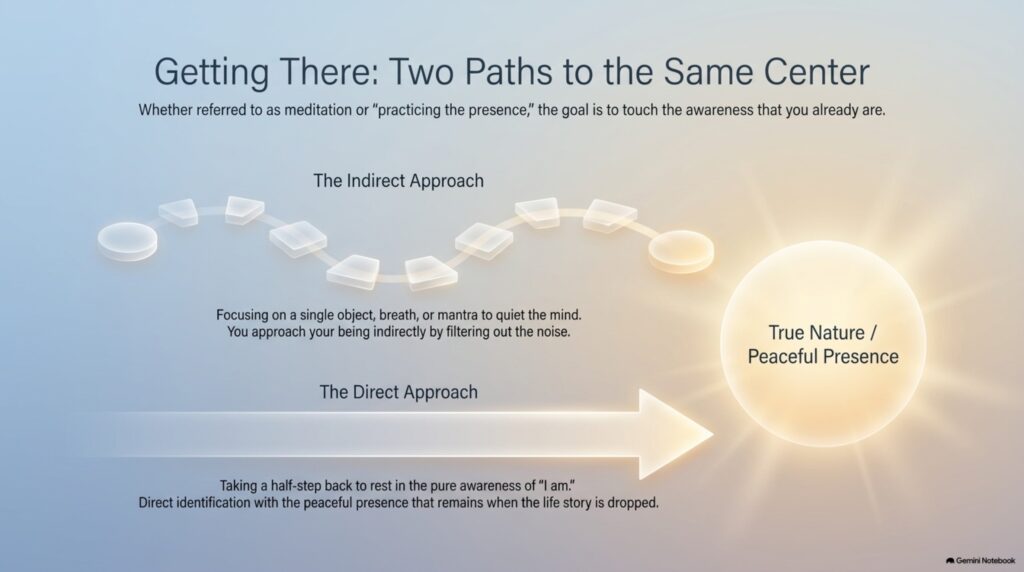
Meditation is framed as getting close to awareness. Different traditions use different entry points, but the aim is the same.
| Direct approach | Enter awareness immediately |
|---|---|
| Indirect approach | Focus through an object |
| Practicing presence | Religious phrasing for meditation |
- Indirect meditation may use breath, flame, text, mantra, or visualization.
- Direct meditation takes a half-step back into awareness itself.
- Neither approach is treated as inherently superior.
Words are only pointers. The experience matters more than the terminology, and people can adapt the language to their own faith background.
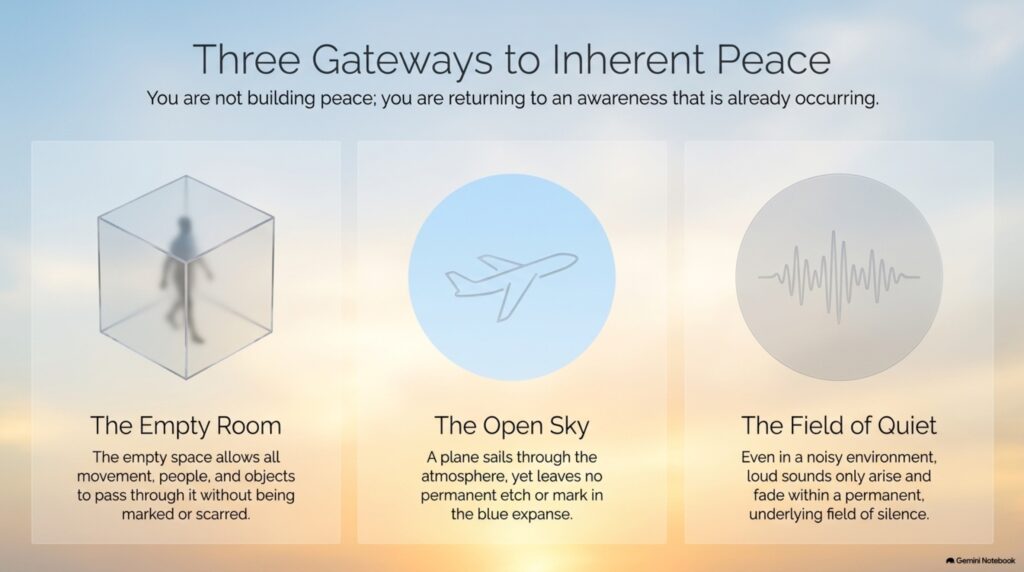
The three suggested practices are:
- Notice empty room space
- Use the sky
- Key into quiet
These images point to openness, unaffectedness, and stillness. Noise can still arise within a field of quiet.
Nature
Awareness is explored as peaceful, constant, and not confined to the personal story. Inquiry asks what its limits actually are.
- Awareness is presented as boundless, unfading, and unchanging.
- Thoughts, emotions, sensations, situations, and people come and go.
- Awareness does not come and go; it simply is.
This creates a distinction between the self-story and an abiding presence. The note treats that abiding presence as a glimpse of true nature.
Identity
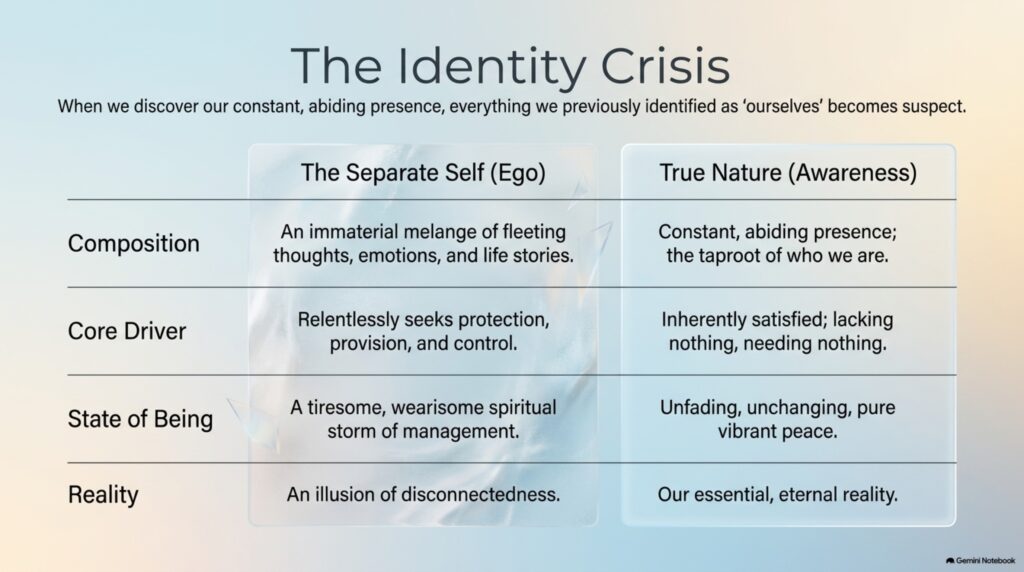
The sense of self becomes less certain once awareness is taken as primary. The usual identity built from thoughts, feelings, body, and biography is treated as unstable by comparison.
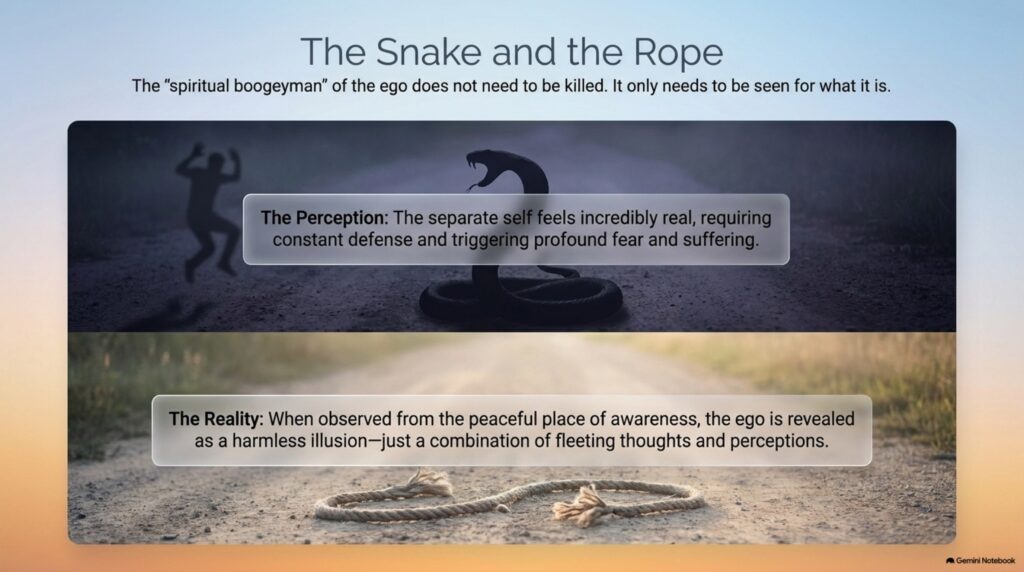
- The ego is the separate self outside peaceful awareness.
- The ego does not need to be destroyed; it needs to be seen for what it is.
- Social identity can remain useful when grounded in awareness.
A recurring contrast appears here: what is thought to be the self changes, while awareness remains constant. This can create a storm around identity before settling.
Suffering
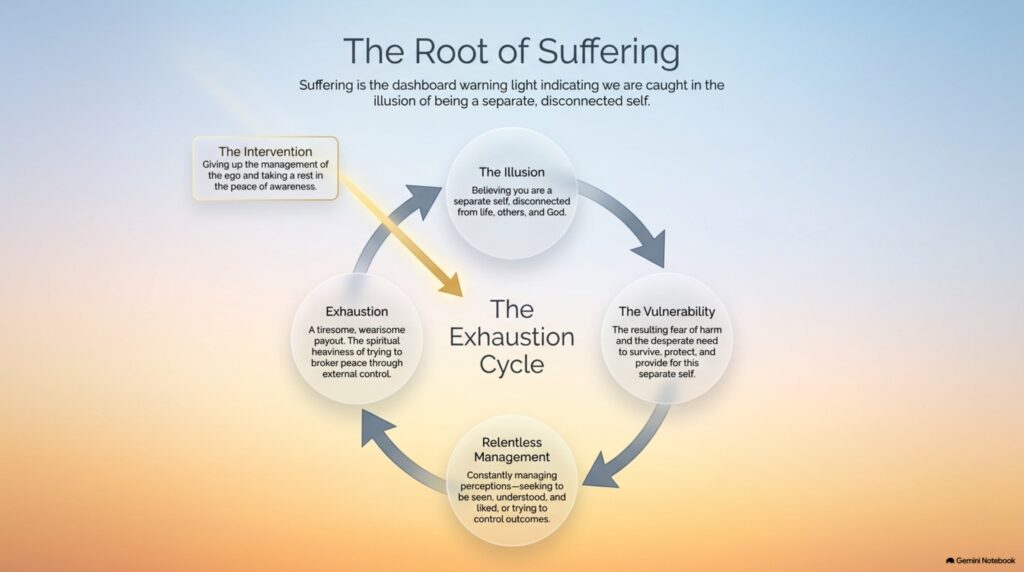
Suffering is traced to the illusion of being a separate self. That illusion drives protection, provision, approval-seeking, and constant self-management.
- A separate self tries to survive by securing love, safety, and understanding.
- Suffering acts like a warning light that signals disconnection from awareness.
- Awareness is not hungry, lonely, or lacking.
The practical response is to return to awareness and rest from managing the ego. In other people, suffering can be heard without needing to argue against it.
Healing
Awareness is applied to relational hurt and past trauma by revisiting memories from a peaceful place. The point is not denial of pain but a shift in identification.
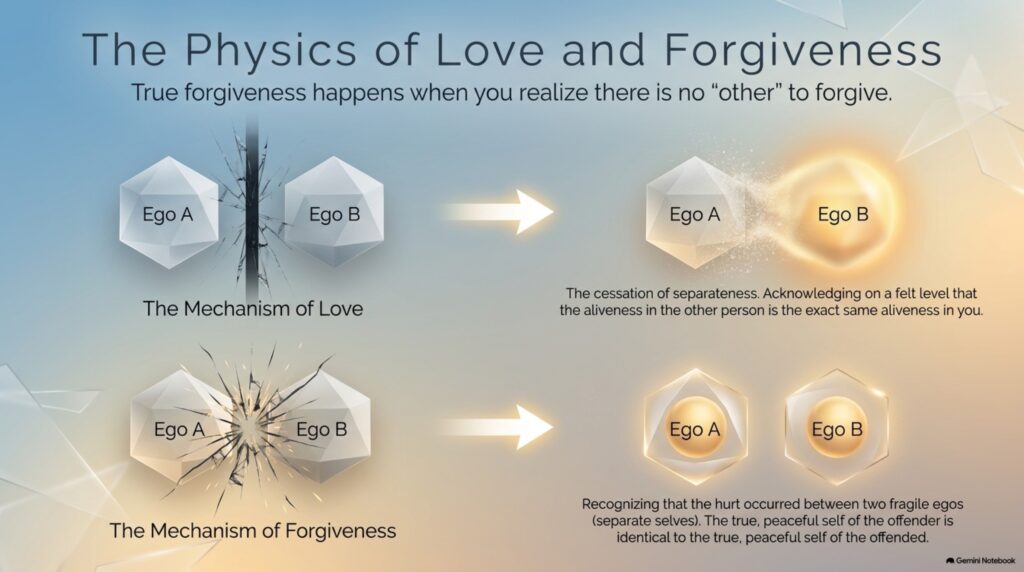
- In conflict, both people are said to share awareness and peace beneath the separate selves.
- Revisiting a painful exchange can reduce sting or shame.
- Trauma can soften when identity shifts to what was never damaged.
The note still leaves room for wise responses to difficult situations later.
Living
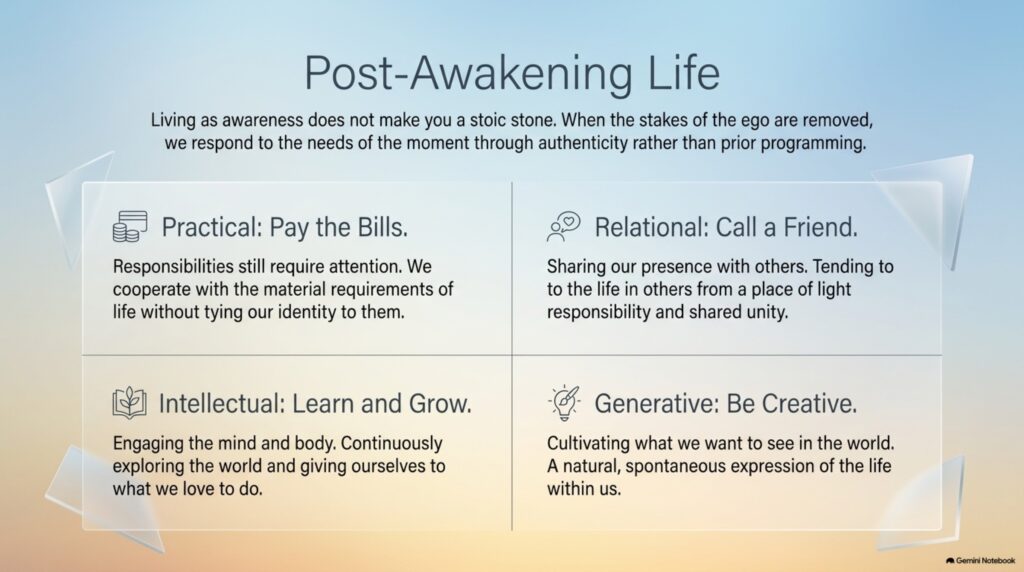
Daily life still includes action, responsibility, and decisions. The difference is that choices no longer determine the peace of one’s core.
- Decision-making becomes lighter because outcomes do not alter awareness.
- Wisdom is often spontaneous when needed.
- Responsibilities still remain: pay bills, clean the house, do what is required.
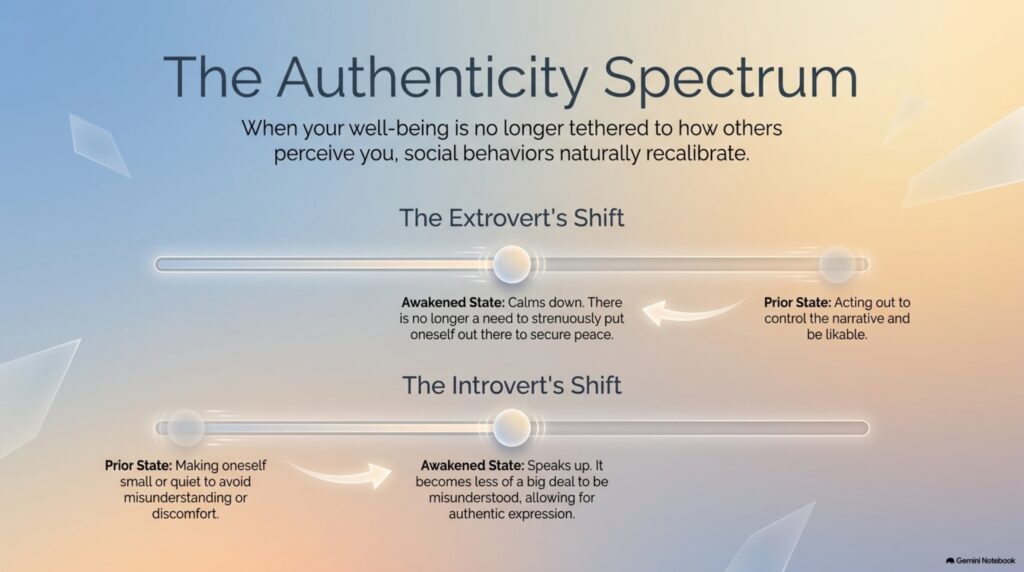
Extroversion and introversion are also reframed. Both can function as strategies for social protection, and both may loosen as stabilization in awareness grows.
Another practical framework is given for life after awakening.
- Pay the bills
- Call a friend
- Learn and grow
- Be creative
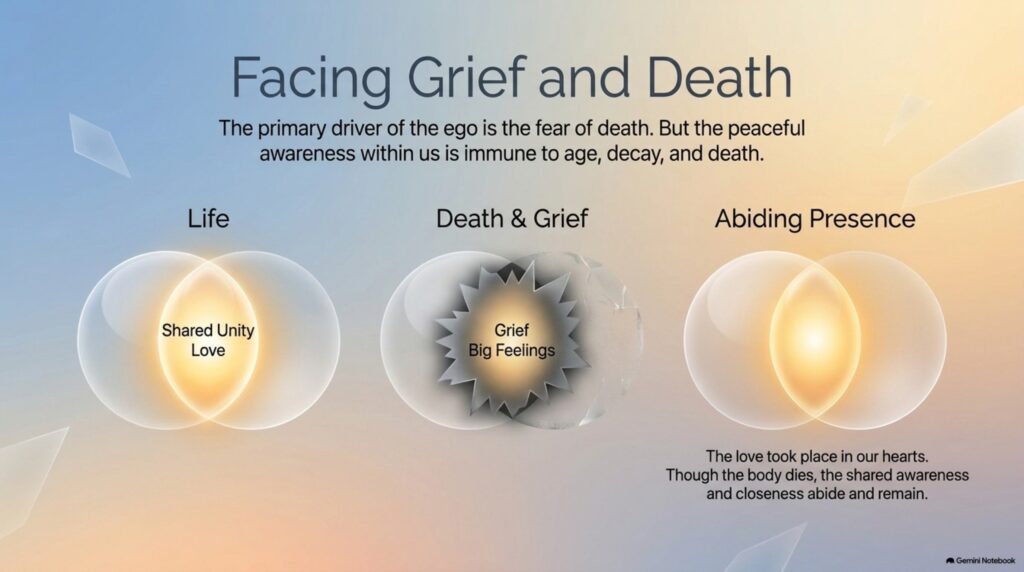
Death
Awareness is described as not subject to aging, decay, or death. The body dies, but awareness is treated as untouched.
- Grief remains real and feelings still need to be felt.
- Peace can anchor the experience of grief without denying loss.
- Love shared with the dead is said to remain accessible in the heart.
The fear of death is presented as a main driver of egoic survival and protection.
Love
Love is defined as shared unity rather than separateness. In its highest moments, the sense of two separate selves relaxes.
- Love is shared consciousness or shared being.
- To love another is to sense the same awareness in them.
- Loving enemies means recognizing that same deepest level, not necessarily liking them.
Forgiveness follows the same structure. It collapses separate identities and sees offender and offended as sharing the same essential awareness.
Reality
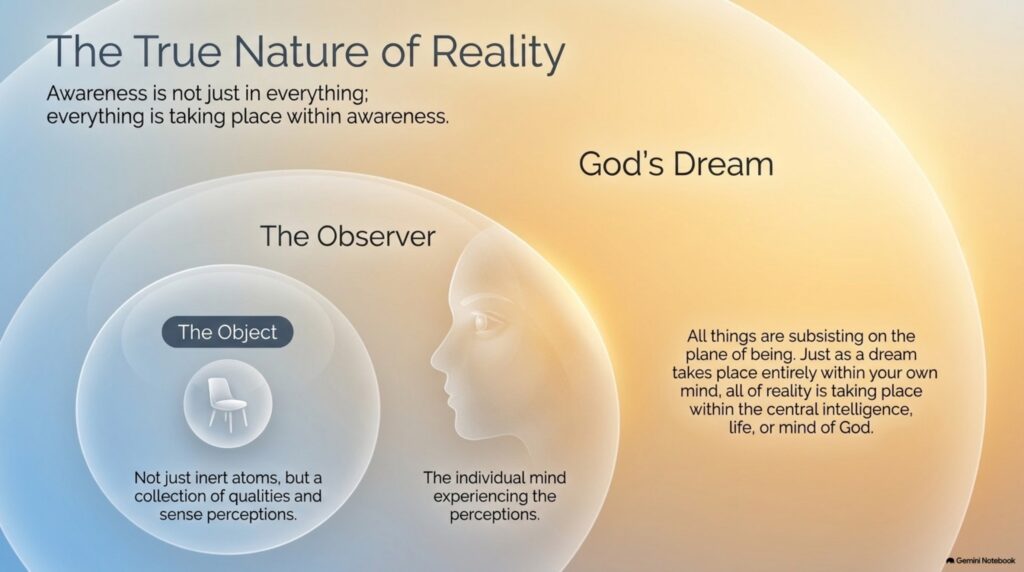
The note extends awareness from inner practice to a view of reality itself. Experience is framed as awareness plus what awareness perceives.
- Objects are encountered as collections of perceptions within experience.
- Dream imagery is used as an analogy for reality in God’s mind.
- Awareness is said to be in everything, and everything is said to be in God.
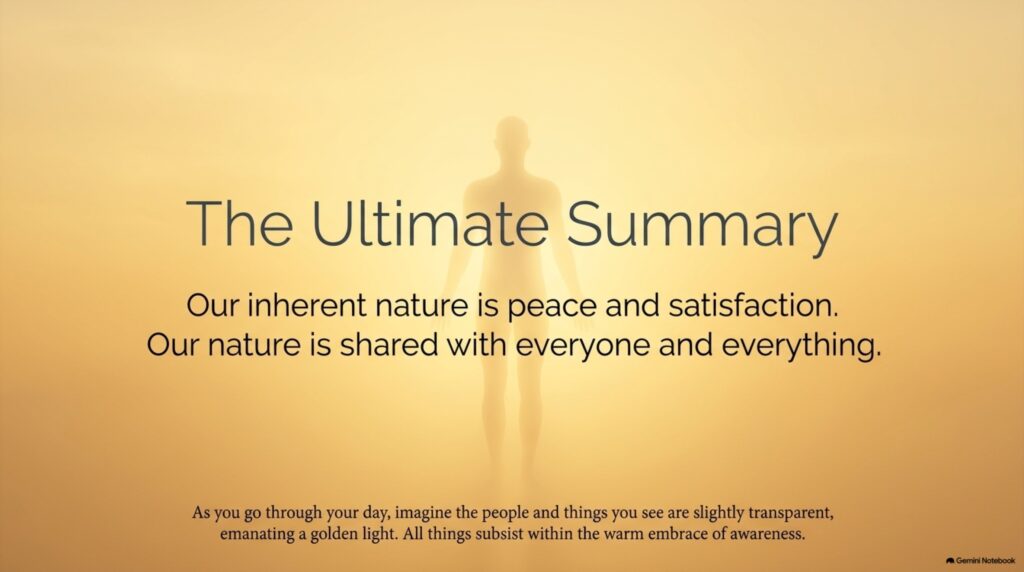
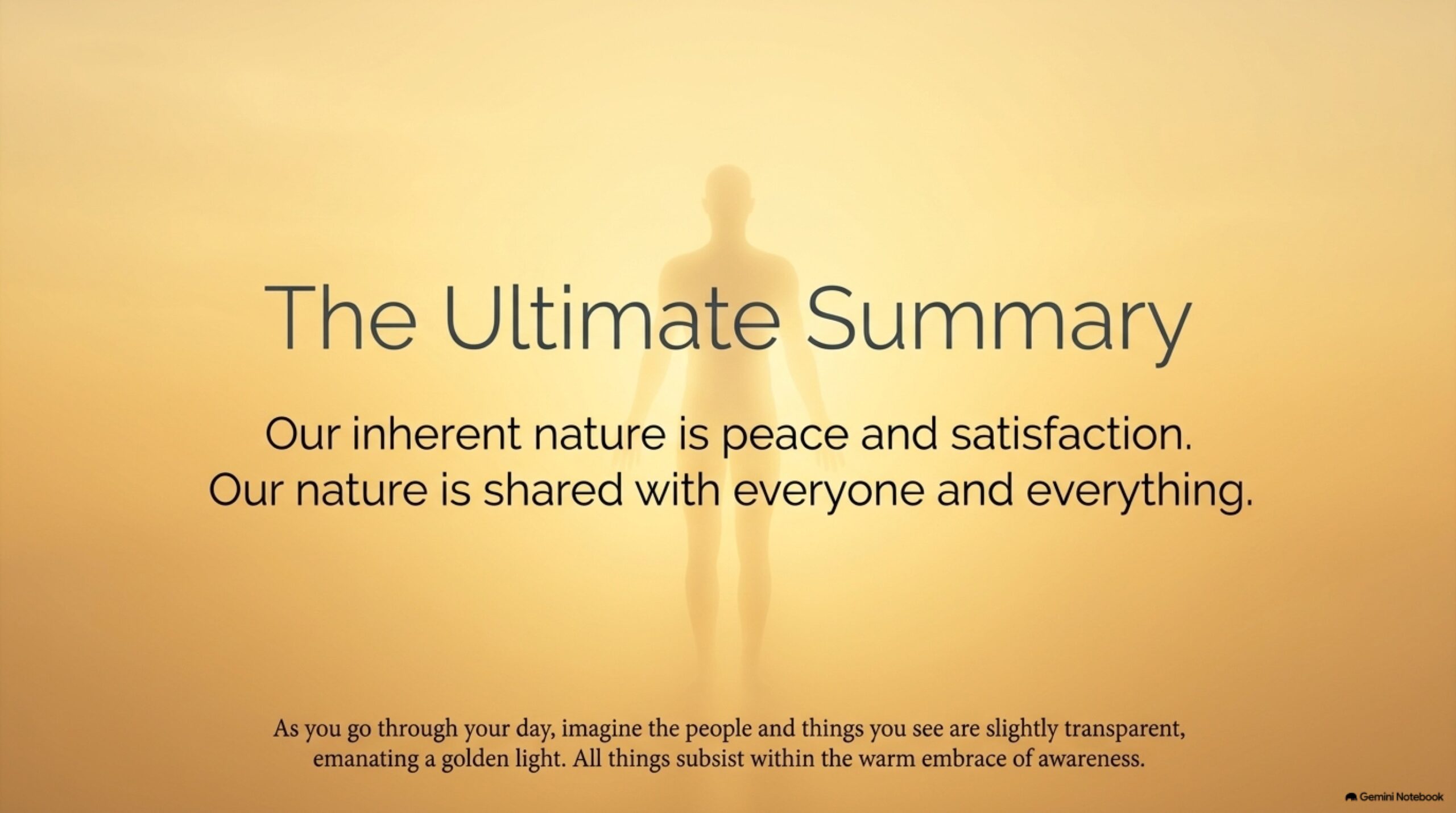
A brief summary is given: human nature is peace and satisfaction, and that nature is shared with everyone and everything.
God
God is approached through the same inquiry into being and awareness. The shared phrase is I am.
- God is described as aware, alive, peaceful, boundless, and present.
- Human experience of being and awareness is treated as a sharing in that reality.
- Knowing God becomes experiential through stabilizing in awareness.
Questions about God’s character remain open, but the note treats peaceful presence as the place where divine nature becomes known.
Religion
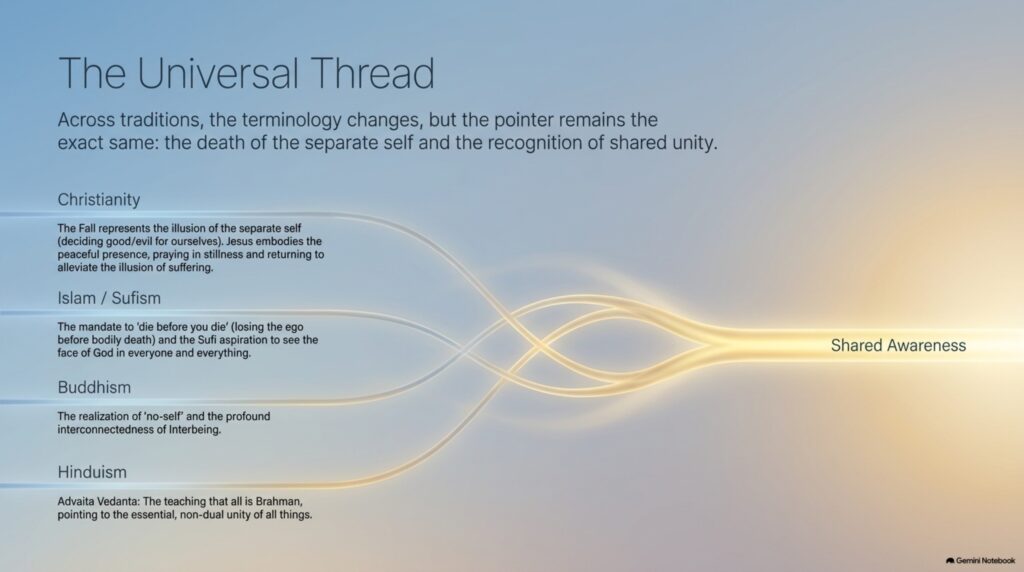
The final movement places the teaching inside Christian language while also linking it to other traditions. The main thread is unity rather than separation.
- Christianity is read through creation, the fall, life, oneness, repentance, forgiveness, and Christ.
- Christ is presented as embodying peaceful presence and unity with God.
- Similar themes are named in Buddhism, Kabbalah, Islam, Sufism, Taoism, and Advaita Vedanta.
The closing emphasis stays practical: know true nature in direct experience, then let language follow.
Final exercise
A last visualization is offered to make the unity of awareness feel more immediate.
- Imagine people and things as slightly transparent.
- Imagine a soft golden light emanating from them.
- Imagine the whole atmosphere glowing the same way.
This is presented as a poetic way to sense that awareness pervades all things and that all things rest within God.
NotebookLM.Google.com
Leave a Reply