You Have Never Seen Reality:
Discover Who You Actually Are
in Only Two Minutes | Rupert Spira
Concise Summary (getrecall.ai)
The Nature of Reality and Consciousness 00:00
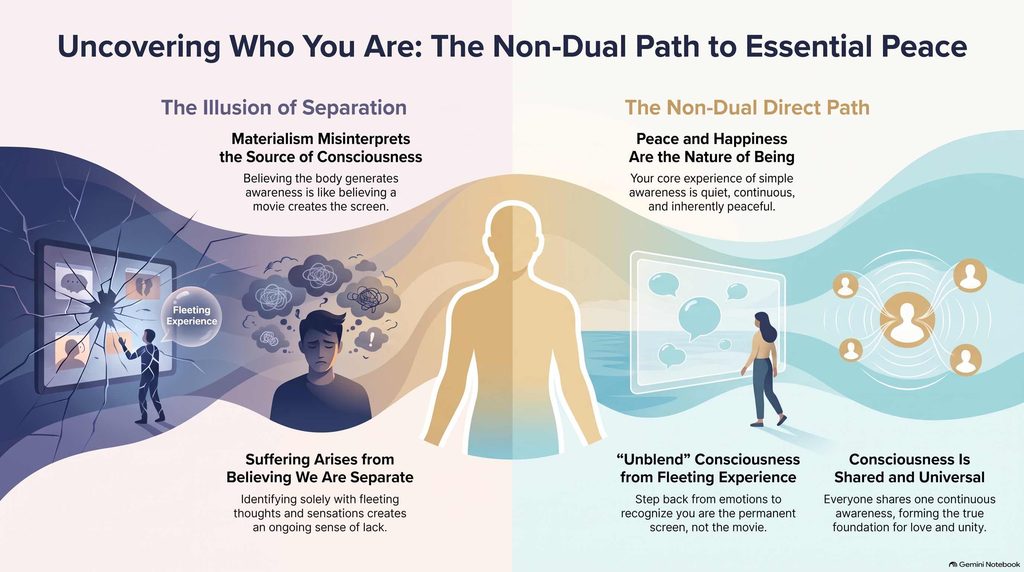
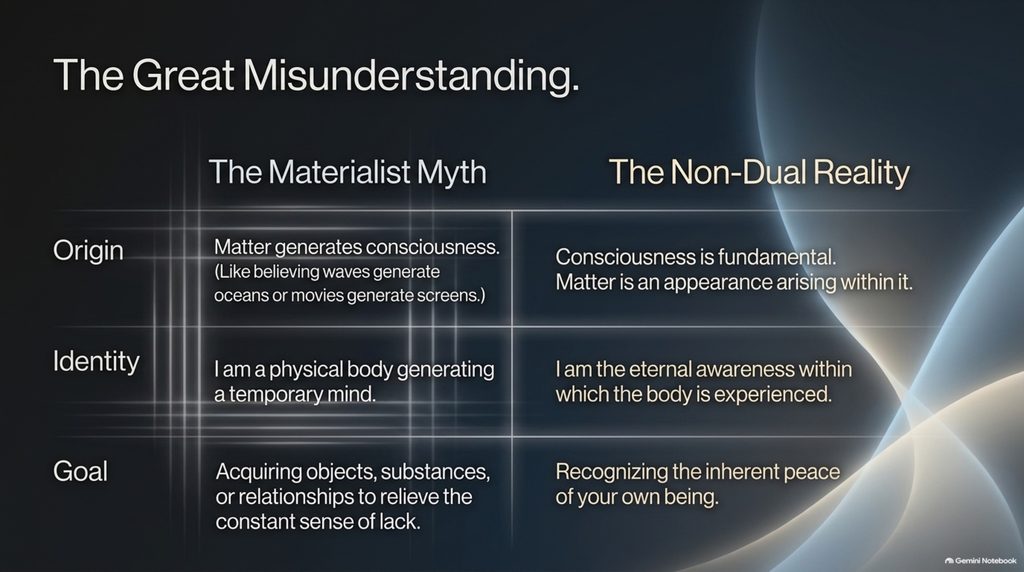
- The world is not fundamentally physical, and the belief that consciousness is generated by matter is compared to the mistaken idea that movies generate screens or waves generate oceans 00:00
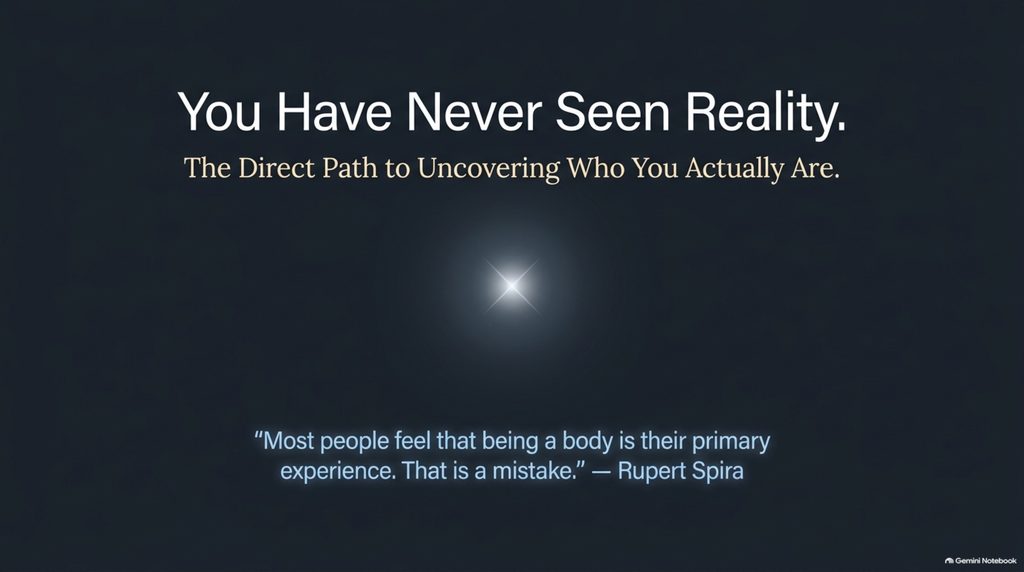
- Many people mistakenly identify primarily with their bodies, whereas the true essence of being is infinite and eternal 00:27
- Recognizing the nature of one’s being, which remains untraumatized regardless of physical circumstances, is described as the ultimate form of healing 00:40
Transition to Non-Dual Understanding 03:34
- After practicing non-dual understanding privately for 35 years while working as an artist, the transition to full-time writing and speaking occurred following the publication of a book 03:34
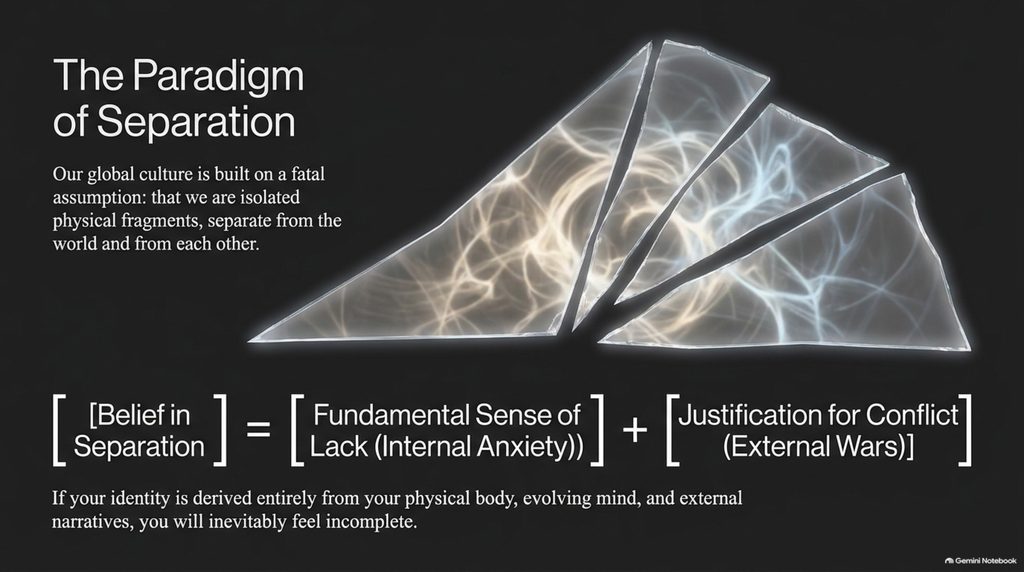
- The current cultural paradigm is founded on the assumption of separation, which leads to internal anxiety and external conflict between individuals and nations 04:36
- Fundamental change in the world requires moving outside this paradigm of separation to recognize the unity that underlies all people and things 05:42
The Consequences of Separation 06:41
- When identity is derived solely from thoughts, feelings, and narratives, individuals inevitably feel incomplete and lacking, leading them to seek relief through external objects or activities 07:07
- The belief in separation allows for the mistreatment of others, as it denies the fundamental unity shared by all beings 07:51
Defining Non-Duality 08:35
- Non-duality is the core understanding found at the foundation of all major religious and spiritual traditions, asserting that peace and happiness are the nature of one’s being and are shared with everything 08:35
- While the core message is simple, traditions have developed complex pathways and methods to help individuals recognize this nature, especially when their personal experience is dominated by conflict and suffering 09:17
- These various teachings are adapted to suit different temperaments, intellectual levels, and cultural contexts 10:14
Misinterpretation of Religious Origins 11:05
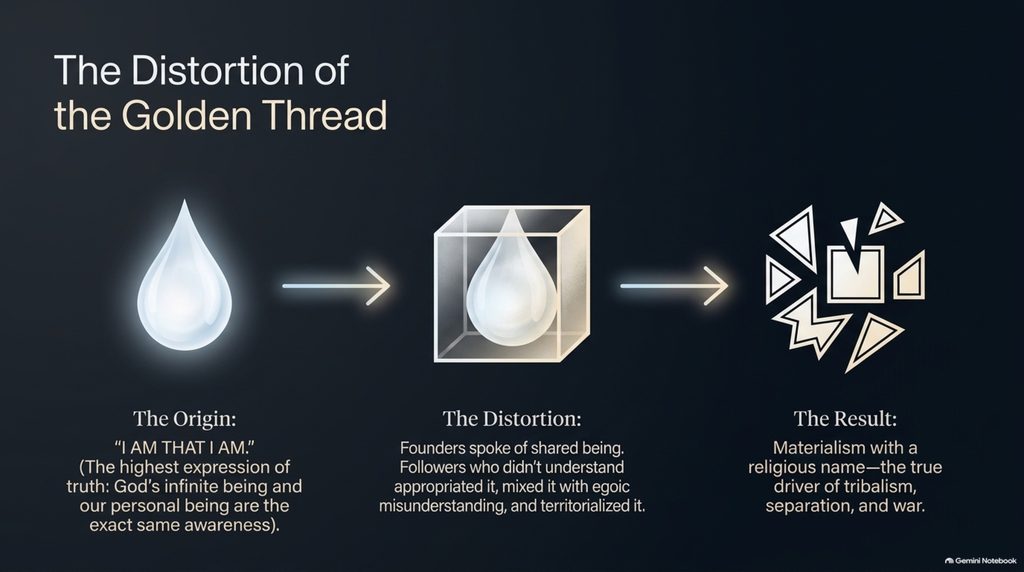
- Religious conflicts and atrocities are attributed to the misunderstanding and distortion of the core messages originally taught by religious founders 11:58
- After the founders passed away, their teachings were often appropriated by others who lacked the original understanding, leading to the use of these traditions for egoic purposes 12:26
- Modern religious practices are described as being far removed from the fundamental truths initially spoken by the founders 12:58
Non-Duality and the Nature of Belief 15:40
- Non-duality does not require belief in a deity or higher power; instead, it necessitates the questioning of all beliefs, including the fundamental assumption that one is primarily a person or a body 15:40
- Because all knowledge of the world or a higher power is experienced through the self, understanding the nature of the “knower” is a prerequisite for understanding anything else 16:12
- This investigation is characterized as a gentle but radical process that makes no initial assumptions 17:32
Challenges in Religious Traditions 17:42
- Many established religious texts, such as those in the Old Testament, are viewed as being distant from the original mystical experiences of figures like Moses or the prophets 17:42
- Traditional religious frameworks often emphasize tribalism, territoriality, and concepts of a vengeful God, which contrast with the pursuit of peace and happiness 18:19
- A central challenge for practitioners is reconciling the original, transformative experiences of religious founders with the evolved, often distorted traditions that have been passed down 19:19
The Nature of Being 19:28
- The phrase “I am that I am” is considered a foundational expression of absolute truth found within religious and spiritual traditions 19:28
- The experience of “I am” refers to the fundamental, ordinary, and intimate feeling of being or consciousness, rather than a mystical or enlightened state 21:46
- This sense of being is the constant “golden thread” that remains present throughout all experiences, including waking life, dreaming, and deep sleep 23:14
- While thoughts, feelings, and perceptions are temporary and constantly changing, the awareness of being remains unbroken 23:32
Experiencing Pure Awareness 25:15
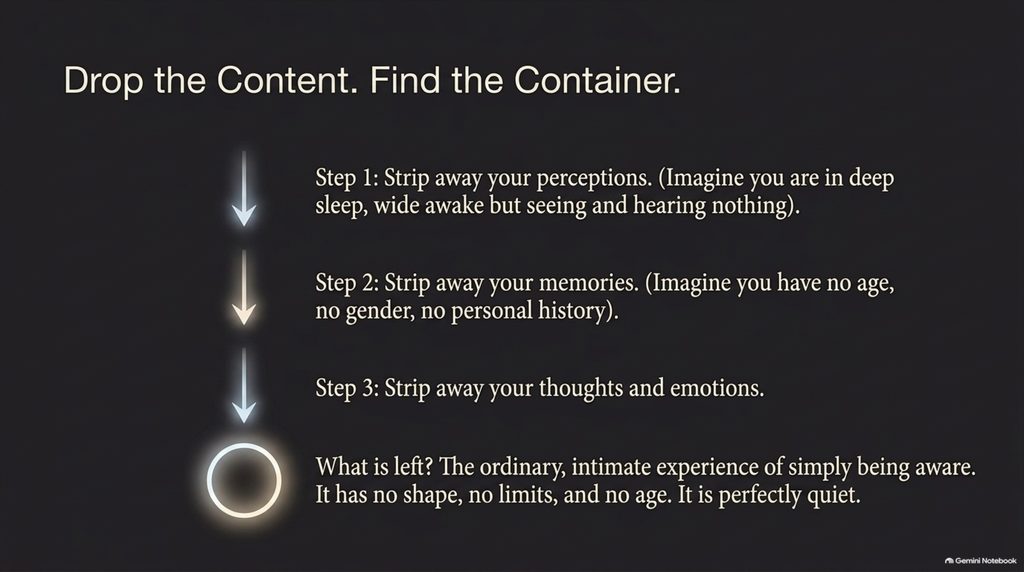
- The core experience of being exists prior to any conceptualization, such as age, gender, or personal identity 24:48
- When isolated from thoughts, memories, and perceptions, the experience of being is found to be quiet, ageless, and without location 26:06
- Because this pure state of being has no extension in time or space, it is characterized as eternal and infinite 26:59
Non-Duality and the Nature of Reality 28:04
- The understanding that there is only one infinite and eternal being is the core of non-duality 28:04
- Individuals often perceive themselves as separate, finite beings because they experience their existence as mixed with thoughts, feelings, and sensations rather than in its pure, essential form 28:28
- Spiritual and religious traditions aim to guide individuals to recognize their own being before it is qualified by experience, revealing that all things derive their existence from a single, shared being 28:59
- This direct, unmediated access to the experience of being is a universal core truth that transcends the specific language or methodologies of any particular tradition 29:40
The Nature of Being and Consciousness 30:20
- Peace is an inherent quality of one’s being that remains accessible regardless of external circumstances, such as physical pain, emotional distress, or chaotic environments 30:46
- The ability to recognize “I am” signifies that an individual is not only a being but is also aware of that being, distinguishing human consciousness from inanimate objects 32:09
- Because the self is both the subject that exists and the subject that knows it exists, being and consciousness are considered synonymous, self-aware states 33:18
Perspectives on Near-Death Experiences 36:41
- Reports of individuals witnessing their own surgeries from outside their bodies are interpreted as shifts in the locus of perception rather than the movement of consciousness itself 37:39
- This phenomenon is compared to dreaming, where one’s consciousness remains stationary while the perceived location of experience shifts from one place to another 38:29
- Regardless of whether an experience is ordinary, extraordinary, psychedelic, or related to a near-death event, all experiences occur within and are known by consciousness 39:36
The Materialist Paradigm 40:01
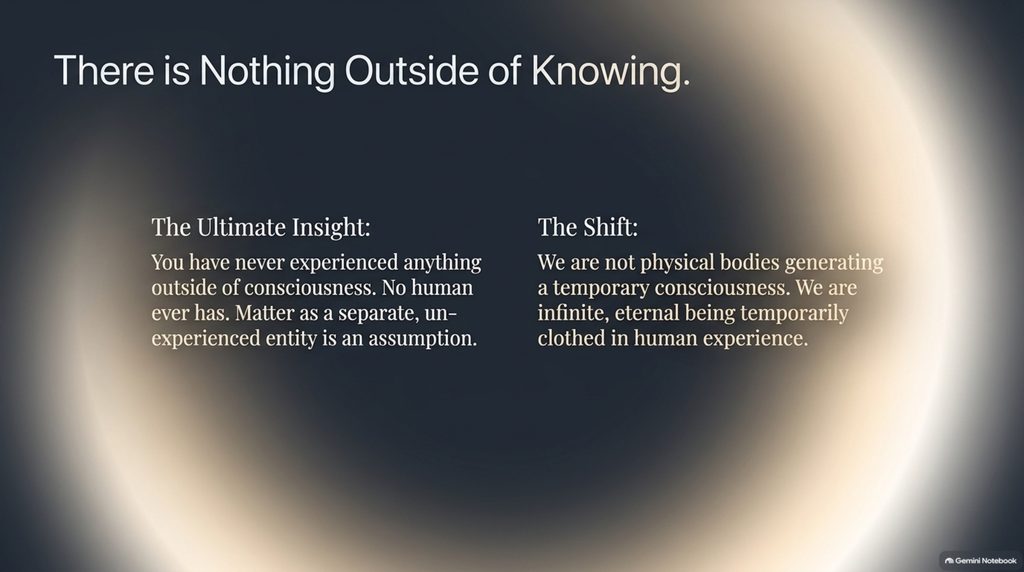
- Modern culture operates under the assumption that matter is the fundamental reality and that consciousness is a derivative generated by the body 40:01
- This perspective relies on the belief that sense perception provides evidence of a physical world that exists independently of and prior to the individual 40:17
- Materialist scientists often defend this paradigm because their professional identities and sense of self are deeply invested in the belief that matter is the ultimate nature of reality 43:38
The Primacy of Consciousness 40:49
- Direct experience contradicts the materialist view, as being aware is the primary experience for every individual 40:49
- No person or living being has ever experienced anything prior to or outside of consciousness, as consciousness is the necessary prerequisite for all experience 41:04
- While objective experiences like thoughts or perceptions require a mind, these phenomena still occur within and are known by consciousness 42:53
Challenging Cultural Assumptions 45:02
- The dominance of the materialist paradigm stems from the mistaken belief that being a body is one’s primary experience, leading to the assumption that consciousness is merely a faculty generated by the body 45:11
- A second contributing factor is the reliance on sense perception, which is often incorrectly viewed as a direct window into a physical world 45:52
- While there is a reality outside the individual mind, it is not a physical one, and both the belief in the body’s primacy and the interpretation of sense perception fail under rigorous inquiry 46:13
The Consistency of Awareness 46:42
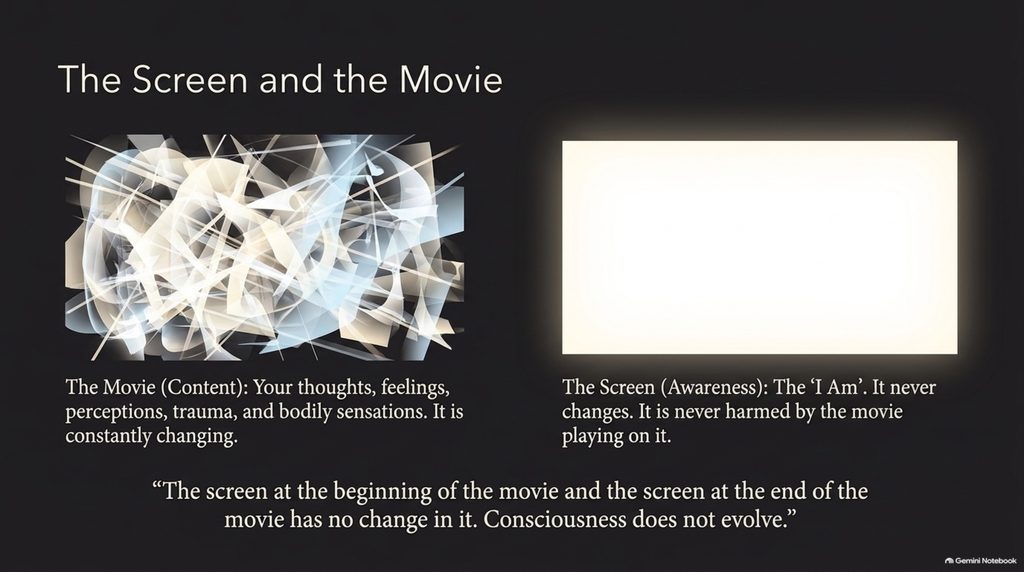
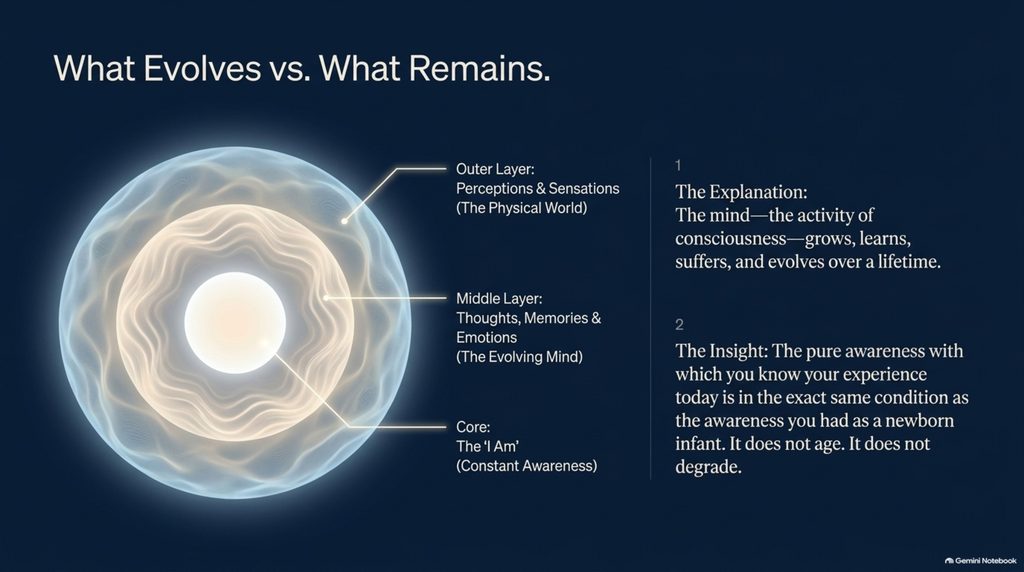
- While the content of human experience—such as thoughts, sensory perceptions, and emotional states—changes constantly over time, the underlying awareness of those experiences remains identical 46:58
- This awareness remains consistent regardless of whether an experience is pleasant or unpleasant, or whether the individual is in a normal state, intoxicated, or suffering from severe trauma or conditions like locked-in syndrome 48:09
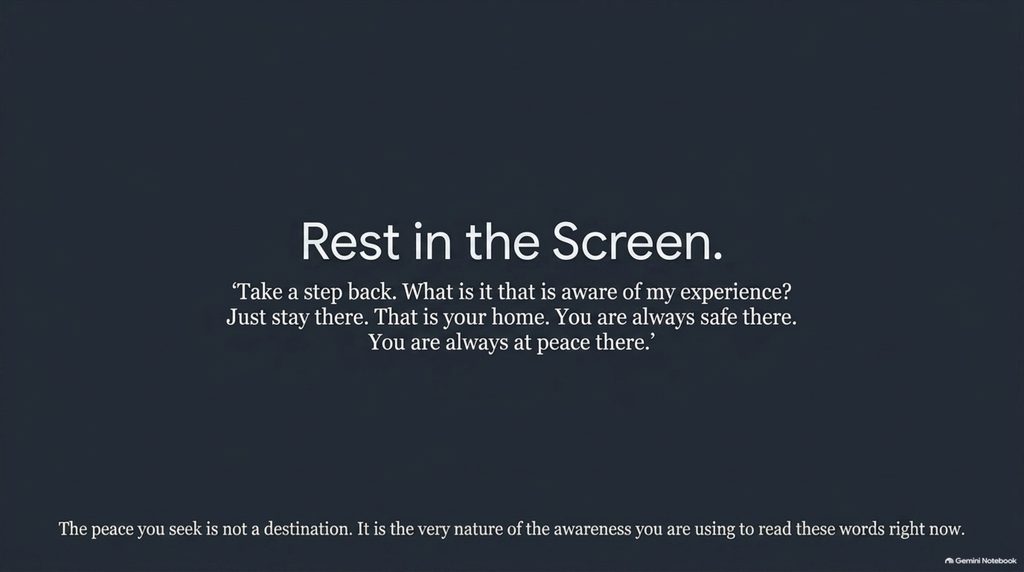
- Consciousness functions like a screen that remains unchanged regardless of the nature of the movie being projected upon it 49:38
Unblending Being from Experience 50:39
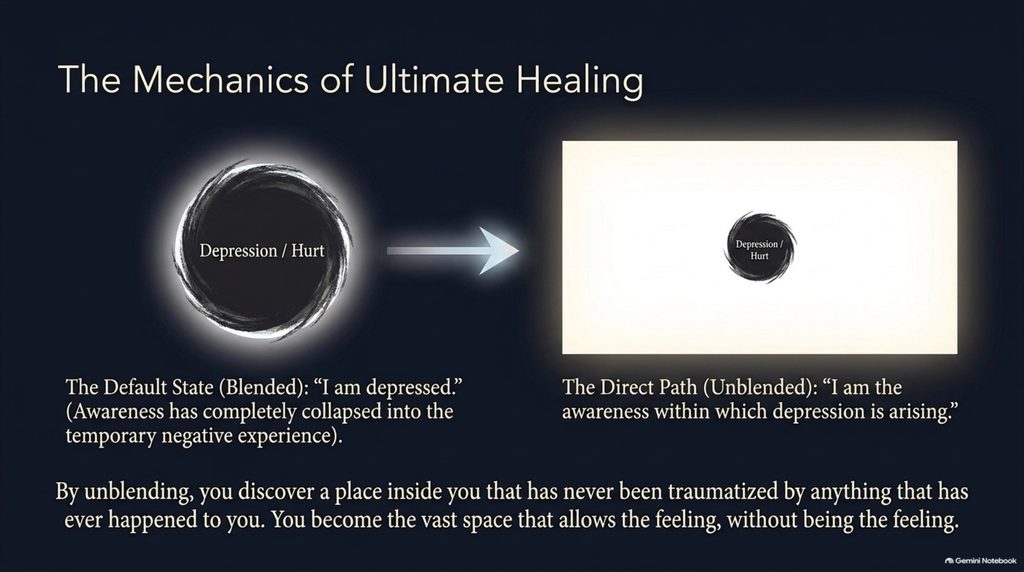
- The primary methodology of nondual understanding involves “unblending” one’s sense of being from the specific content of experience 50:49
- Most individuals typically identify themselves with their experiences, such as feeling lonely, depressed, or agitated, rather than recognizing their essential nature 51:06
- By separating awareness from the content of the mind, individuals can recognize that their core being is whole, unblemished, and untouched by past trauma or life events 51:26
The Nature of Ultimate Healing 51:43
- Recognizing the inherent peace and fullness of one’s own being is described as the ultimate form of healing, distinct from the long-term process of traditional therapy 51:43
- This recognition is a universal theme found across diverse fields, including philosophy, physics, and various therapeutic practices 52:19
- Although people may arrive at this understanding through vastly different paths—such as psychoanalysis, creative work, or other personal practices—the core realization remains the same 52:41
The Direct Path to Being 53:15
- The “direct path” involves turning attention away from the content of experience—such as thoughts, feelings, or external stimuli—to return directly to one’s being 53:43
- While some individuals can access this state immediately, others may require progressive paths to address intense trauma, shame, or fear before they are prepared to turn inward 54:14
- The essence of meditation is the act of pausing to experience being, which provides a sense of quiet and peace that exists independently of one’s thoughts 56:03
- Different individuals may reach this state through various methods, such as yoga or meditation, but the goal remains the same: to access a place of silence and stillness that feels like “everything” rather than “nothing” 57:15
Staying in Awareness 58:29
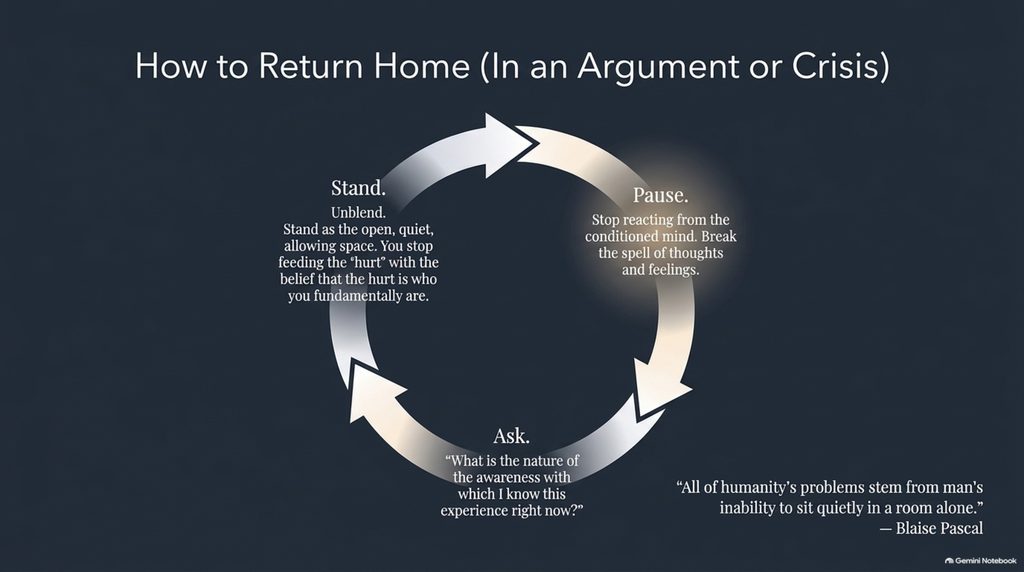
- To access this state independently, one can ask, “What is the nature of the awareness with which I am aware of my current experience?” regardless of whether one is feeling agitated, lonely, or excited 59:00
- Initially, being is a place one visits briefly between other experiences, but with repeated practice, the capacity for objective experience to distract from one’s being weakens 59:38
- Over time, this practice allows an individual to feel as though they live within their being, maintaining that connection even while engaging with the outside world 01:00:07
- While this approach does not solve external physical events like earthquakes, it addresses the existential sense of lack and conflict in personal psychology and relationships by enabling individuals to sit alone without the constant need for distraction or thought 01:00:40
Returning to Being 01:01:20
- Many people lack a “being practice,” leading to an imbalance caused by excessive doing rather than simply existing 01:01:36
- During interpersonal conflicts, individuals often react from a place of hurt, anger, or irritation rooted in their thoughts and feelings 01:02:08
- Stepping back from these reactive thoughts to the experience of being—a state characterized by peace and a lack of resentment—can profoundly improve the quality of one’s responses 01:02:32
The Nature of Shared Being 01:03:04
- Non-duality posits that peace and happiness are the nature of one’s being and that this being is shared by everyone and everything 01:03:04
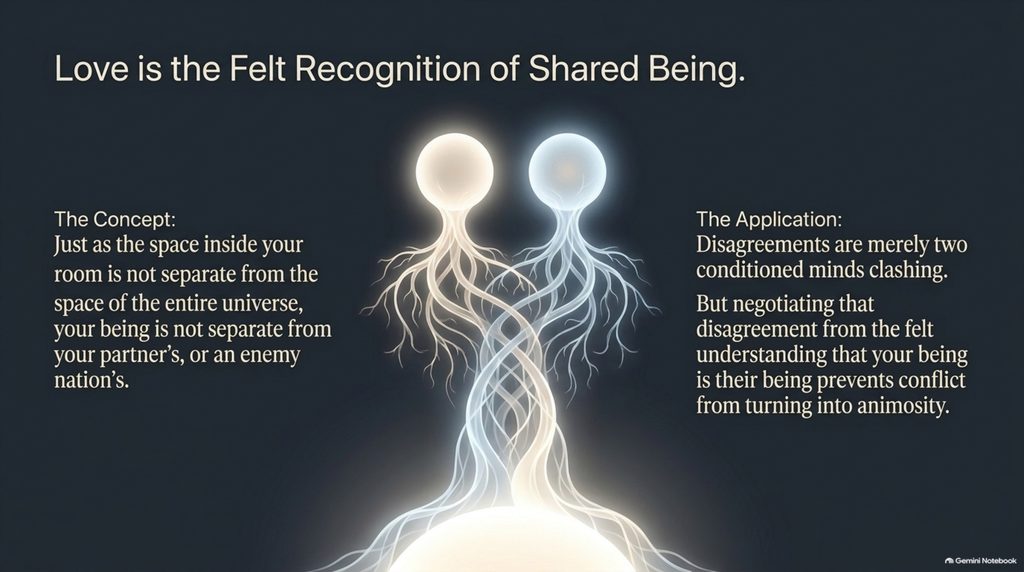
- Just as the space within a room is not separate from the space in the rest of the universe, individual beings are seemingly bounded by thought and perception but are fundamentally one infinite being 01:03:36
- Love is defined as the felt recognition that individuals share this singular, unified being 01:04:07
Navigating Disagreements and Conflict 01:05:02
- While recognizing a shared being changes the tone and quality of interactions, it does not eliminate disagreements, as these occur at the level of the conditioned and limited mind 01:05:25
- Negotiating disagreements from a felt sense of shared being prevents them from escalating into conflict and animosity 01:05:46
- If the understanding of unified being were mainstream, it would be impossible for nations to engage in war, as perpetrators would feel their own being in those they attack 01:06:12
Healing Through Presence 01:07:27
- When one person is hurt, the other can model healing by remaining open, non-reactive, and grounded in their own being rather than defending or attacking 01:07:48
- This approach allows the hurt individual to recognize that they are experiencing hurt, rather than being the hurt itself 01:08:49
- By unblending from the emotion and viewing it as a “movie on the screen” while standing as the “screen” itself, an individual stops feeding the feeling with the belief that it defines their identity 01:09:31
The Role of the Witness 01:09:53
- Fully feeling an emotion requires standing as the witness of that experience, which inherently involves taking a step back to become the space in which the feeling arises 01:10:02
- Just as physical space cannot be harmed by the objects within it, the core of one’s being or awareness remains untouched by the experiences that occur within it 01:10:41
- To “feel” an experience is to stand as the allowing openness that permits the experience to arise without becoming identified with it 01:10:55
Defining Enlightenment 01:11:09
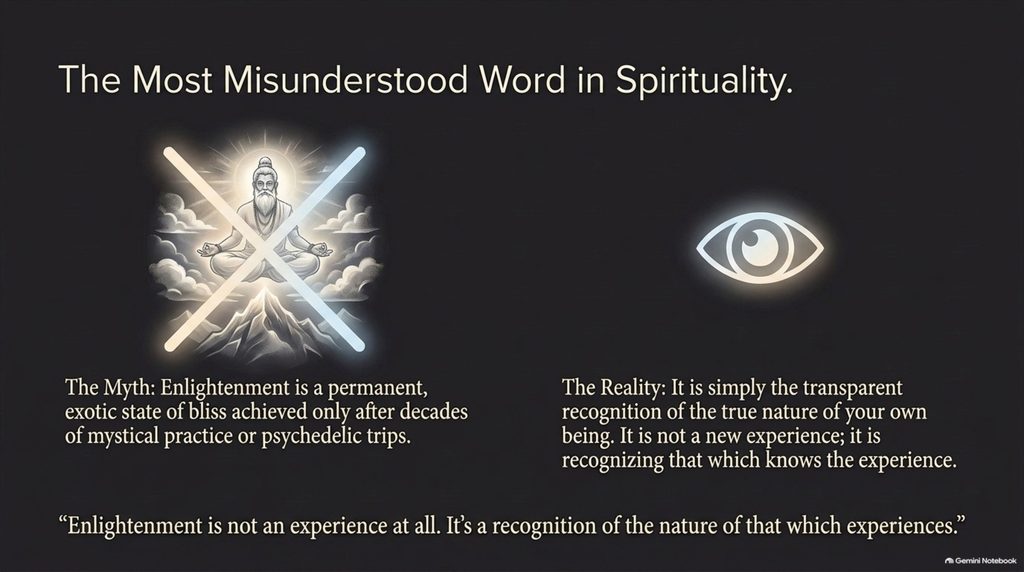
- Enlightenment is defined as the recognition of the nature of being, which involves two distinct steps 01:11:24
- The first step is to unblend from thoughts and feelings by recognizing oneself as the witness or knower of experience, rather than the experience itself 01:11:31
- The second step is to recognize that this awareness is inherently fulfilled, peaceful, ever-present, and limitless 01:11:55
- Enlightenment is not merely an inner experience but a lived one, requiring the expression of this understanding in daily life 01:13:52
Misconceptions Regarding Enlightenment 01:12:31
- Enlightenment is often mistakenly viewed as a permanent state of bliss or an exotic, marvelous experience 01:12:44
- While the recognition of one’s nature can be described as positive in contrast to previous negative experiences, it is strictly neither positive nor negative 01:12:50
- The idea that enlightenment is a positive state is a tool used to move past negative experiences, but ultimately both labels should be discarded 01:13:06
- Enlightenment is not an experience at all, and the pursuit of it as an exotic event has led many to travel the world in search of something that is not actually an experience 01:14:35
The Nature of Realization 01:17:20
- What are often described as miraculous awakenings or blissful states are the potential effects of enlightenment on the mind and body, rather than enlightenment itself 01:17:20
- The recognition of one’s true nature can occur quietly, with the mind barely registering the event, or it can be powerful enough to cause significant mental expansion or physical relaxation 01:17:42
- Physical reactions such as laughing or crying are expressions of the body relaxing in the aftermath of this recognition 01:18:43
- The mind may be gradually impacted by repeated, brief recognitions of one’s true nature, even if the initial realization is subtle 01:18:10
Synchronicity and the Consciousness-Only Model 01:19:13
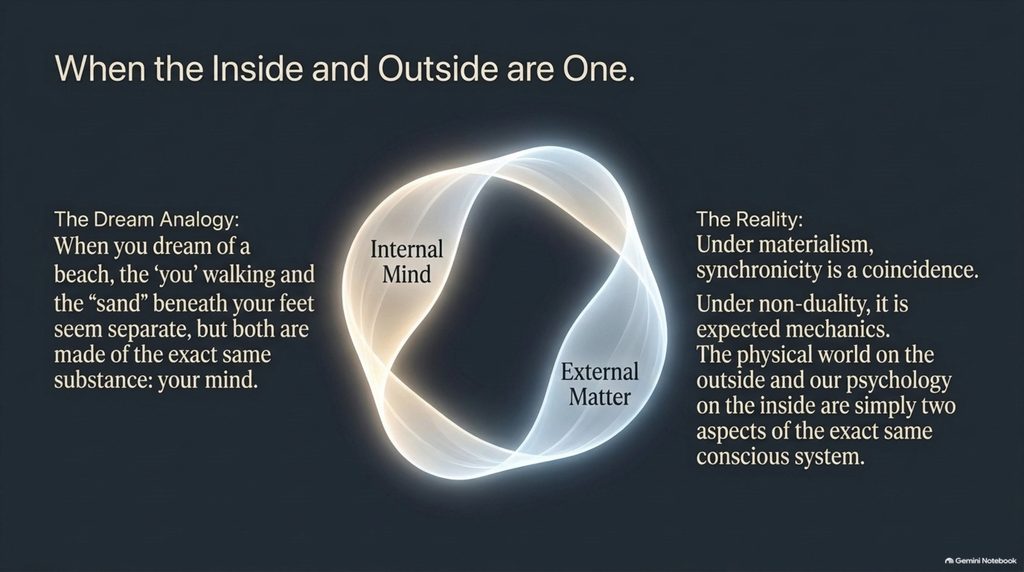
- Synchronicity, such as thinking of someone who then immediately contacts you, is often dismissed as coincidence under a materialist paradigm 01:19:13
- Within a consciousness-only model, where consciousness is considered fundamental, these events are explained as a correspondence between internal mental states and the external world, which are viewed as two aspects of the same system 01:20:25
- Because the world is perceived through the lens of the mind, physical events and internal psychological experiences are inherently linked 01:21:40
- Individuals who are more aware of this interconnected nature are more likely to both notice and experience these moments of synchrony 01:23:10
The Nature of Knowing and Reality 01:23:32
- Direct experience reveals that there is nothing to any experience other than the knowing of it 01:23:32
- The belief that matter exists independently of consciousness is described as a cultural misconception, akin to believing that waves generate the ocean or movies generate the screen 01:25:09
- This paradigm of separation is suggested to be a root cause of global sorrow and conflict 01:25:52
- Religious or belief-based systems that claim exclusive knowledge of truth are characterized as refinements of materialism rather than alternatives to it 01:26:43
Existence, Death, and Consciousness 01:27:10
- Consciousness does not evolve or change; it is the fundamental nature of the mind, while the mind itself—comprising thoughts, emotions, and perceptions—is the evolving activity of consciousness 01:28:21
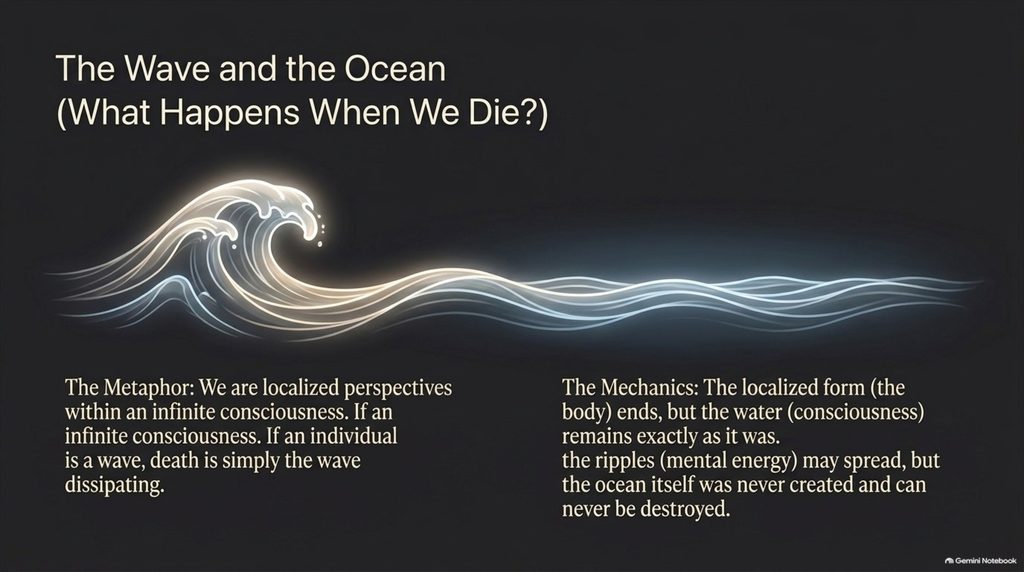
- Death is likened to the dissipation of a wave back into the ocean; the individual mind may persist or reincarnate, but the underlying consciousness remains unchanged 01:29:32
- In the highest analysis, nothing is ever created or destroyed, as all existence is a temporary modulation of infinite, eternal being 01:34:30
- The practice of pausing and questioning what is aware of one’s experience allows individuals to step back from the content of their lives and rest in their fundamental being 01:36:36
Personal Integration and Diverse Paths 01:38:08
- Maintaining a practice of returning to one’s core awareness can help individuals navigate difficult emotions and trauma without becoming overwhelmed by them 01:38:32
- There is no single path or method for “unblending” from the identification with temporary experiences; different individuals require different approaches 01:39:31
- Diverse experiences, including those reported by people who have had near-death encounters or other profound phenomena, suggest that there are many ways to access a sense of connection with the universe

Leave a Reply