Summary provided by Memo AI App:
Nondual Presence Discussion
Key Points
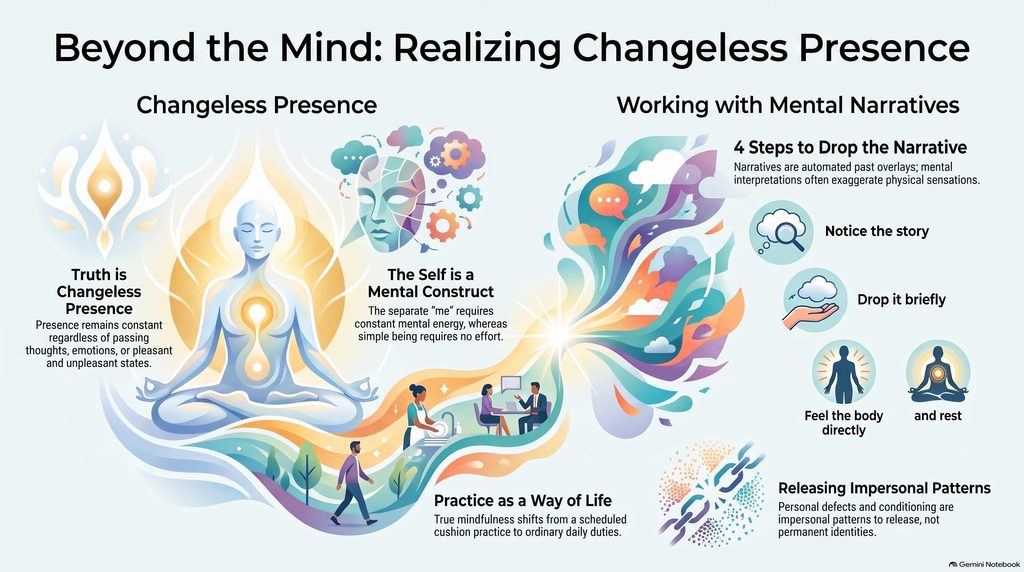
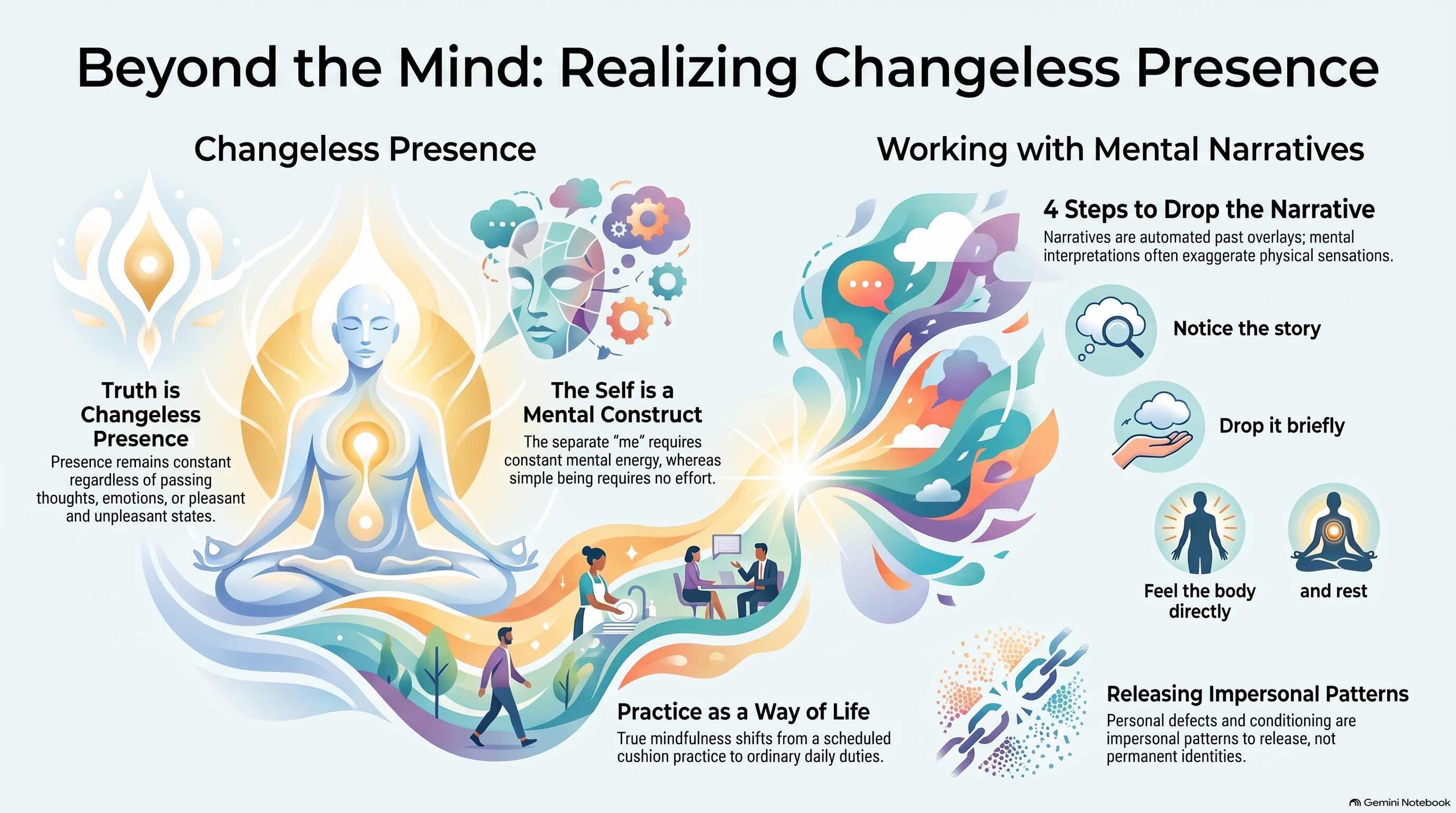
- Truth is changeless presence
- Mind works through contrast
- Ritual can interrupt chatter
- Narratives often replay fear
Overview …
| Concept | Detail |
|---|---|
| Truth | Changeless presence of I am |
| Mind | Operates through contrast |
| Presence | Includes anger and anxiety |
| Ritual | Interrupts chatter and points back |
| Synagogue | Community over private experience |
| Mindfulness | Meant as way of life |
| Narratives | Old fear patterns replay |
| Witness | Stays as experiences change |
[[2026-10-07]] This conversation explored nonduality, religious practice, and personal patterns through the shared theme of returning to what is present now.
Truth
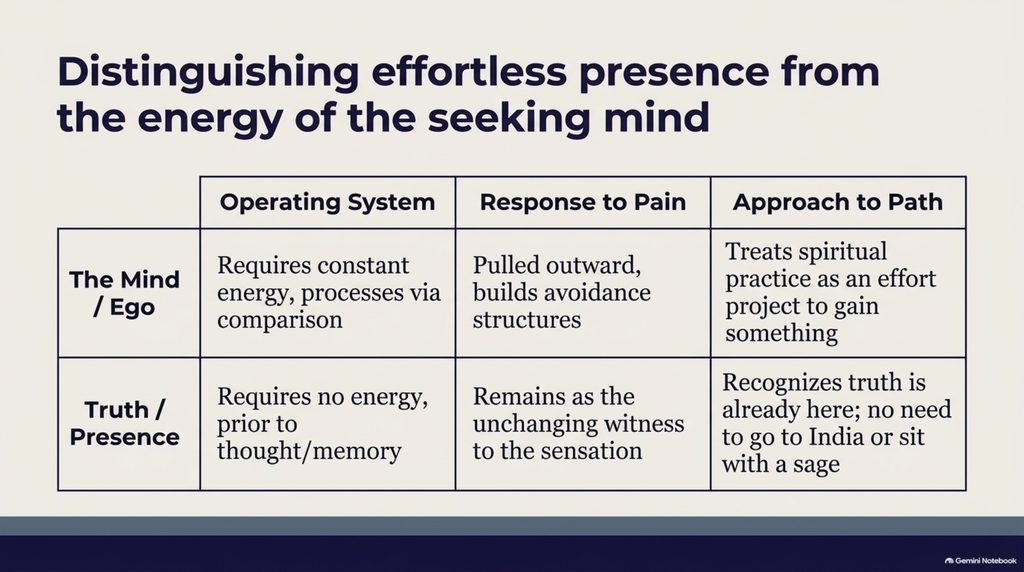
Truth was treated as something prior to ideas, doctrines, or personal paths. Different teachings can point to the same end without requiring the same route.
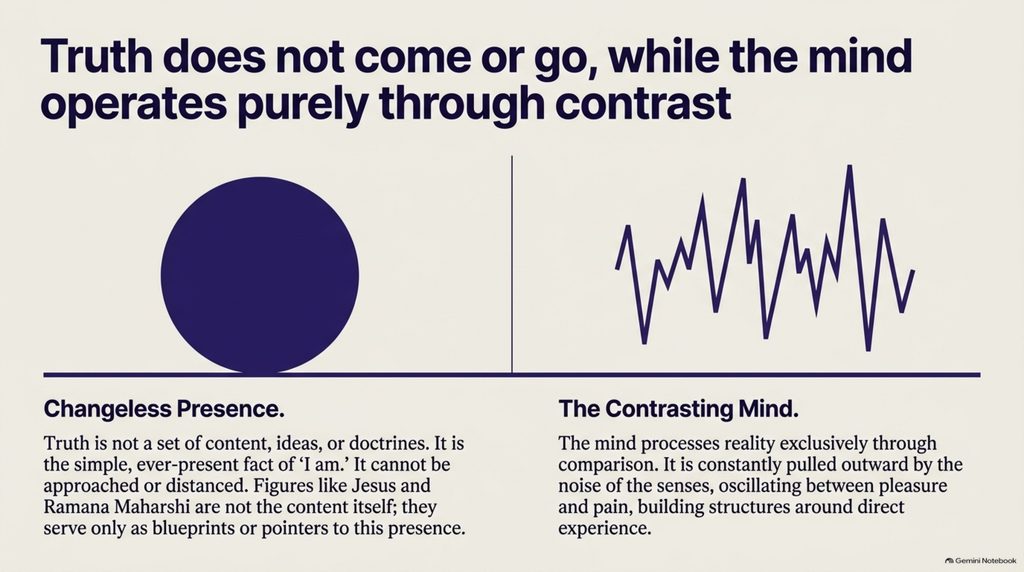
The truth is that which never changes: the presence of I am.
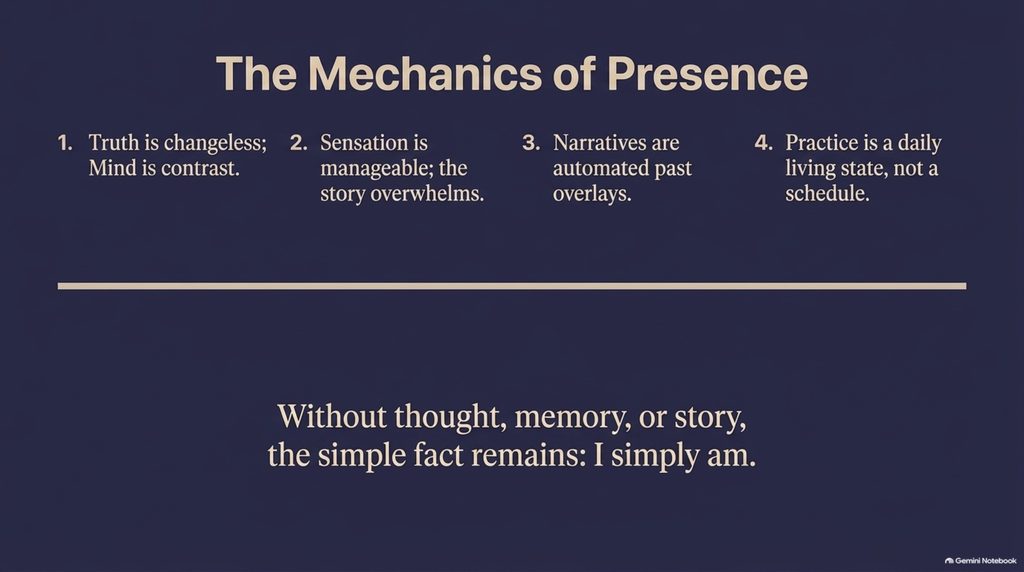
Truth does not come or go, and nobody can be nearer or farther from it. Without thought, memory, or story, the simple fact remains: I simply am.
A short inquiry captured that direction.
Truth not a set of content Presence always here Jesus pointer or blueprint Ramana Maharshi character in the dream
- Personal paths differ.
- Going to India or sitting with a sage is not required.
Self
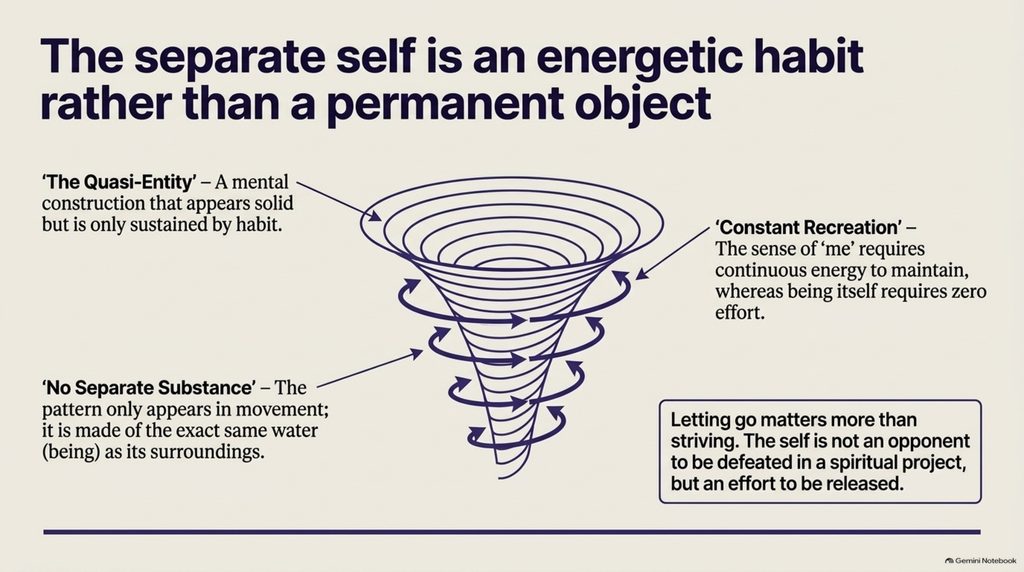
The discussion treated the separate self as a mental construction sustained by habit. Letting go mattered more than striving.
It is not an effort project. The sense of “me” takes constant energy to keep recreating, while being itself does not.
- The quasi-entity is a mind construct.
- Mind knows contrast and processes through comparison.
- Pleasure and pain pull attention outward.
- The noise of the senses seems to overshadow being.
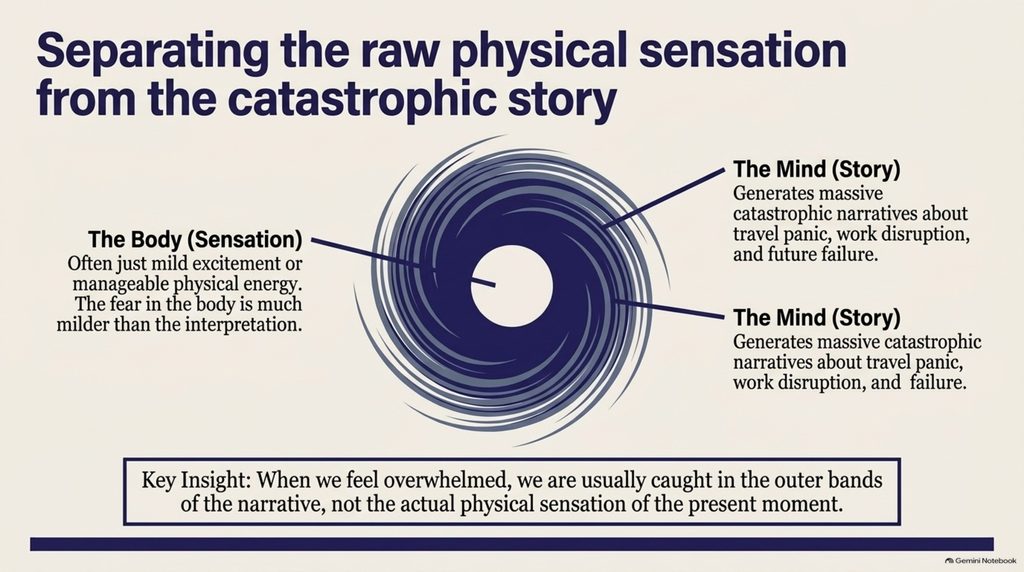
The whirlpool image framed this clearly: the pattern appears in movement and has no separate substance apart from it.
Experience
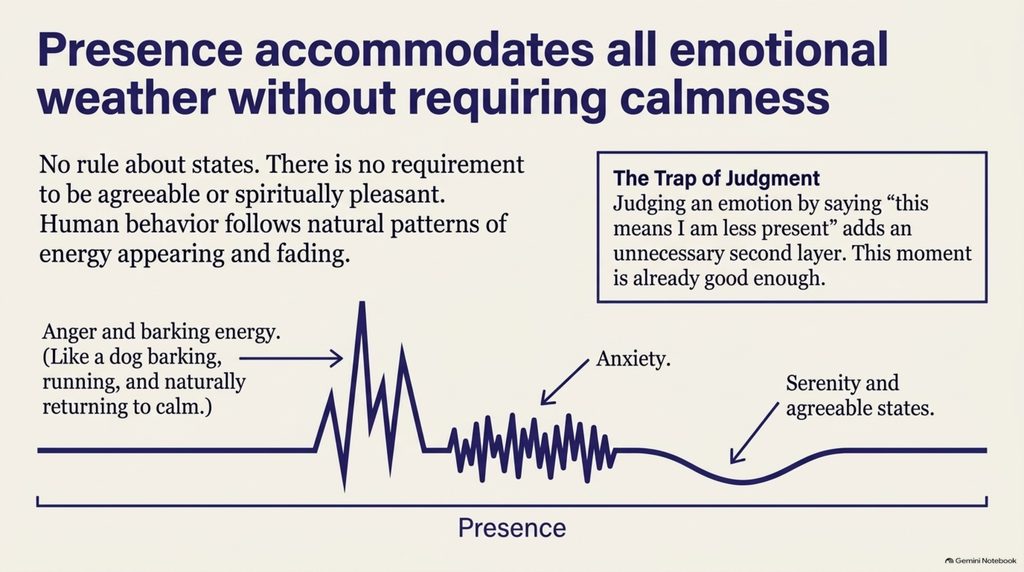
Presence was not tied to pleasant states. Anger, anxiety, barking energy, and serenity can all appear without changing what is aware.
No rule about states: presence does not require being calm, agreeable, or spiritually pleasant.
- A dog can bark, run, and then return to calm.
- Human behavior follows the same pattern of energies appearing.
- Judgment adds a second layer: “this means less present” or “that means more present.”
What matters is where importance gets placed. This moment was treated as already good enough.
Rituals
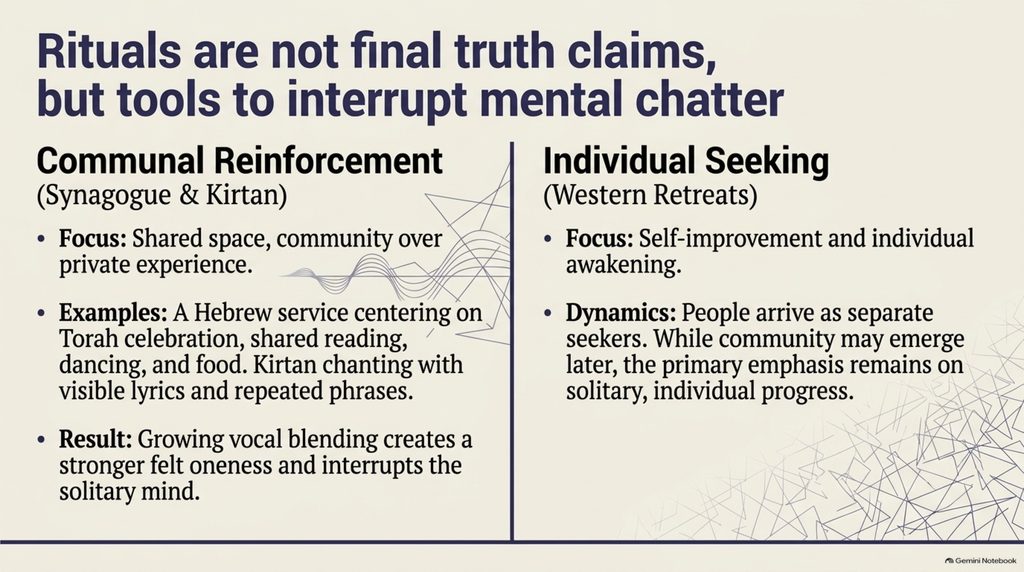
Religious forms were discussed less as final truth claims and more as pointers, symbols, and communal practices.
Helpful side: ritual, repetition, and sacred symbols can interrupt mental chatter and support presence.
Limitation: texts and institutions become a mishmash of translation, hierarchy, and inherited structure.
A synagogue visit stood out as a communal example rather than an individual mystical one.
- The service was in Hebrew at a semi-progressive synagogue.
- Men and women shared the same space and both read.
- The gathering centered on Torah celebration, singing, dancing, food, and social contact.
It felt aimed at reinforcing community more than producing a solitary spiritual experience. Kirtan was contrasted with that because shared chanting, visible lyrics, repeated phrases, and growing vocal blending can create a stronger felt oneness for a newcomer.
Group settings
Retreat culture brought a different emphasis.
- Western retreats can feel like self-improvement.
- People arrive as separate seekers trying to wake up for themselves.
- Community may emerge later through singing or dancing, but individuality still dominates.
Spaces
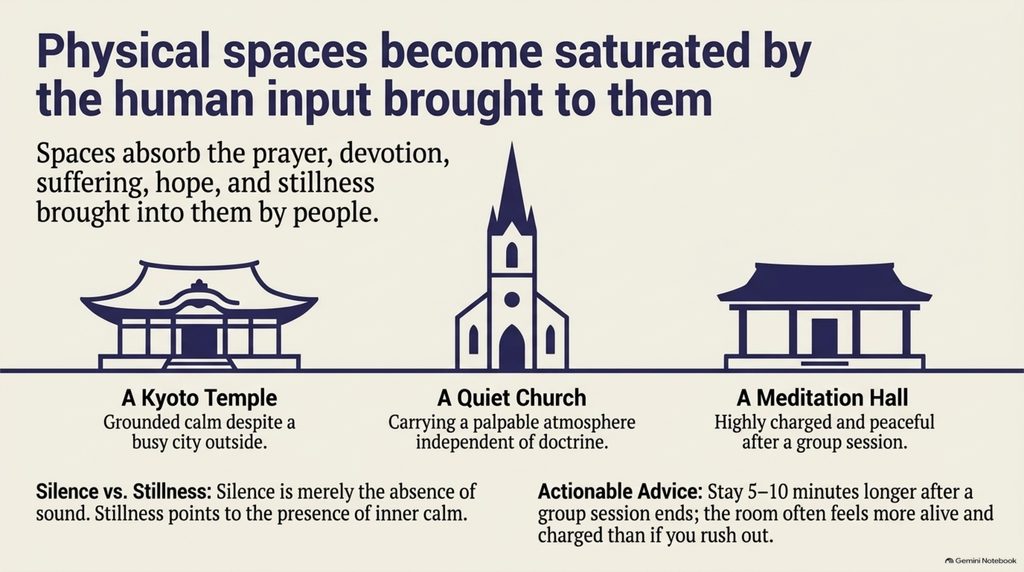
Places of worship and meditation rooms were described as carrying a palpable atmosphere independent of doctrine.
Kyoto temples, quiet churches, Buddhist gardens, and meditation halls all pointed to the same intuition: people bring prayer, devotion, suffering, hope, and stillness into a place, and that saturates the space.
- A temple can feel grounded and calm despite a busy city outside.
- After group meditation, the room can feel especially charged and peaceful.
- Staying 5–10 minutes longer after a session can feel more alive than rushing out.
Silence and stillness were also separated: silence is the absence of sound, while stillness points more to inner calm.
Practice
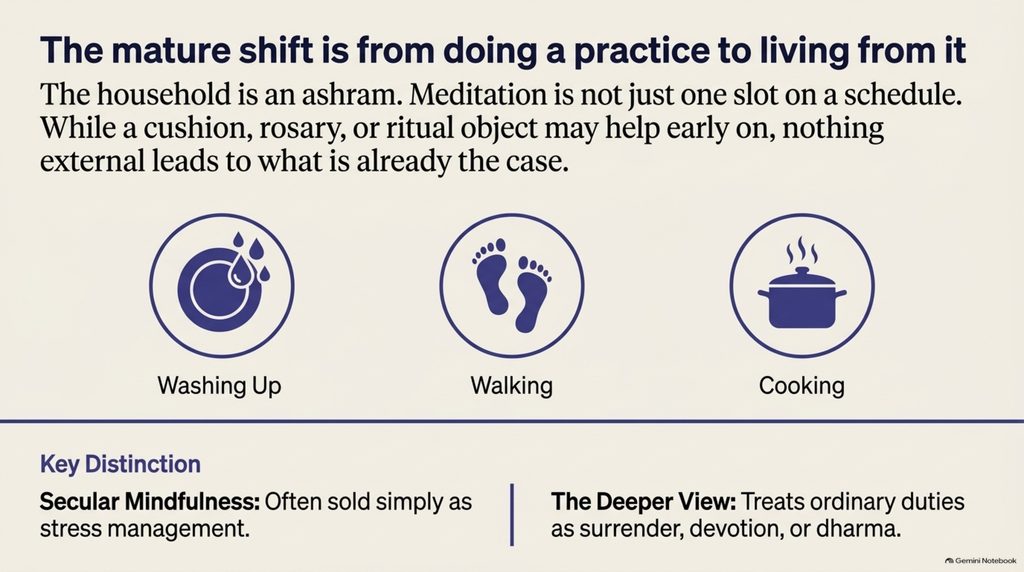
Meditation and mindfulness were treated as a way of life rather than one slot in a schedule. Sitting practice can help, but it is not the whole of it.
The household was described as an ashram: washing up, walking, cooking, and ordinary duties can all become devotion or mindfulness. A cushion, rosary, or ritual object may help early on, but nothing external leads to what is already the case.
- Secular mindfulness often gets sold as stress management.
- A deeper view treats practice as surrender, devotion, or dharma.
- The mature shift is from doing practice to living from it.
Patterns
Several personal themes came up around defectiveness, relationships, and family conditioning.
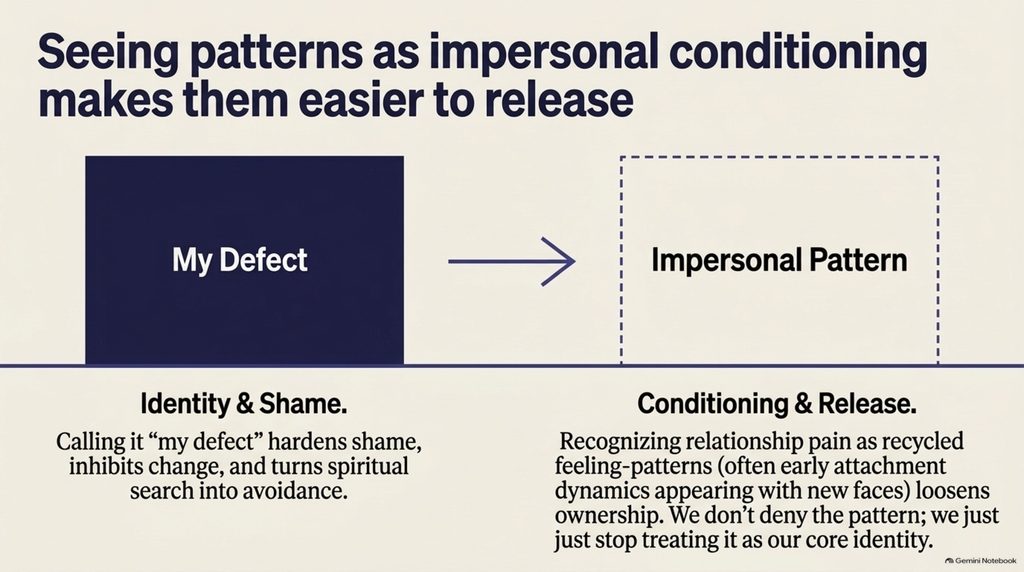
Spiritual search can begin as avoidance, then later expose what was being avoided. The teachings were used to loosen ownership of painful patterns rather than deny them.
- “Defects” are behaviors or conditioning, not identity.
- Saying “my defect” can harden shame and inhibit change.
- Seeing patterns as impersonal makes them easier to release.
Relationship pain was framed as recycled feeling-patterns that appear with new faces. Many partnerships replay early attachment dynamics until those are seen more clearly.
Family inheritance
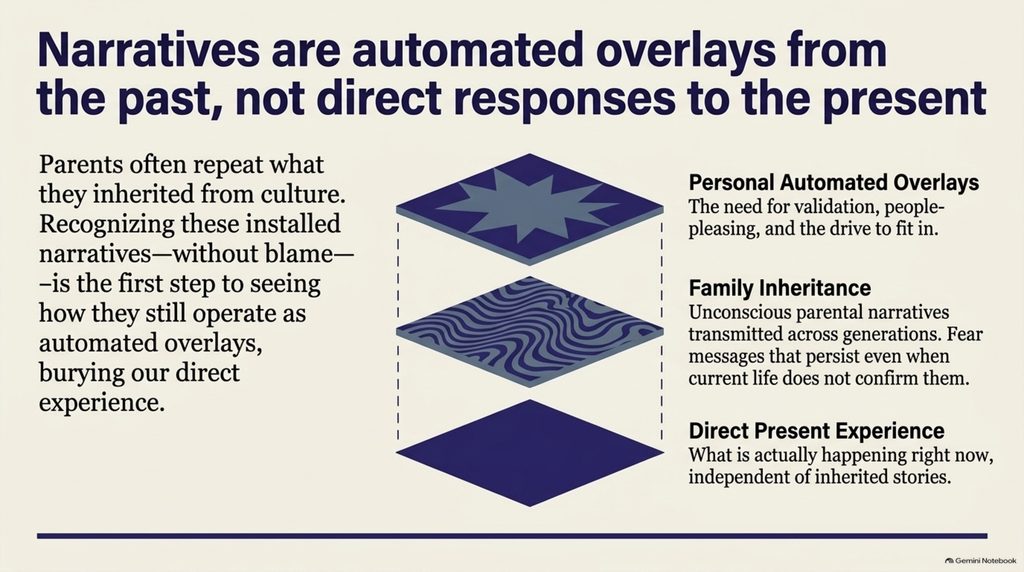
Parental narratives were treated as transmitted unconsciously across generations.
- Fear messages can persist even when life does not confirm them.
- Parents often repeated what they inherited from family and culture.
- More information is available now than many earlier generations had.
This was not framed as blame. The emphasis stayed on recognizing installed narratives and seeing how they still operate.
Validation
People pleasing and the need to fit in were named directly as common motives.
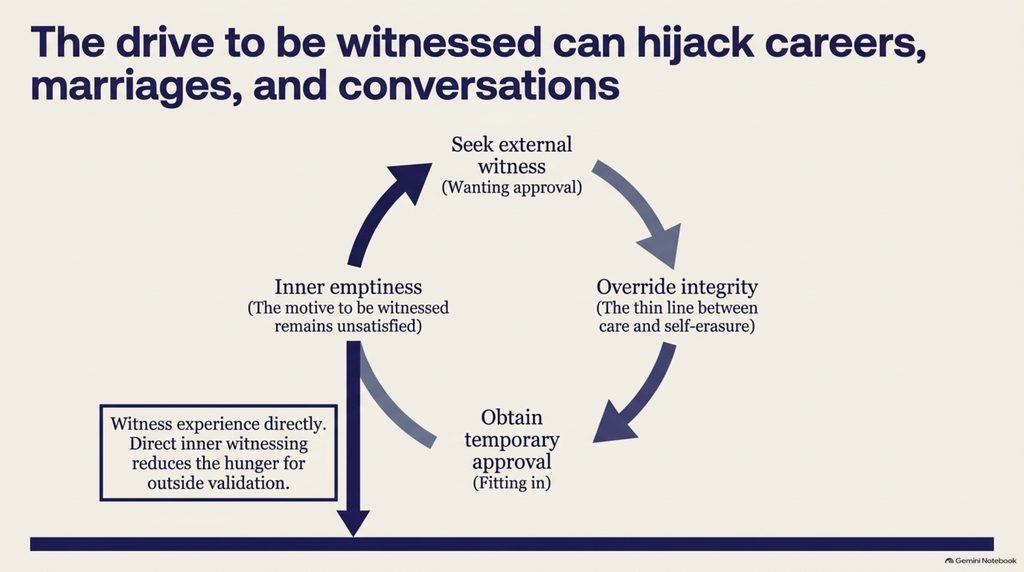
Wanting approval is ordinary; the problem begins when approval becomes the sole aim and overrides integrity. The line between care and self-erasure can be very thin.
- Much of life can become a search to be witnessed.
- Careers, marriages, and conversation can all carry that motive.
- Witnessing experience directly may reduce the need for outside validation.
Traditions were also read through this lens. Reformers such as Jesus and the Buddha were presented as reacting against rigid structures, only for later followers to rebuild structure around them.
Change
The closing theme returned to impermanence and the changeless witness.
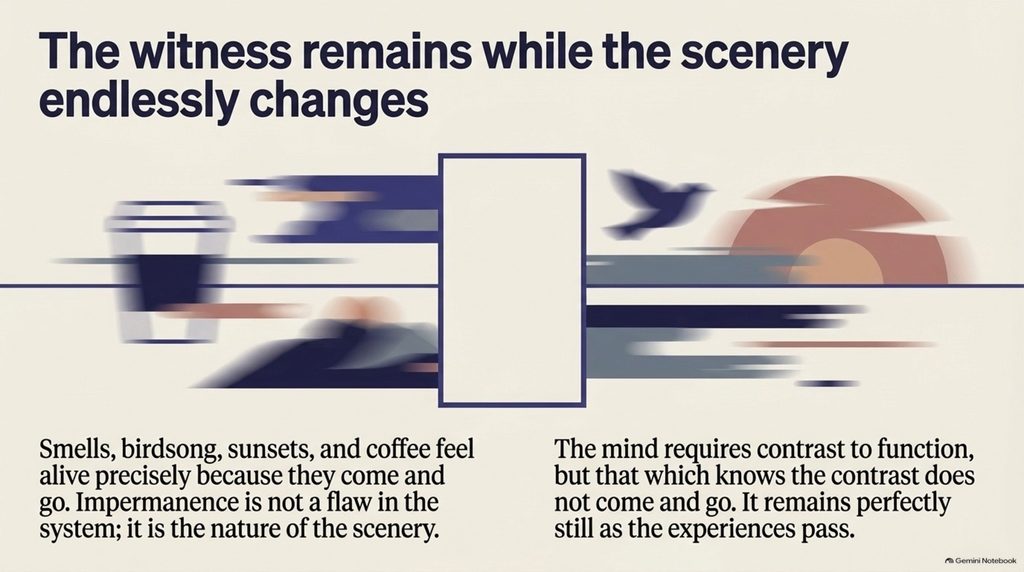
Smells, birdsong, sunsets, coffee, and other fleeting things feel alive partly because they come and go. Mind needs contrast, but what knows the contrast does not come and go.
- The witness remains while scenery changes.
- Awareness was tested with questions such as peace, satisfaction, borderlessness, and timelessness.
- The Four Noble Truths were recalled as suffering, its origin, its cessation, and a path.
Working with narrative
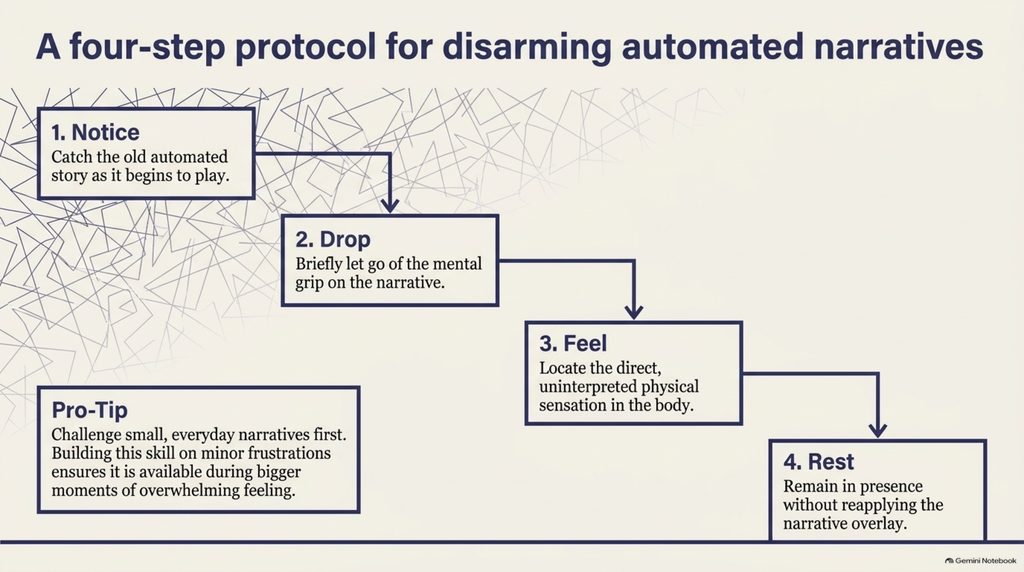
Narratives were described as automated overlays from the past rather than direct responses to the present.
- Notice the old story
- Drop it briefly
- Feel the body directly
- Rest without narrative
Two practical angles came out. One was to challenge small everyday narratives so the skill is available during bigger moments. The other was to separate sensation from story: fear in the body may be much milder than the surrounding interpretation.
A hurricane example illustrated that gap. The body sensation felt closer to mild excitement, while the mind generated stories about travel, work, and disruption.
Leave a Reply